Why your Angelfish fighting, and how can you stop them? These graceful freshwater fish are usually peaceful, but aggressive behavior can emerge. Is it territorial disputes, breeding instincts, or something else?
Angelfish fight due to reasons like overcrowding, mating aggression, and dominance battles. Limited space and incompatible tank mates can also lead to conflicts. Understanding these triggers helps you create a peaceful aquarium.
But there’s more to it than just identifying the cause. Experts like Dr. Paul Loiselle suggest specific strategies to manage aggression. So, let’s dive deeper into the best ways to stop angel fish from fighting and keep your tank harmonious!
Angelfish Kissing or Fighting?
Often, what appears to be angelfish fighting might actually be a display of affection or courtship known as “kissing.” This behavior can be mistaken for aggression, especially when two angelfish chase each other around the tank.
However, it’s important to recognize that this interaction is a normal part of their behavior, particularly during breeding seasons.
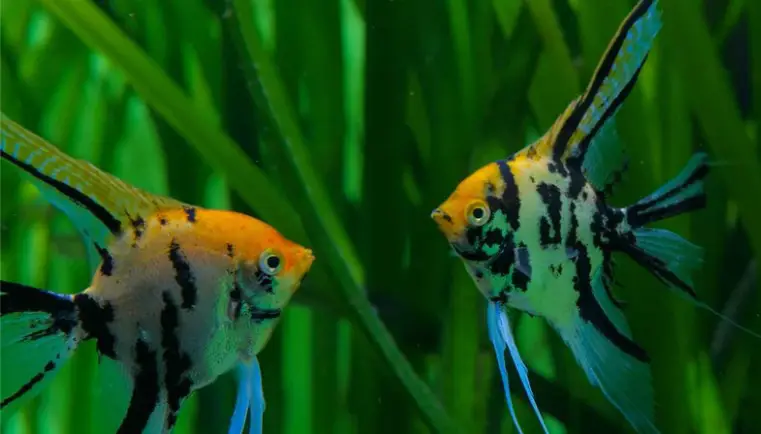
When they’re establishing a pair bond, angelfish may nuzzle or rub against each other, leading to confusion among aquarists. Nevertheless, if you notice signs of true aggression, like nipping or fin chasing, it’s essential to take action before things escalate further.
Understanding the nuances of angelfish behavior is key. While “kissing” may appear peaceful, it can also signify a struggle for dominance or territory, especially in smaller tanks.
In a well-setup aquarium with ample hiding spots and plants, these interactions can often be mitigated, allowing the aquarium fish to express their natural behaviors without resorting to full-blown fights. Therefore, monitoring their interactions is vital to differentiate between normal behavior and aggression to ensure a healthy environment.
Why Are My Angelfish Fighting Each Other?
Angelfish fighting can be attributed to several factors, mainly aggression stemming from territorial disputes. In a confined space, such as a smaller tank, angel fish may feel the need to assert dominance over their territory, leading to confrontations.
Additionally, factors like tank size play a significant role; if your tank is too small, the fish may become stressed, increasing their likelihood of fighting. Moreover, the presence of other fish species can also heighten tensions, as angelfish might perceive them as intruders within their established territory.
Another reason for fighting could be the pairing behavior among male and female angelfish. During breeding periods, males can become particularly aggressive, defending their nests and chasing away other fish.
It’s essential to keep this in mind when setting up your aquarium. If you notice consistent fighting between two angelfish, you may need to reevaluate your tank’s conditions or consider separating them to prevent injuries. Understanding these triggers can help you create a more peaceful environment for your fish.
Do Angelfish Fight to the Death?
While angelfish aggression can lead to serious injuries, it is relatively rare for them to attack each other to the death. Most angel fish will engage in displays of dominance, which may include chasing, nipping, or fin biting, but they often know when to back off.
However, in a high-stress environment, or if 1 angelfish is significantly weaker, the risk of severe injury or death increases.
As cichlids, angelfish have a natural aggression that can manifest during breeding or territorial displays, but they usually aim to assert dominance rather than kill.
Nonetheless, it is crucial to monitor their behavior closely. If you see persistent fighting or if one fish is being bullied constantly, it may be necessary to intervene. Providing enough space and hiding spots can significantly reduce aggression and fighting.
A bigger tank setup with proper decoration can allow angelfish to establish their territories without feeling threatened, ultimately leading to a more harmonious aquarium environment.
How to Stop Angelfish Fighting
To stop angelfish fighting, begin by assessing your tank size. Ideally, a minimum of a 20 gallon aquarium is recommended for a pair of angelfish, as this provides enough space for them to establish their territories without constant conflict.
Additionally, adding plenty of decorations, such as plants and hiding spots, can reduce aggression by giving fish areas to retreat when they feel threatened. If necessary, consider rearranging these decorations to disrupt established territories, which can sometimes alleviate tension among aggressive fish.
Another effective strategy is to monitor your fish closely and intervene if fights escalate. If two angelfish are consistently aggressive towards each other, you may need to separate them temporarily or permanently.
In some cases, introducing a larger group of angelfish or compatible tank mates, like tetras or guppies, can help dilute aggression by shifting the focus of territorial behavior. Keeping an eye on feeding times and ensuring that all fish receive adequate nutrition can also minimize competition and associated fighting.
Conclusion
In summary, angelfish fighting can be an alarming sight for any aquarium owner, but understanding the root causes of aggression is crucial for maintaining a peaceful environment. By recognizing the difference between normal behaviors and aggressive actions, you can take proactive steps to prevent conflicts. Providing an adequately sized tank, ample hiding spots, and monitoring their interactions can significantly reduce fighting. If you find yourself in need of advice, don’t hesitate to consult community resources or top posts on platforms like Reddit or YouTube. With the right approach, you can enjoy observing your angelfish thrive in a harmonious aquarium.
Top Posts
- Angelfish Mating vs. Fighting: Key Signs to Watch For
- Exploring the Angelfish Natural Habitat: Rivers & Ecosystems
- Do Angelfish Bite? Myths, Facts & How to Keep Them Peaceful
- Are Angelfish Schooling Fish: (Do They Swim in Groups!)
- Best 10 Gallon Angelfish Tank Setup – Tips & Essentials