Are you ready to witness the stunning transformation of this vibrant species? Caring for a juvenile Emperor Angelfish requires precise tank conditions, proper nutrition, and patience. But how do you ensure your fish thrives from its early stages to its majestic adult form?
To raise a healthy Emperor Angelfish, you need a spacious tank, high-quality marine food, and pristine water conditions. As they mature, their diet and environment must evolve to support their growth.
Following expert advice from marine biologists like Scott W. Michael can significantly increase their chances of thriving in captivity.
But there’s more to it than just feeding and tank maintenance. Understanding their behavior, potential tank mates, and transition phases is crucial. Let’s dive into the complete care guide to help your imperator angelfish reach its full, breathtaking potential!
How Big Are Juvenile Emperor Angelfish?
Juvenile emperor angel fish typically start at a size of about 2 to 3 inches when introduced into a saltwater aquarium. As they grow, these fish can reach sizes of up to 12 inches in length when fully matured.
This impressive growth means that they require a spacious tank, ideally a minimum of 220 gallons, to accommodate their swimming needs as well as their territorial behavior. It’s essential for aquarists to plan for this size increase when selecting tank mates or designing the aquarium environment.
Providing ample space will not only allow the juvenile angelfish to swim freely but also reduce aggressive interactions with other fish species.
Juvenile emperor angelfish, specifically Pomacanthus imperator, are relatively small at first, but their growth potential is significant. As these fish reach their adult size, they become one of the most majestic marine species in the aquarium trade.
Their growth rate can vary based on factors such as diet and water conditions, with optimal environments yielding quicker maturation.
To ensure the juvenile angelfish has the best chance of thriving, aquarists should consider the tank size, ensuring it allows for plenty of swimming space and hiding spots, such as caves and ledges, which are vital for their sense of security during the acclimation process.
How Do You Identify a Juvenile Angelfish?
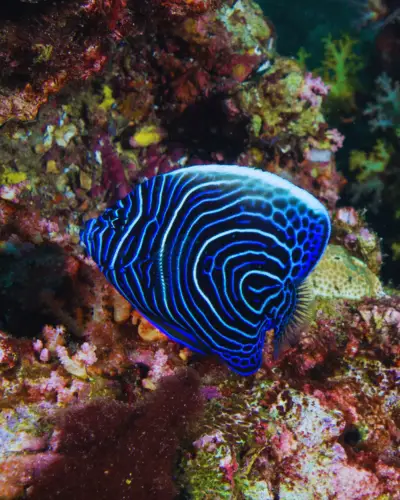
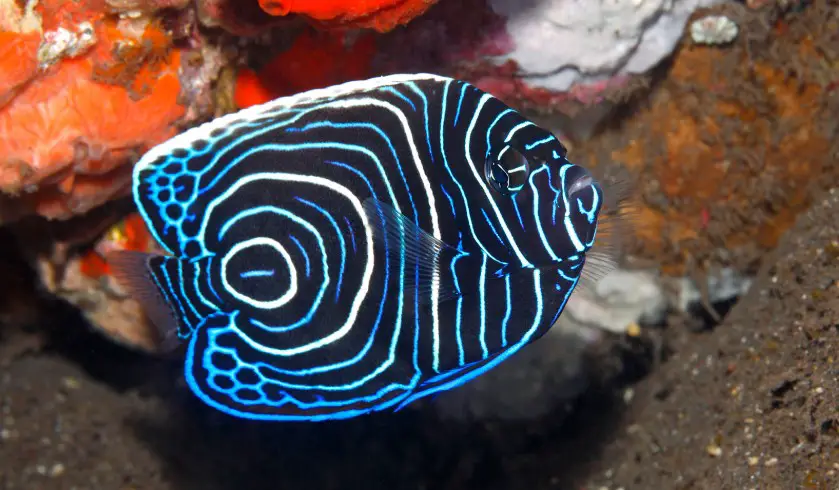
Identifying a juvenile emperor angelfish pomacanthus can be relatively straightforward due to their distinctive coloration. Juveniles exhibit a dark blue body with vertical stripes that are a lighter shade. This coloration serves as a form of camouflage within their natural habitat, which includes coral reefs and lagoons in the Indo-Pacific region.
As they mature, their coloration transforms into the vibrant blue face and yellow horizontal stripes characteristic of adult emperor angelfish. Understanding these color morphs is essential for aquarists who wish to monitor the growth and development of their marine angelfish.
To properly identify a juvenile angelfish, look for the presence of distinctive vertical stripes on a deep blue body. These stripes help differentiate them from other species within the Pomacanthus genus.
Angelfish Juveniles often display a more compact and streamlined body shape, which aids in their swimming agility. As they grow, these vertical stripes will fade, giving way to the bright yellow horizontal stripes of adults.
Observing these changes can provide aquarists with insights into their angelfish’s health and maturation, ensuring they maintain proper care levels throughout their development.
Juvenile Emperor Angelfish Care: From Aquarium to Adult Fish
Caring for juvenile emperor angelfish requires a tailored approach that addresses their specific needs throughout their growth stages. Initially, a well-maintained saltwater aquarium with stable water parameters is vital for their acclimation.
These fish thrive in environments with moderate water flow and enriched habitats that include live rock and coral structures, as they naturally seek shelter in the wild.
Additionally, providing a varied diet that includes high-quality flake foods, pellets, and live foods such as shrimp or brine shrimp will support their nutrition and growth, enabling them to develop into healthy, full-grown adults.
As juvenile angelfish mature, their care requirements evolve. It’s crucial to monitor their dietary intake closely and adjust as needed to ensure they receive a balanced diet that promotes healthy growth. Regular water changes and filtration maintenance are also key components of their care.
Aquarists should be cautious when introducing tank mates; while juvenile emperor angelfish can be relatively peaceful, they may exhibit aggression towards smaller fish or other angelfish species.
Providing plenty of hiding spots in the aquarium will help mitigate territorial disputes as they grow and establish their space within the tank.
What Do Juvenile Angelfish Eat?
Juvenile emperor angelfish have a diverse diet that significantly impacts their growth and health. In their natural habitat, these fish are omnivorous, feeding on algae, coral, and small invertebrates. In a home aquarium, it is essential to replicate this varied diet to promote optimal health.
High-quality marine flakes and pellets are excellent staples, complemented by occasional servings of live or frozen foods such as brine shrimp or mysis shrimp. This combination not only ensures a balanced diet but also encourages natural foraging behavior, which is important for their overall well-being.
Feeding juvenile emperor angelfish requires careful consideration to ensure they receive the right nutrients. A varied diet rich in vitamins and minerals will help showcase their stunning coloration and maintain their energy levels.
To promote healthy growth, aquarists should feed them multiple small meals throughout the day rather than one large feeding. This approach mimics their natural feeding habits and reduces the risk of overfeeding.
By providing a mix of flake and pellet foods, along with occasional treats of fresh or frozen invertebrates, aquarists can ensure that their angelfish pomacanthus remain healthy and vibrant throughout their developmental stages.
How Long Does It Take for Angelfish to Mature?
The maturation process of juvenile emperor angelfish can vary significantly based on environmental conditions, diet, and overall care. Generally, it takes about 12 to 18 months for juvenile angelfish to reach their adult size, which can be up to 12 inches.
However, factors such as tank size, water quality, and the quantity of food provided can influence this timeline. A well-maintained aquarium with stable conditions will promote faster growth and a healthier transformation into their adult coloration and size.
Understanding the maturation timeline of angelfish is crucial for aquarists aiming to provide optimal care. While some individuals may mature faster, others may take longer due to less-than-ideal conditions.
Regular monitoring of their growth and behavior can provide valuable insights into their development. By ensuring that juvenile emperor angelfish receive appropriate care, including a balanced diet and ample space, aquarists can significantly influence their growth rate. Ultimately, patience is key; as these fish transition into adulthood, they will reward careful caretaking with stunning displays of color and grace.
Conclusion
In conclusion, the juvenile angelfish is a remarkable species that can thrive in a well-maintained saltwater aquarium. Understanding their specific care needs, including tank size, diet, and social interactions, is essential for any aquarist looking to raise these fish from juvenile to adult. By providing the right environment and food sources, you can ensure that your angelfish will flourish and display their stunning coloration. As you embark on this journey, remember that patience and attention to detail will yield the best results, transforming your aquarium into a vibrant display of aquatic life.
Ultimately, caring for juvenile emperor angelfish is a rewarding experience that requires commitment and knowledge. With proper care, these fish not only grow into majestic adults but also become an integral part of your aquatic ecosystem. By monitoring their growth, maintaining water quality, and offering a diverse diet, you can enjoy the beauty and grace of Pomacanthus imperator in your home aquarium. As they mature, these fish will not only enhance your aquarium’s aesthetic but also provide a fascinating glimpse into the underwater world, making the effort worthwhile for any dedicated aquarist.
Recommended posts
- Emperor Angelfish: A Complete Guide for Beginners
- Saltwater Angelfish Species: Colors, Sizes & Compatibility