is your Guppy Fish about to Give Birth? Many guppy owners worry about missing the moment their pregnant guppy gives birth. If you have noticed your female guppy hiding, acting differently, or developing a larger belly, you may be wondering whether it’s time to prepare for a new batch of fry. Missing the signs can lead to stressed fish, fry being eaten, or an unprepared aquarium that reduces the survival rate of newborn guppies.
The good news is that guppy fish display several clear signs before giving birth. By learning to recognize these behaviors and physical changes, you can confidently predict when labor is near and create a safe environment for both the mother and her babies. Whether you’re a beginner or an experienced aquarist, understanding the final stages of guppy pregnancy will help you protect your fry and keep your aquarium healthy.
In this guide, you’ll discover the unmistakable signs your guppy fish is about to give birth, learn how long guppy labor typically lasts, and find practical tips on how to prepare your breeding tank, breeding box, or community aquarium. By the end, you’ll know exactly what to expect, when to intervene, and how to maximize the survival of your newborn guppy fry.
Understanding Guppy Pregnancy
Female guppies reach breeding age surprisingly quickly. Once mature, a female housed with males can remain pregnant almost continuously because she is capable of storing sperm and producing several broods without mating again. This remarkable reproductive ability explains why guppy populations grow so rapidly in home aquariums.
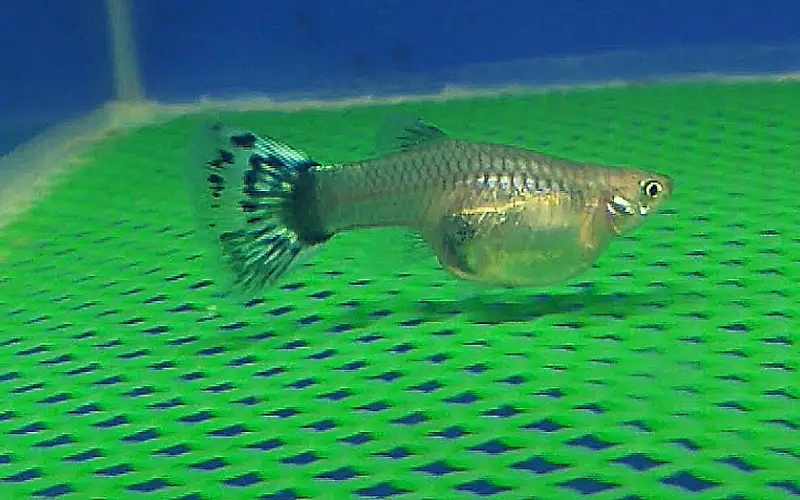
The pregnancy, or gestation period, generally lasts three to four weeks, although water temperature, nutrition, genetics, and stress can slightly shorten or lengthen this timeline.
Observing your fish daily makes it much easier to recognize the subtle changes that happen during pregnancy. A guppy rarely gives birth without warning. Instead, her body gradually transforms, and her behavior changes as delivery approaches.
How to Know If Your Guppy Fish about to Give Birth?
Many new aquarists mistake a well-fed guppy for a pregnant one. While both appear larger than usual, pregnancy causes very distinctive changes.
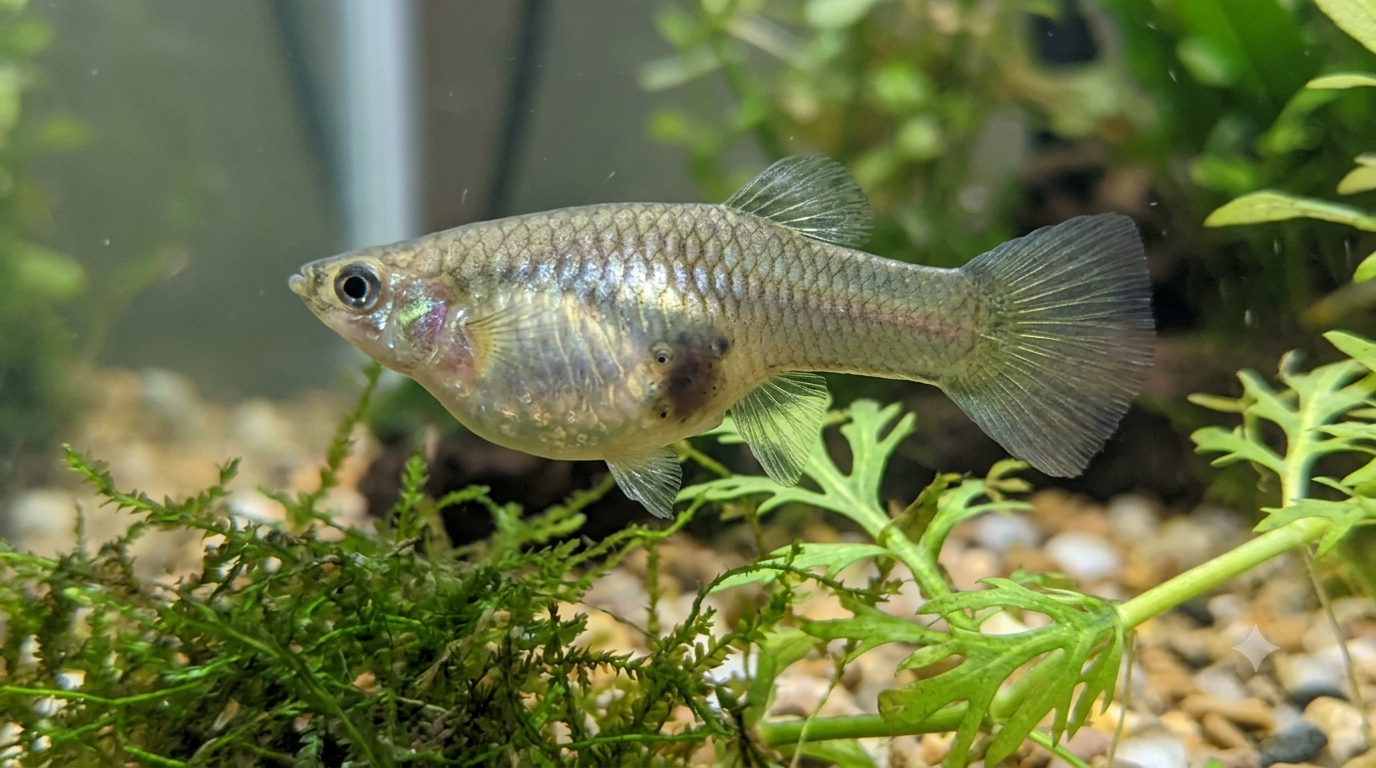
The abdomen grows steadily over several weeks instead of expanding after feeding. Near delivery, the belly becomes noticeably square or box-like rather than simply round. At the same time, the gravid spot—the dark patch near the anal fin—becomes much darker as the fry mature. In lighter-colored guppies, you may even notice tiny black dots that are actually the eyes of the developing babies.
Behavior also provides valuable clues. Pregnant females often spend more time hiding among plants, become less interested in food, breathe faster, or avoid active tank mates. None of these behaviors alone guarantee labor, but when several occur together, birth is usually very close.
What Are the Signs of a Guppy in Labor?
Labor is the final stage before the fry are born. Unlike mammals, guppies don’t have dramatic contractions that are always obvious, but experienced fish keepers notice a clear shift in the mother’s behavior.
A guppy in active labor often stays in one quiet corner of the aquarium, underneath decorations, or inside dense plants. She may gently flex her body every few minutes while breathing more rapidly than normal. Some females remain nearly motionless between contractions, while others swim briefly before returning to their hiding place.
One common misconception is that labor happens instantly. In reality, a female may deliver fry over several hours, and occasionally the process extends through most of the day.
7 Major Signs a Guppy Fish Is About to Give Birth
1. The Belly Becomes Square Instead of Round
This is considered the most reliable physical indicator.
Throughout pregnancy, the abdomen expands gradually. During the last few days, however, the lower portion becomes almost rectangular or box-shaped. The developing fry press against the abdominal wall, giving the fish a noticeably different silhouette.
Many experienced breeders rely on this single feature because it is easier to identify than any other sign.
2. The Gravid Spot Turns Much Darker
The gravid spot is located just above the anal fin.
As pregnancy progresses, this patch changes from gray or light brown to a deep black or dark maroon. In pale-colored guppies, careful observation may even reveal the tiny eyes of the fry through the abdominal wall.
A darker gravid spot usually means the babies have developed significantly and birth is approaching.
3. She Starts Hiding Frequently
Healthy guppies are naturally social fish.
A pregnant female that suddenly isolates herself under decorations, behind filters, or inside thick plants is usually searching for a safe location to deliver her fry. This instinct protects both the mother and the babies from potential predators—even when those predators are simply other guppies sharing the tank.
Providing floating plants such as hornwort, guppy grass, or Java moss gives her comfortable hiding places while also protecting newborn fry.
4. Appetite Decreases
Most pregnant guppies maintain a healthy appetite throughout most of pregnancy.
Shortly before labor, however, many females eat much less or ignore food altogether. This reduced appetite is considered normal if the fish otherwise appears healthy and shows other pregnancy signs.
Avoid overfeeding during this stage because uneaten food quickly reduces water quality.
5. Restlessness and Heavy Breathing
Behavior often changes dramatically during the final hours.
Some females pace around the aquarium before suddenly becoming still. Others repeatedly swim to the surface before returning to hiding places. Faster gill movement and heavier breathing are also commonly reported just before delivery.
Although these signs are common, persistent gasping may also indicate poor water quality, so always check ammonia, nitrite, and oxygen levels if you’re unsure.
6. Body Flexing or Mild Contractions
Just before fry emerge, many females display gentle body bends or rhythmic contractions.
These movements may occur every few minutes as the muscles push the fry toward birth. The contractions are much subtler than those seen in mammals, making them easy to miss unless you’re watching carefully.
Once contractions become frequent, delivery usually follows soon afterward.
7. She Becomes Defensive Around Other Fish
A normally peaceful guppy fish may suddenly chase tank mates away.
This temporary aggression is believed to help protect the chosen birthing location. Even females that never show aggressive behavior may briefly nip at curious fish approaching too closely.
Once labor is complete, most mothers quickly return to their usual temperament.
How to Prepare the Fish Tank When Guppies Are About to Give Birth
Preparation is often more important than the birth itself. Begin by ensuring excellent water quality. Keep ammonia and nitrite at zero, perform small regular water changes instead of large ones, and maintain a stable temperature between 76°F and 80°F (24–27°C) for most community aquariums.
Next, create natural hiding places. Dense live plants such as Java moss, water sprite, hornwort, and floating vegetation dramatically improve fry survival because newborns instinctively swim into cover immediately after birth.
Many beginners wonder whether they should move the mother into a breeder box. While breeder boxes can protect fry, many experienced aquarists recommend avoiding prolonged isolation because it can increase stress. Instead, maintaining a heavily planted aquarium often provides a more natural and less stressful environment. Community discussions among experienced guppy keepers consistently favor dense plant cover over extended confinement unless separation is absolutely necessary.
After the fry arrive, feed them finely crushed flakes, specialized fry food, baby brine shrimp, or microworms several times each day while maintaining pristine water conditions.
Conclusion
Recognizing the signs of a guppy about to give birth becomes much easier with observation and experience. The combination of a box-shaped belly, dark gravid spot, hiding behavior, reduced appetite, restlessness, visible contractions, and temporary aggression provides a reliable indication that labor is near.
The best preparation isn’t constant intervention—it’s providing a stable, clean aquarium with plenty of plants where both the mother and fry feel secure. Healthy water, minimal stress, and natural hiding places usually result in stronger mothers and healthier baby guppies. Watching dozens of tiny fry emerge from a single female is one of the most fascinating moments in fishkeeping, and understanding these signs ensures you’re ready when it happens.
Frequently Asked Questions
1. How long does a guppy stay pregnant?
Most guppies remain pregnant for 21–30 days, although temperature, nutrition, and genetics can slightly affect the duration.
2. How many babies can a guppy have?
A healthy adult female commonly gives birth to 20–60 fry, though large, mature females may produce even more.
3. Should I separate my pregnant guppy?
Not always. A well-planted aquarium is often less stressful than keeping the female confined in a breeder box for long periods.
4. Will adult guppies eat their babies?
Yes. Adult guppies, including the mother, may eat fry if they can catch them. Dense plants significantly increase survival.
5. How soon can a female guppy become pregnant again?
Female guppies can become pregnant again almost immediately after giving birth and may produce multiple broods from stored sperm over the following months.
You might also like
- Pregnant Guppy Not Giving Birth: 3 Causes & Quick Help!
- When to Separate Pregnant Guppy: (A Comprehensive Guide)
- When Can Guppy Fry Go with Adults: (A Comprehensive Guide)