Are you considering adding Freshwater Black Angelfish to your aquarium? Known for their striking black coloration and graceful swimming, these angelfish are a favorite among fish enthusiasts. But what makes them unique, and how can you create the perfect environment for them?
Freshwater Black Angelfish thrive in warm, slow-moving waters with plenty of live plants and hiding spots. They typically live for 8 to 10 years with proper care and can coexist with peaceful tank mates like tetras, gouramis, and corydoras. With the right conditions, they can grow up to 6 inches, making them a stunning centerpiece in any tank.
But there’s more to know before you bring one home! From ideal water parameters to expert-backed care tips, we’ll cover everything to ensure your angelfish thrives. Let’s dive into this care guide for freshwater angelfish and explore the fascinating world of these magnificent freshwater fish!
Freshwater Black Angelfish Species profile
The freshwater black angelfish, a variant of the more common angelfish, is renowned for its deep black coloration and graceful fins. These fish are a part of the cichlid family and have been selectively bred for their unique aesthetics.
In terms of size, black angel fish can grow up to 6 inches in length, requiring an adequately sized aquarium to thrive. They’re known for their feisty nature, especially as they mature, and can be territorial when breeding.
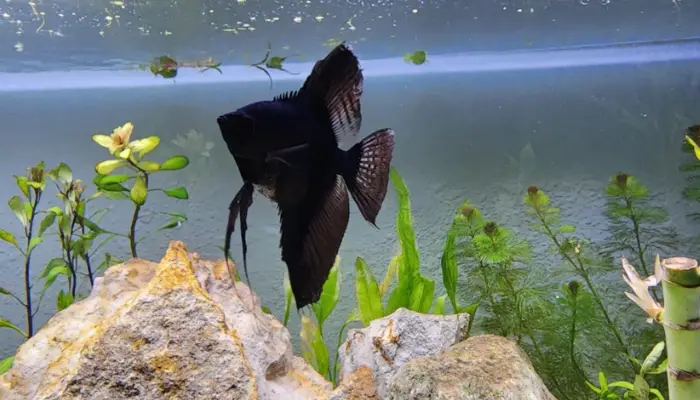
However, they can also coexist peacefully in a community tank if appropriately matched with compatible species. When selecting angelfish, always look for healthy specimens with vibrant colors and active behaviors, as these traits indicate a well-maintained aquatic environment.
These freshwater angelfish are popular for many reasons, including their striking appearance and manageable care requirements. The black freshwater angelfish is often seen as the “feisty angel of the aquarium” because of its lively personality.
They thrive in planted tanks that provide hiding spots and territories for breeding. It’s crucial to ensure that the aquarium water quality remains optimal, with a temperature around 82°F and suitable water hardness levels.
This species readily breeds in captivity, and caring for their fry can be an exciting challenge for aquarists. The black angelfish’s adaptability to various tank conditions makes them a favored choice among fish enthusiasts.
Black Angel Fish Freshwater Habitat
In their natural habitat, black angelfish are found in the slow-moving waters of the Amazon River basin. They thrive in environments that offer plenty of vegetation, which serves as both shelter and a spawning ground.
When setting up a community aquarium for black angelfish, it is essential to replicate this habitat to encourage their natural behaviors. A well-planted tank not only enhances visual appeal but also provides necessary hiding spots for shy fish.
Additionally, maintaining clean water through regular water changes is vital for the health of these freshwater fish. Optimal water parameters, such as temperature and pH, must be monitored to create a stable environment where black angel fish can flourish.
Creating an ideal habitat for black angelfish involves careful consideration of tank size, decorations, and water flow. A minimum of 20 gallons is recommended for a small group, allowing room to swim and establish territories.
To mimic their natural surroundings, incorporate driftwood, rocks, and a variety of aquatic plants. This setup facilitates not only the well-being of the angelfish but also benefits other tank inhabitants.
Regular water testing and changes are critical to ensure that ammonia and nitrite levels remain low, promoting a healthy ecosystem. By understanding their habitat needs, aquarists can provide a suitable environment for black angelfish to thrive.
Black Angelfish Freshwater Lifespan and Tankmates
The lifespan of black angelfish typically ranges from 10 to 15 years when cared for properly. Their longevity is greatly influenced by factors such as water quality, diet, and social interactions within the tank.
Providing a high-quality nutritious consisting of flake food, frozen foods, live fish food such as bloodworms, brine shrimp, daphnia will enhance their health and vitality. In terms of tank mates, black angelfish can be kept with various community fish, such as guppies, black skirt tetras, and certain catfish, as long as they are of similar size and temperament.
It is crucial to avoid overly aggressive or territorial species, as these can lead to stress and aggression among tank inhabitants.
When setting up a community aquarium with black angels fish, it’s essential to choose compatible tank mates that won’t disrupt their peaceful nature. Dwarf cichlids and other non-aggressive fish make excellent companions, as they share the same water requirements and can coexist harmoniously.
Monitoring interactions is vital, especially during breeding periods when angelfish may become more territorial. Ensuring that there are plenty of hiding places and space in the aquarium can help reduce conflicts.
By selecting suitable tank mates and providing a balanced diet, aquarists can enjoy the beauty and charm of black angelfish for many years.
Are Black Angelfish Rare?
Black angelfish are not considered rare in the aquarium trade, but their availability may vary depending on location and demand. They have been bred extensively in captivity, resulting in a consistent supply for aquarists.
However, certain variations, such as the platinum or albino angelfish, may be rarer and can command higher prices.
When searching for black angelfish, it’s important to source them from reputable breeders or stores that prioritize the health and quality of their fish. This ensures you are selecting healthy specimens that are more likely to thrive in your aquarium.
While black angelfish are widely available, the popularity of specific color morphs can fluctuate. The demand for unique varieties, such as the platinum angelfish, can sometimes overshadow the classic black variant.
It’s essential to educate yourself about the fish and assess their health before making a purchase. By picking healthy angelfish, you contribute to the responsible breeding practices that help maintain their population in the aquarium trade.
Ultimately, black freshwater angel fish remain a staple in the hobby, providing beauty and interest to community tanks worldwide.
What Are Black Angelfish Called?
Black angelfish are commonly referred to simply as “black angelfish,” but they are also known by their scientific name, Pterophyllum scalare. This name is derived from their elegant shape and distinctive fin structure, which sets them apart from other freshwater fish.
As a variant of the angelfish family, they share many characteristics with other types of angelfish, including their cichlid lineage and social behaviors. The term “freshwater angelfish” encompasses various color morphs, including the black, albino, and platinum varieties, each appealing to different tastes among aquarists.
In the aquarium hobby, these fish are often affectionately referred to as the “feisty angels” due to their vibrant personalities and unique appearance. Their black coloration provides a stunning contrast against the lush greens of planted tanks, making them a favorite choice for many aquarists.
Understanding the terminology used in the hobby can help fish keepers communicate better and make informed decisions about their aquatic companions. By recognizing the various names and classifications, aquarists can appreciate the diversity within the angelfish species and select the right fish for their community aquarium.
Are Black Angelfish Aggressive?
Black angelfish can exhibit territorial behaviors, particularly during breeding seasons, but they are not inherently aggressive. Their temperament can vary based on individual personality and environmental factors.
In a well-maintained community tank with ample space and hiding spots, black angelfish are generally peaceful and can be kept in a community aquarium with other fish. However, they may display aggression towards smaller or more timid fish, especially when establishing their territory.
Therefore, it is crucial to select tank mates carefully, opting for species that are similarly sized and share compatible temperaments.
To minimize aggression, providing a spacious aquarium with plenty of hiding places is essential. Black angel fish are known to be territorial, particularly when spawning, and can become semi aggressive if they feel threatened.
Monitoring their interactions with other fish in the community aquarium will help ensure a harmonious environment. If aggression does occur, consider rearranging the tank layout to disrupt established territories or adding more hiding spots to reduce stress.
By understanding their temperament and providing the right conditions, aquarists can facilitate a peaceful coexistence in their tanks.
Conclusion
In summary, the freshwater black angelfish is a stunning and popular choice for aquarists seeking to enhance their community tanks. With their elegant appearance and manageable care requirements, these cichlids can thrive in various environments. Understanding their habitat, lifespan, and temperament is critical for providing the best care. Although veil tail black angelfish are not rare, selecting healthy specimens from reputable sources is essential. By carefully choosing tank mates and maintaining optimal water conditions, aquarists can enjoy the beauty and personality of these feisty angels for many years to come.
Ultimately, the black freshwater angelfish remains a beloved species in the aquarium hobby, captivating fish keepers with its charm and grace. Whether you are a novice or an experienced aquarist, incorporating black angelfish into your aquarium can bring joy and fascination. With proper care, attention to their habitat needs, and understanding of their behaviors, these fish can flourish and become a highlight of any community aquarium. Embrace the adventure of keeping black angel fish and explore the beauty they bring to your underwater world.
Recommended posts
- Top 5 Common Angelfish Diseases & How to Cure Them Fast
- Angelfish Different Types: Stunning Varieties for Your Tank
- Saltwater Angelfish Species: Colors, Sizes & Compatibility
- Are Freshwater Angelfish Schooling Fish: (Do They Swim in Groups!)
- Do Angelfish Bite? Myths, Facts & How to Keep Them Peaceful
- Where Do Angelfish Live? Explore Their Natural Habitats
- Bulgarian Green Angelfish: Care, Habitat & Breeding Guide