Have you ever wondered How to Breed Guppies, and why these tiny, tropical fish multiply so easily when you set the right conditions? Many new fish hobbyist ask how they can guide the process instead of leaving it to chance. Let’s explore the simple steps that turn your aquarium into a safe and thriving breeding habitat.
Guppy breeding starts with choosing healthy pairs, creating a stress-free tank, and providing nutrient-rich foods that boost fertility. To breed guppies, keep male and female guppies together in a well-maintained tank.
The process includes setting the right water temperature, adding dense plants for hiding, and separating fry once they arrive. These steps ensure fast growth, vibrant colors, and a steady, healthy population.
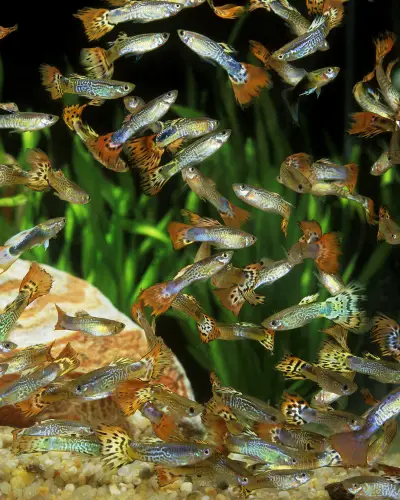
Plenty of enthusiasts follow the insights of experts like Dr. Paul Loiselle, who shaped modern aquarium breeding practices. You will discover how his research aligns with practical methods you can apply today.
So, if you’re ready to raise strong, lively fry, dive into the full guide and unlock the secrets behind successful guppy breeding! This guide will provide detailed instructions on how to breed guppys successfully. Let’s jump right in!
Do Guppies Breed Easily?
Yes—guppies breed extremely easily, which is why they are often recommended as the perfect starter fish for beginners who want to try their hand at fish breeding. Guppies are livebearers, meaning the females give birth to fully formed, free-swimming fry rather than laying eggs. This drastically reduces the complexity of the breeding process.
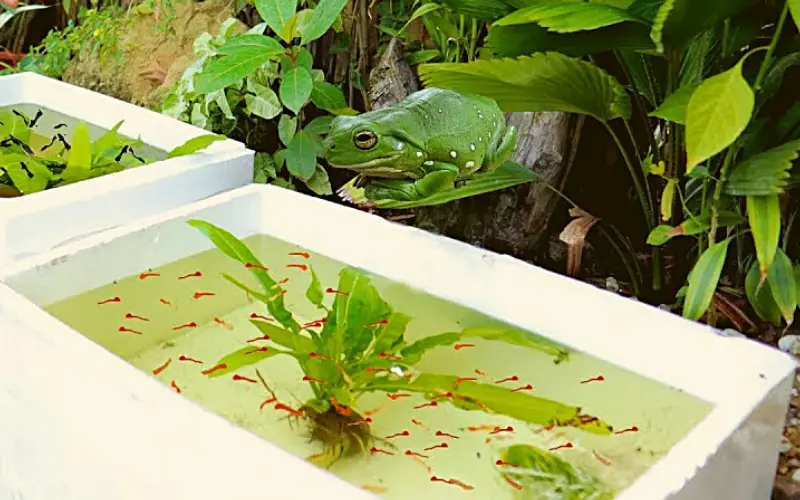
Here are the key reasons guppies reproduce so readily:
1. They Have a Short Gestation Period
A female guppy’s pregnancy lasts only 21–30 days. This means you can expect new fry nearly every month from each female.
2. They Can Store Sperm
Female guppies are capable of storing sperm from a single mating for up to six months, allowing them to produce multiple broods without repeated mating sessions.
3. They Breed Naturally in Community Tanks
Unlike other species that require special triggers, guppies happily breed in normal aquarium conditions as long as the water is clean and stable.
4. They Thrive in Small, Peaceful Environments
Guppies do not require large or heavily planted tanks for breeding—although plants do increase fry survival.
5. They Have Large Brood Sizes
A single female can give birth to anywhere from 10 to 60 fry, depending on her age, health, and environment.
Overall, guppies are almost too easy to breed—so easy, in fact, that overpopulation can be an issue if not properly managed.
What Age Do Guppies Start Breeding?
Guppies begin breeding at an incredibly young age. In optimal conditions:
Male Guppies
- Become sexually mature at 6–8 weeks old
- Begin developing their colorful patterns and gonopodium (their reproductive organ)
Female Guppies
- Become sexually mature at 10–12 weeks old
- May become pregnant immediately after maturation if males are present
Important Note
You should separate males and females around 4–5 weeks old if you want to control the breeding process. Otherwise, they will start mating too early, potentially leading to smaller, weaker fry due to early pregnancies.
How to Breed Guppies Fast Like a Pro?
If your goal is not just to breed guppies but to maximize fry production, improve survival rates, and possibly create high-quality strains, you need a more strategic approach. Below is a step-by-step guide used by professional and commercial guppy breeders.
1. Start With High-Quality Breeding Stock
Selecting your breeders is the most important step. Choose:
- Healthy, active fish
- Vibrant colors and strong patterns
- Females with a large, rounded bodies
- Males with well-defined fins and symmetry
Avoid guppies that show signs of:
- Bent spines
- Torn fins
- Dull coloration
- Lethargy
High-quality breeding stock produces stronger fry and reduces the risk of genetic deformities.
2. Maintain Ideal Water Parameters
Stable, clean water dramatically increases breeding frequency.
Optimal water conditions:
- Temperature: 76–82°F (24–28°C)
- pH: 7.0–7.8
- Hardness: Medium to hard water (8–12 dGH)
- Ammonia & Nitrites: 0 ppm
- Nitrates: Under 20 ppm
Raising the temperature slightly (around 80°F/26.5°C) can stimulate faster breeding—just make sure oxygen levels stay high.
3. Use a Separate Breeding Tank
While guppies can breed in a community tank, fry survival plummets because adults often eat the babies.
A dedicated breeding tank should be:
- 10–20 gallons
- Lightly planted with guppy grass, Java moss, or hornwort
- Equipped with a gentle sponge filter
The sponge filter prevents fry from getting sucked in and maintains good biological filtration.
4. Maintain a 1:2 Male-to-Female Ratio
For optimal breeding:
- Use 1 male for every 2–3 females
This prevents females from becoming stressed by excessive male attention and ensures healthier pregnancies.
5. Increase Live Foods for Conditioning
Conditioning your breeders with high-protein foods significantly boosts:
- Fertility
- Brood size
- Health of the babies
Best conditioning foods:
- Baby brine shrimp
- Daphnia
- Microworms
- Bloodworms (occasionally)
- High-quality flake or pellet food for guppies
Feed small amounts 2–3 times per day for the best results.
6. Monitor Females for Pregnancy
Signs your female is pregnant:
- Large belly that becomes squarer over time
- Darkening gravid spot near the anal fin
- Increased hiding behavior
- Slightly more aggressive feeding
A female that is close to giving birth will often isolate herself in plants or in a corner of the main tank.
7. Isolate Pregnant Females (Optional)
To maximize fry survival, move the female to a maternity tank or breeder box a few days before she gives birth.
Avoid moving her too early, as confinement can cause stress.
Once she gives birth, remove the female immediately to prevent predation on her fry.
8. Optimize Fry Survival
To raise large batches of healthy fry:
Provide hiding spots
Thick plants like Java moss dramatically increase survival.
Feed fry frequently
4–6 small meals per day of:
- Baby brine shrimp
- Powdered fry food
- Crushed flake food
Perform frequent water changes
10–20% every 1–2 days keeps fry tanks ultra-clean and stimulates growth.
Separate fast-growing males
At 4–5 weeks, remove young males to prevent uncontrolled breeding and dominance issues.
9. Selectively Breed for Traits
If you want to breed show-quality or high-value guppies:
- Choose your best males and females
- Line breed specific traits (color, tail shape, size)
- Avoid inbreeding for more than 2–3 generations
- Introduce new bloodlines periodically
This produces stronger, healthier, and more vibrant offspring.
What Can Guppies Breed With?
Guppies can interbreed with certain closely related species within the Poeciliidae family. However, crossbreeding should be done intentionally and with knowledge of potential outcomes.
Species Guppies CAN Breed With
✔ Endler’s Livebearers (Poecilia wingei)
- The most common and successful cross
- Produces hybrids with vibrant and unique patterns
✔ Some Poecilia reticulata varieties
- These are simply different types of guppies
Species Guppies CANNOT Breed With
✘ Mollies
✘ Platies
✘ Swordtails
✘ Tetras
✘ Rasboras
Should You Crossbreed?
While crossbreeding with Endlers is possible, it’s often discouraged by purists because it creates hybrids that can’t be classified as pure guppies or pure Endlers.
If you’re breeding guppies for profit or show purposes, maintaining pure strains is usually best.
Commonly Asked Questions about Guppies Breeding at Home (FAQs)
What is the best way to spawn guppies?
To spawn guppies effectively, place one male and two to three females in a breeding tank. Ensure the environment is comfortable, with plenty of hiding places and a gentle filter to minimize stress, promoting successful breeding among your guppy parents.
How can I ensure quality guppies?
To ensure quality guppies, focus on selective breeding. Choose guppy parents with desirable traits you are looking for, such as vibrant colors and healthy fin shape. Regularly cull inferior fish to maintain the genetic quality of your guppy population.
What should I feed my guppies during breeding?
Feed your guppies a balanced diet during breeding. Include standard flakes, vegetable flakes, and occasional treats like frozen brine shrimp or boiled spinach to enhance their health and vitality, which is crucial for successful spawning and the health of the fry.
What happens after guppy fry are born?
After guppy fry are born, they should be left in the tank with the adult fish for a short period. However, it’s advisable to move the fry to another tank to avoid cannibalistic behaviors from the adult fish and ensure their survival.
How do I set up a breeding tank for guppies?
To set up a breeding tank, choose a 10g tank with adequate filtration and aeration. Add fake plants and hiding places where guppy fry can take refuge. Maintain stable water conditions, and monitor the tank to prevent stress among the adult fish.
What is the ideal temperature for breeding guppies?
The ideal temperature for breeding guppies is between 76°F and 82°F (24°C to 28°C). Maintaining this temperature range helps promote spawning activity and ensures that both adult fish and guppy fry thrive in a comfortable environment.
How many fry can guppies produce at once?
Guppies can produce a significant number of fry at once, often between 20 to 40 fry per birthing session. The exact number varies based on the size and health of the female guppy, as well as environmental conditions in the breeding tank.
How should I care for newborn fry?
Newborn fry should be fed small amounts of food such as hatched brine shrimp or finely crushed flakes. Ensure they have access to food multiple times a day, and maintain clean water to support their greatest growth potential during their early development.
Conclusion
Breeding guppies is one of the easiest and most enjoyable activities in the aquarium hobby. Once you understand How to Breed Guppies, you’ll discover that even beginners can produce healthy fry and grow vibrant, thriving guppy colonies with minimal effort. Whether your goal is to enjoy the natural reproduction process, create stunning new guppy strains, or even start breeding professionally, guppies offer endless possibilities.
By choosing quality breeding stock, maintaining optimal water conditions, feeding a nutrient-rich diet, and giving the baby guppies a safe environment to grow, you’ll dramatically enhance your success rate. With consistency and good care, your guppies will reward you with beautiful, colorful offspring month after month.
You might also like
- How Many Guppies Should Be Kept Together? (Explained)
- How to Breed Guppies for Color? (Breeding of Guppy fish Guide)
- Can Guppies Breed with Mollies? Molly Guppy Hybrid (Solved)
- Do Guppies Lay Eggs or Give Birth? (A Comprehensive Guide)
- How Often Do Guppies Have Babies? (A Comprehensive Guide)
- How Many Guppies in a 5 Gallon Tank for Optimum Health?
- Can I Put 2 Pregnant Guppies Together Safely? (Solved)