How to Breed Guppies the Right Way? Guppies are one of the easiest aquarium fish to breed, but raising healthy fry takes a little planning. To breed guppies successfully, keep a healthy male with two or three females in a cycled, planted tank, maintain stable water around 76–78°F, and give newborn juveniles plenty of hiding places.
Guppies are livebearers. Instead of laying eggs, the female carries the young inside her body and gives birth to free-swimming fry. That makes breeding guppies exciting for beginners, but it also means a small tank can become crowded faster than most people expect.
This success with guppies guide walks you through the whole process: how guppies mate, how to set up a breeding tank, how to spot pregnancy, how to protect offspring, and how to raise them into strong adult fish. You will also learn how to avoid the most common mistake—ending up with more guppies than you can properly care for.
What You Need Before Breeding Guppies:
You do not need a complicated tank setup to raise guppies. What matters most is stable water, gentle filtration, and somewhere for fry to hide. A cycled tank will always outperform a new tank that has not had time to establish beneficial bacteria.
Before buying fish, decide what you want from the project. Do you simply want a few fry to survive in a community aquarium? Or do you want to raise as many healthy guppies as possible? The answer changes the equipment you need.
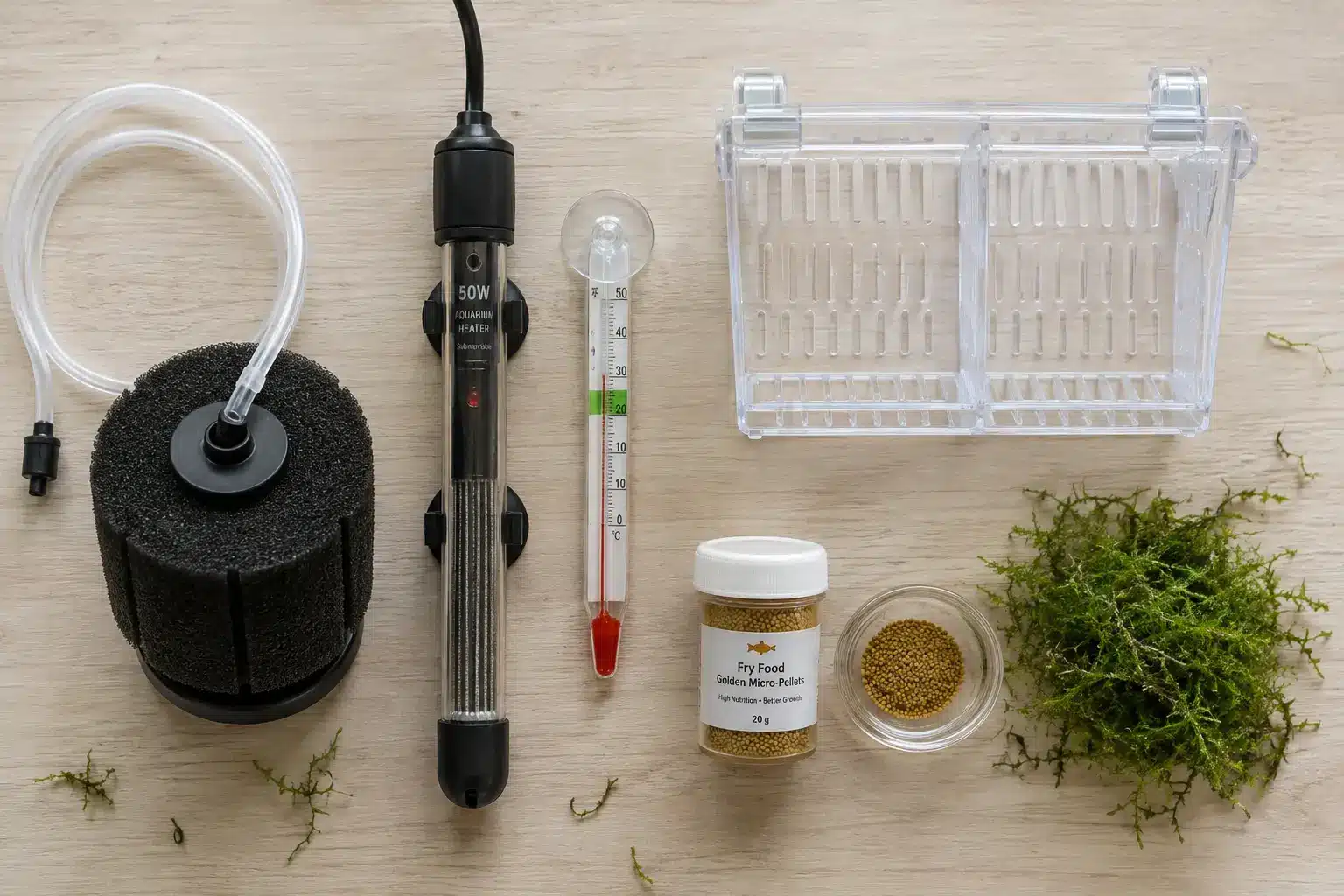
Basic Guppy Raising Aquarium Equipment
-
A cycled aquarium: A 10-gallon tank can work for a small breeding group, but a 20-gallon long tank gives you more room and more stable water.
-
Heater and thermometer: Guppies tolerate a range of temperatures, but stable warmth encourages breeding and helps fry grow. wikipedia
-
Sponge filter or intake cover: Newborn fry are tiny and can easily be pulled into a standard filter.
-
Live plants: Java moss, guppy grass, hornwort, and floating plants give fry immediate cover.
-
Breeding box or fry tank: Useful if you want to protect fry rather than leave survival to chance.
-
Fry food: Powdered juveniles food, finely crushed flakes, baby brine shrimp, microworms, or infusoria.fishforever.co
-
Water test kit: Ammonia and nitrite should stay at 0 ppm. Nitrate should be kept low with regular water changes.
Water conditions that work well
Do not chase perfect numbers to the point of constantly changing the water. Guppies usually breed best in a stable, clean aquarium—not one that is being adjusted every few days.
How Do Guppies Breed?
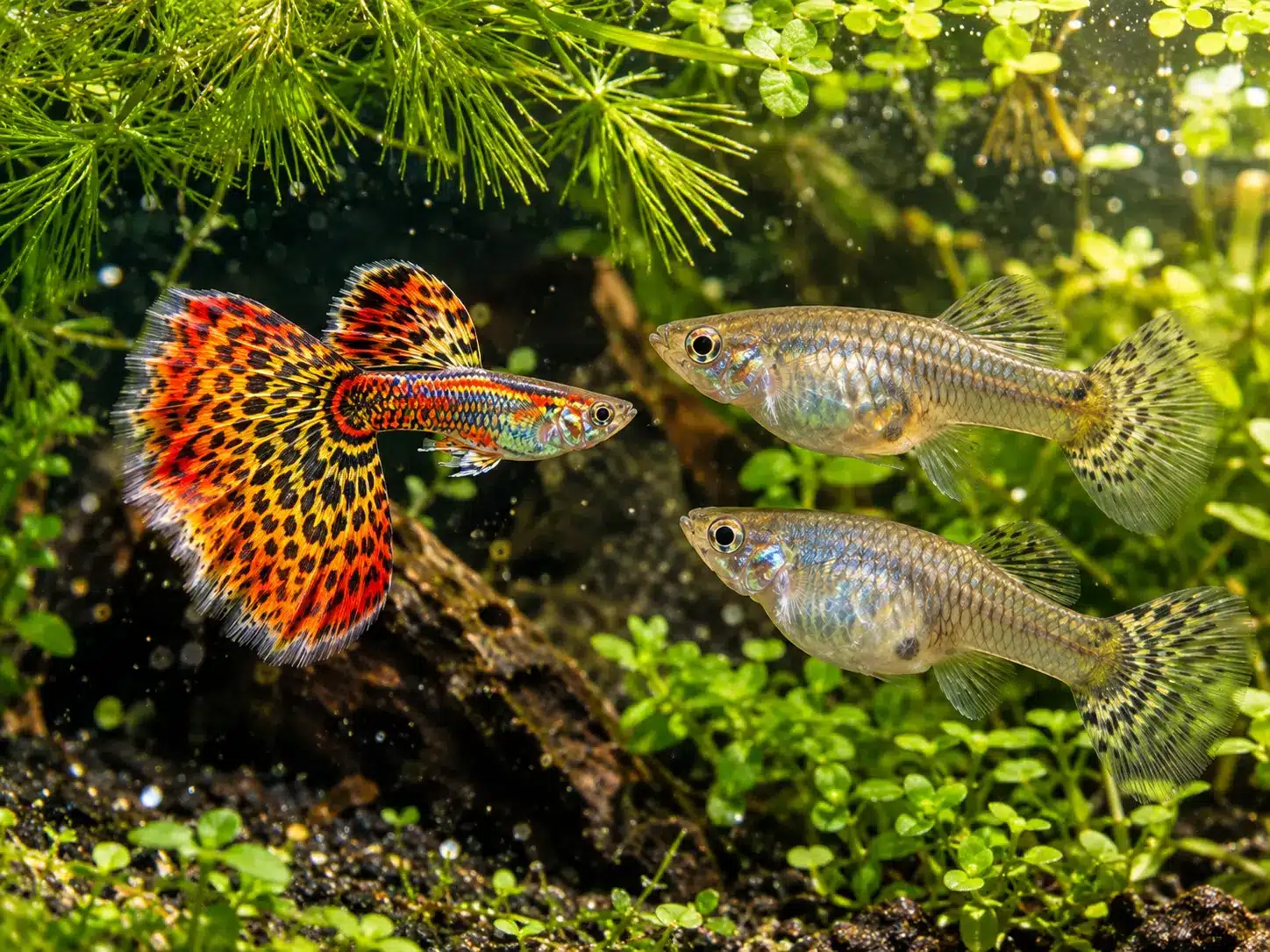
How to breed guppies for beginners tips – Guppies reproduce through internal fertilization. The male has a modified anal fin called a gonopodium, which he uses to transfer sperm to the female. After mating, the female can store sperm and produce more than one brood from a single encounter.
This is why a female guppy may give birth even after the male has been removed from the tank. It surprises many new fish hobbyist, but it is completely normal.
How do guppies mate?
Male guppies are persistent. They display their fins, follow females around the tank, and try to position themselves for mating. Some chasing is normal, but too much of it can wear females down.
That is why most breeders use one male with two or three females. It spreads the male’s attention and gives each female time to rest.
A good reproducing trio is simple:
-
1 healthy male
-
2–3 healthy females
-
A cycled tank with plants and gentle filtration
-
No aggressive tank mates
How fast do guppies breed?
Fast. Under good conditions, a female can produce a new brood roughly every 21–30 days. Some females may take closer to 35 days, especially if the water is cooler or the fish is young or stressed.tfhmagazine+1
Brood size varies a lot. A smaller or younger female may drop only a handful of fry, while a larger, well-fed female can produce 20–50 or more. That is why it is better to plan for fry before the first birth rather than after.
Setting Up a Guppy Breeding Tank
Set up the breeding tank before you add the fish. A mature, planted aquarium is much safer for fry than a bare tank that is still finding its balance.
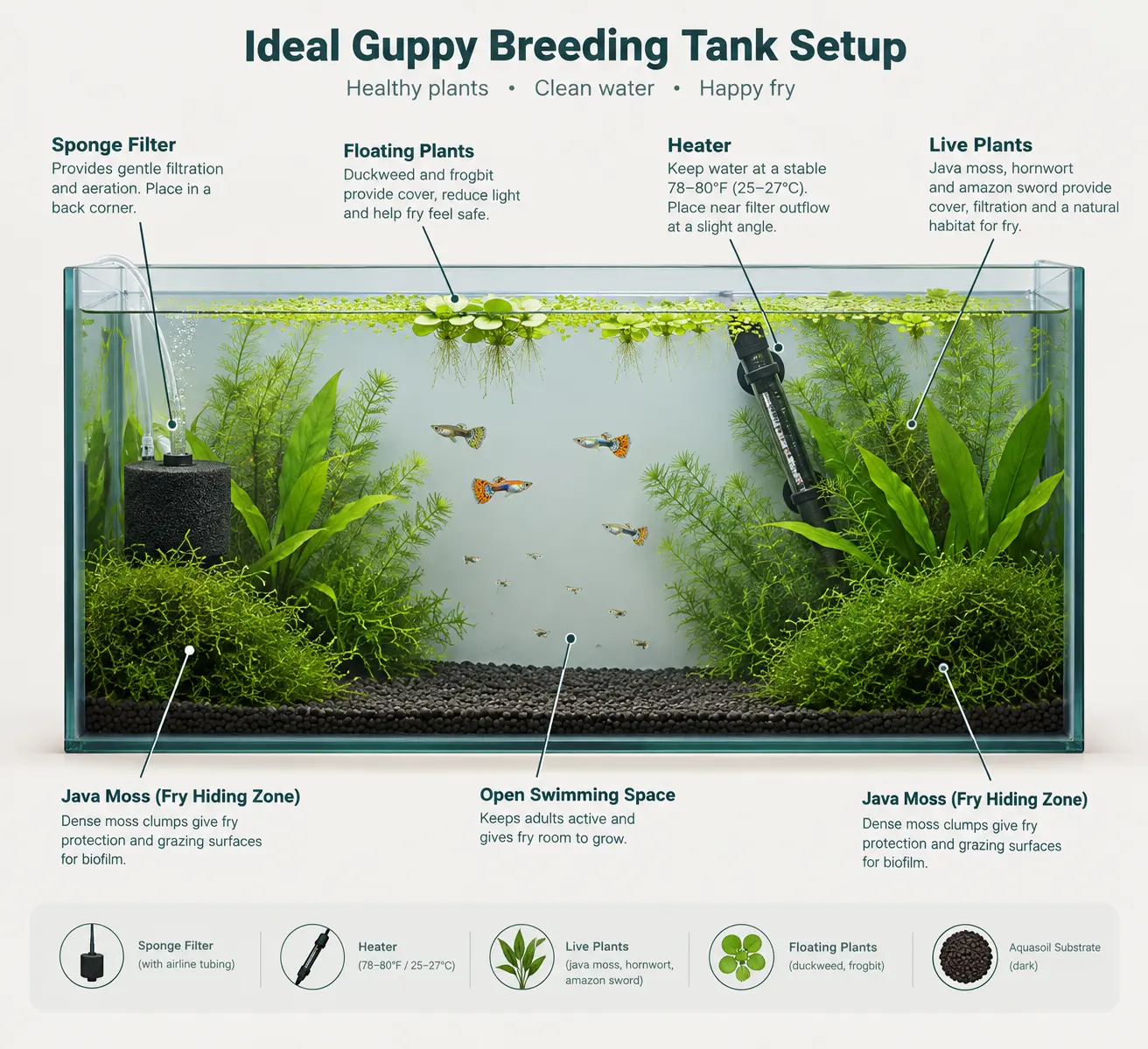
Step 1: Cycle the tank first
Do not add breeding fish to a brand-new tank. Let the filter establish beneficial bacteria first, then test the water until ammonia and nitrite stay at 0 ppm.
Fry are especially sensitive to poor water quality. Even a small ammonia spike can stunt their growth or kill them.
Step 2: Add plants and cover
Fine plants such as java moss and guppy grass are ideal because newborn fry can hide among them. Floating plants are also useful because fry often swim upward right after birth.
If you are using a community tank, plants are not just decoration. They are the difference between a few fry surviving and most of them disappearing overnight.
Step 3: Choose healthy breeding stock
Pick active fish with straight bodies, intact fins, clear eyes, and a good appetite. Avoid fish that look thin, sit at the bottom, gasp at the surface, or show damaged fins.
It is tempting to raise every guppy you own, but starting with a small, healthy group gives better results than overcrowding the tank with random fish.
Step 4: Feed a varied diet
Feed adults a quality flake or micro-pellet diet, then add frozen or live foods such as brine shrimp or daphnia a few times a week. Better nutrition supports fertility, pregnancy, and fry growth.
Feed small amounts once or twice a day. If food is still floating after a couple of minutes, you are probably giving too much.
How to Tell if a Guppy Is Pregnant
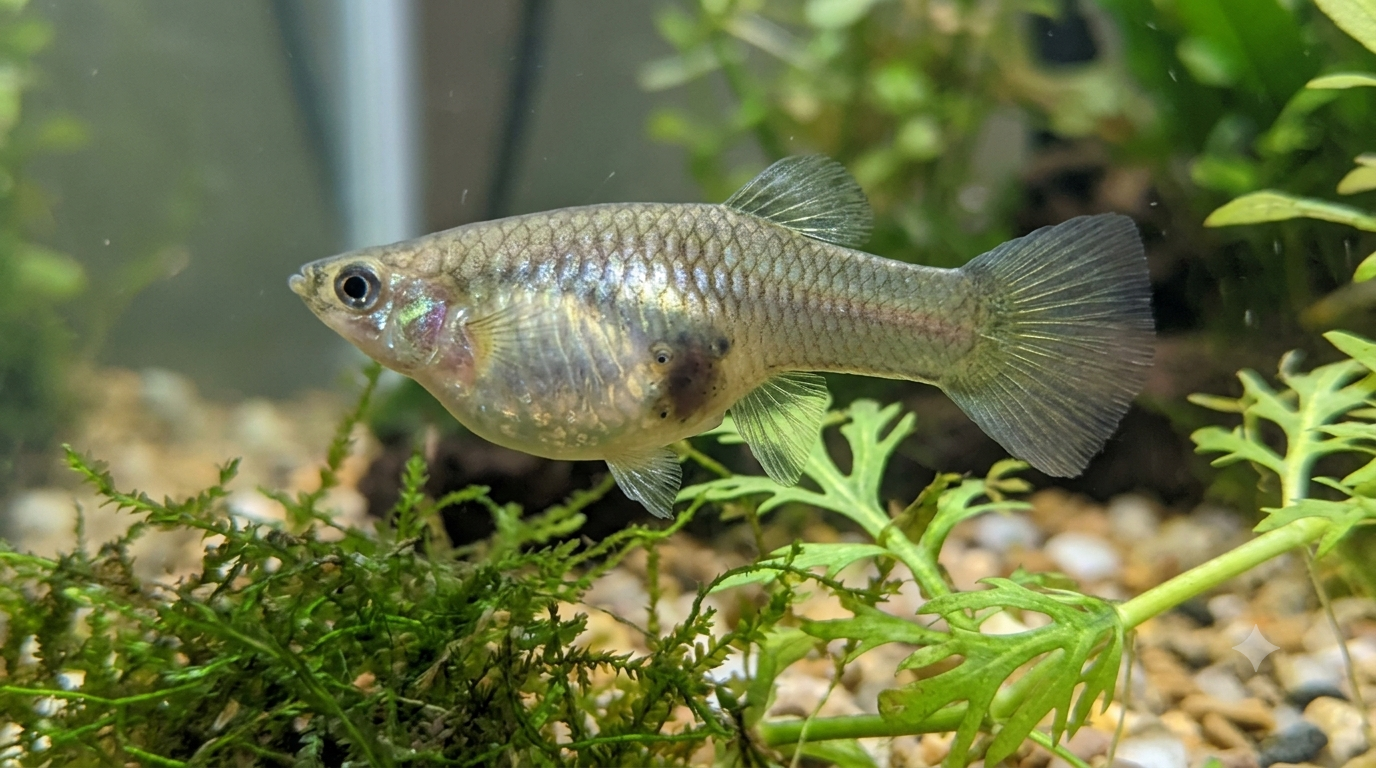
A pregnant guppy fish develops a rounded, boxy belly and a darker gravid spot near the anal fin. As she gets closer to giving birth, she may hide more, swim less, and lose interest in food.
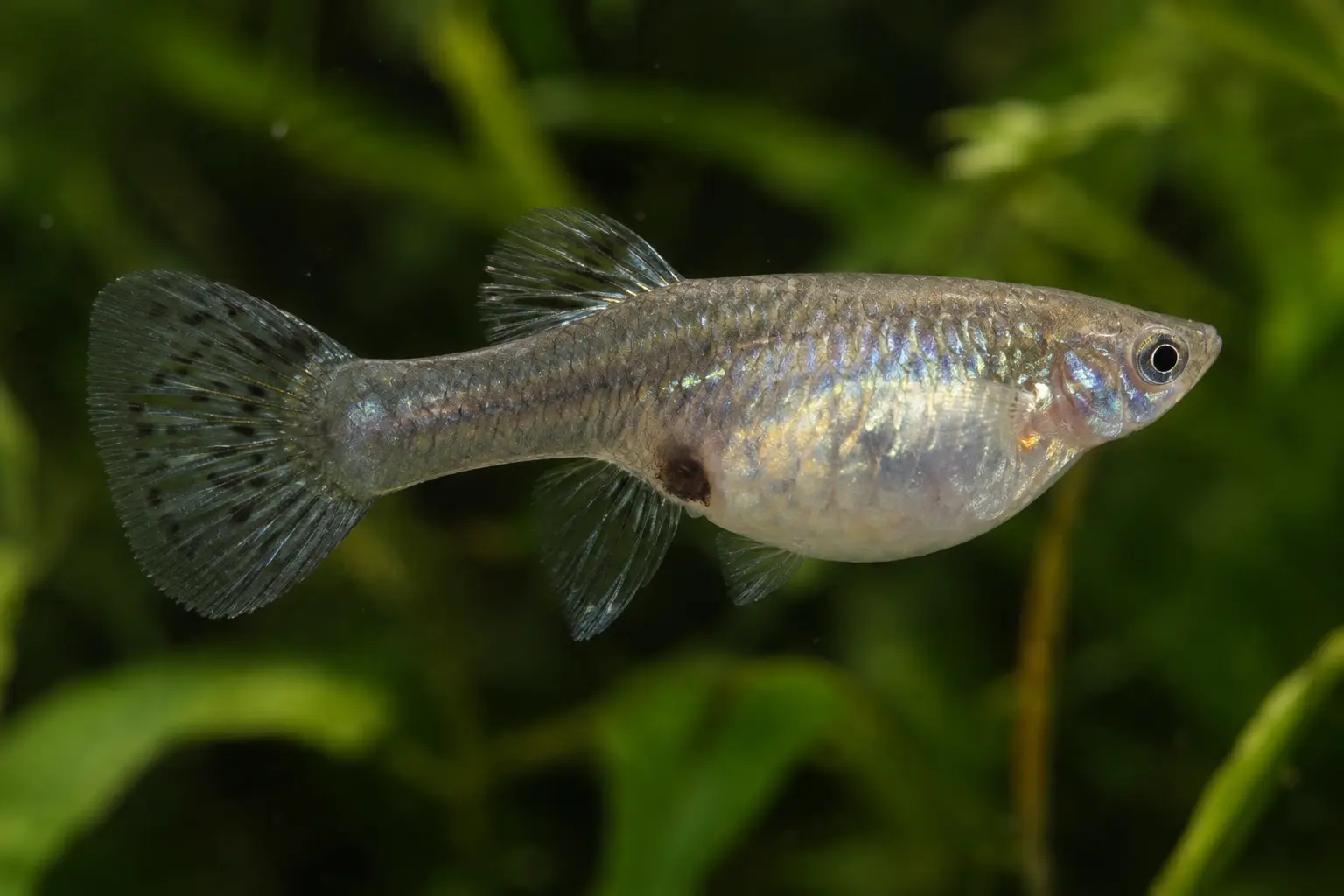
Signs that birth is close:
-
A square or boxy belly shape
-
A darker, larger gravid spot
-
Hiding near plants or tank corners
-
Reduced appetite
-
Restless swimming or sitting still near cover
Most pregnancies last around 21–30 days, though temperature, age, health, and stress can shift the timing.tfhmagazine+1
How to Protect Guppy Juveniles?
Adult guppies will eat newborn fry, including the mother. This is not cruelty; it is normal fish behavior. If you want to raise your fingerlings, you need to give them a head start.
There are three practical ways to do this.
Option 1: Let them breed in a planted tank
This is the easiest method. Leave the female in a densely planted aquarium and let nature take its course. Java moss, guppy grass, and floating plants give fry places to hide.
The downside is that you will not save every fry. Some will be eaten, especially in a community tank.
Option 2: Use a breeding box
Place the pregnant female in a breeder box or net inside the main tank. Once she gives birth, remove her and return her to the main aquarium.
Breeding boxes work, but they are small. Do not leave the female in one for days on end. Use it only for the final days of pregnancy and the birth itself.
Option 3: Use a separate fry tank
This is the best option if you want to raise strong, healthy guppies. Move the pregnant female to a small, cycled nursery tank with a sponge filter and plenty of cover. After she gives birth, remove her and raise the fry separately.
A separate tank gives you control over feeding, water changes, and growth. It also prevents adult fish from eating the fry.
How to Raise Guppy Fry?
How do you breed guppies juveniles can swim and eat right away, but they need tiny meals and clean water. Frequent small feedings help them grow quickly and evenly.
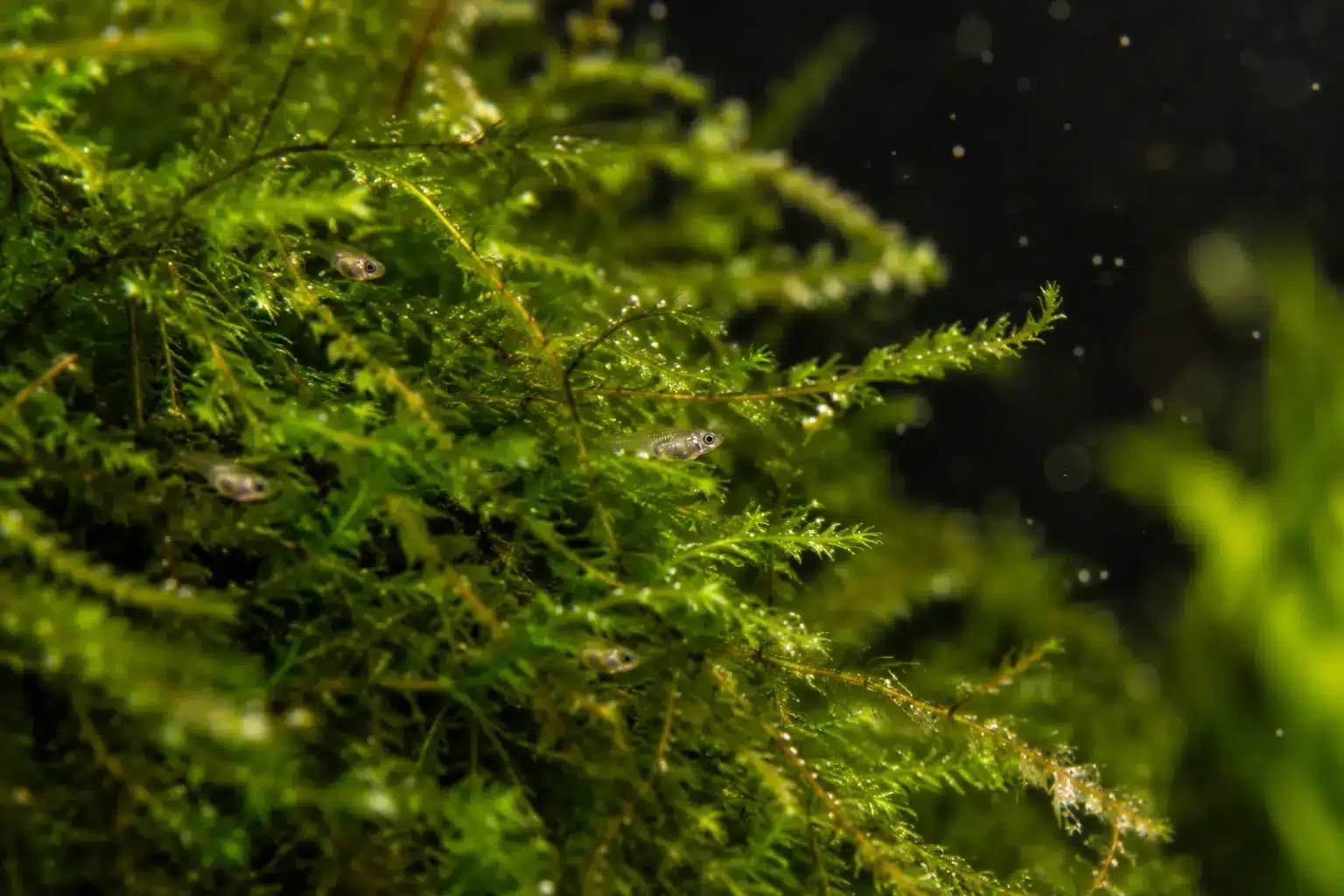
What to feed guppy fry – care for guppies offspring
For the first few days, use food small enough for tiny mouths: powdered fry food, infusoria, or flake crushed into a fine dust.
After the first week or two, baby brine shrimp and microworms are excellent growth foods. As the fry get bigger, introduce finely crushed flakes and micro pellets.
Do not overfeed. Uneaten food rots quickly and can wreck water quality, which is one of the fastest ways to lose juveniles.
Water changes and filtration
Use a sponge filter or cover the intake of your normal filter. Fry can survive in a well-maintained tank, but they are vulnerable to strong flow and poor water quality.
Small, frequent water changes are better than one huge change. A 10–20% change two or three times a week is a good starting point, especially if you are feeding several times a day.
Guppy Fry Growth Timeline
Guppy fry grow quickly when they are fed well and kept in clean water. Most start showing early color between four and eight weeks, and males usually develop stronger patterns and brighter colors as they mature.
Once young males are large enough to avoid being eaten, you can move them back to the main tank. If you want to control breeding, separate males from females as soon as you can tell them apart.
Common Guppy Breeding Problems: for healthy guppies
Most guppy spawning problems come back to three things: water quality, fry protection, and overstocking.
How to Prevent Guppy Overpopulation?
Guppies can reproduce continuously, so responsible fishkeepers need a plan for fry before they start breeding guppies. Decide early whether fry will be kept, gifted, traded, sold locally, or used to maintain a particular color line.
A few practical controls:
-
Keep only males if you do not want breeding.
-
Separate young males from females once sex becomes visible.
-
Avoid adding every new batch of fry to the same tank.
-
Connect with a local fish club or aquarium store before producing large numbers.
-
Never release guppies into ponds, lakes, or natural waterways.
Breeding Guppies for Color and Quality
How to breed Guppy fish for color? If you want more than random fry, selective breeding is where guppy keeping becomes genuinely interesting. Choose breeding males and females pairs based on the traits you want to strengthen, such as tail shape, body color, pattern, or fin size. reddit
Keep simple records: which fish were paired, when fry were born, how many survived, and which youngsters developed the best color and form. Serious breeders often keep separate grow-out tanks and select only the strongest fish for the next generation.reddit+1
Avoid breeding closely related fish repeatedly without a plan. Line breeding can help fix desirable traits, but careless inbreeding can reduce vigor and increase deformities.
Guppy Fish Breeding Tips for Beginners
-
Start with a cycled tank, not a new uncycled aquarium. higuppy
-
Use one male with two or three females to reduce stress.
-
Keep the temperature stable rather than constantly adjusting it.
-
Add aquatic plants before fry arrive, not after.
-
Feed adults and juveniles varied, protein-rich foods in small portions.
-
Remove the mother from a breeding box soon after birth.
-
Keep a simple breeding log with dates, brood sizes, and growth notes.
-
Plan for fry before the first birth, because guppies reproduce quickly.
FAQs About Breeding Guppies
How do guppies breed?
Male guppies fertilize females internally using a modified anal fin called a gonopodium. Females then give birth to live, free-swimming offspring instead of laying eggs.
How fast do guppies breed?
A healthy female can give birth approximately every 21–30 days when water conditions and nutrition are good.tfhmagazine+1
How many fry do guppies have?
A female guppy commonly produces 20–50 fry per brood, though brood size depends on her size, age, health, and genetics.fishforever.co
Do guppies eat their babies?
Yes. Adult guppies, including the mother, may eat newborn fry. Dense plants, breeding boxes, or a separate fry tank greatly improve survival.
How long is a guppy pregnant?
Guppy pregnancy usually lasts about 21–30 days, though it can stretch closer to 35 days depending on temperature, health, stress, and individual variation.tfhmagazine+1
What is the best male-to-female ratio for breeding guppies?
Use one male for every two or three females. This reduces constant chasing and gives females time to recover between pregnancies.
What do baby guppies eat?
Feed newborn guppies infusoria, powdered fry food, or finely crushed flakes. After one to two weeks, baby brine shrimp and microworms support faster growth.
Can guppies breed in a community tank?
Yes, but fry survival is lower because other fish and adult guppies may eat them. Dense plants help, while a breeding box or fry tank gives you more control.
Conclusion
How do guppy fish breed? Guppies are probably the easiest aquarium fish to breed, but that does not mean every breeding attempt goes smoothly. Many beginners get their first batch of offspring, then lose most of them because the tank was new, the filter pulled them in, or the adults treated the babies like food.
The difference between raising a few random fry and producing quality guppies usually comes down to preparation. Get the tank cycled before adding fish, keep the water warm and steady, and give fry somewhere to hide from the moment they are born. A separate tank makes life much easier if you are serious about keeping most of the brood alive.
Once you have a few successful batches, selective breeding becomes the interesting part. Pick the healthiest fish, keep notes on color and fin shape, and avoid breeding closely related fish over and over. Guppies do not spawn like egg-laying fish; females give birth to live fry, often every month or so. That is exciting, but it can fill a tank faster than most people expect.
Start with one male and two or three females, watch how your fish behave, and build from there. The best guppy breeders are not the ones who produce the most fry. They are the ones who raise healthy fish and know when to slow down.