How many fry do guppies have at once? A healthy adult female guppy usually gives birth to 20–40 fry in one birth. Some females produce only a few babies, while large, well-fed adults can sometimes have 50 fry or more; exceptional broods may reach 100 or higher.
The exact Guppy litter size depends mainly on the female’s age, body size, genetics, nutrition, and aquarium conditions.
If you have a pregnant guppy, prepare before she gives birth. Guppies are livebearers, so they do not lay eggs; they release free-swimming newborn fry directly into the aquarium.
Adult guppies—and many other fish—will eat tiny fry, so hiding places or a separate tank can make a major difference in survival.
How Many Fry Do Guppies Have in One Birth?
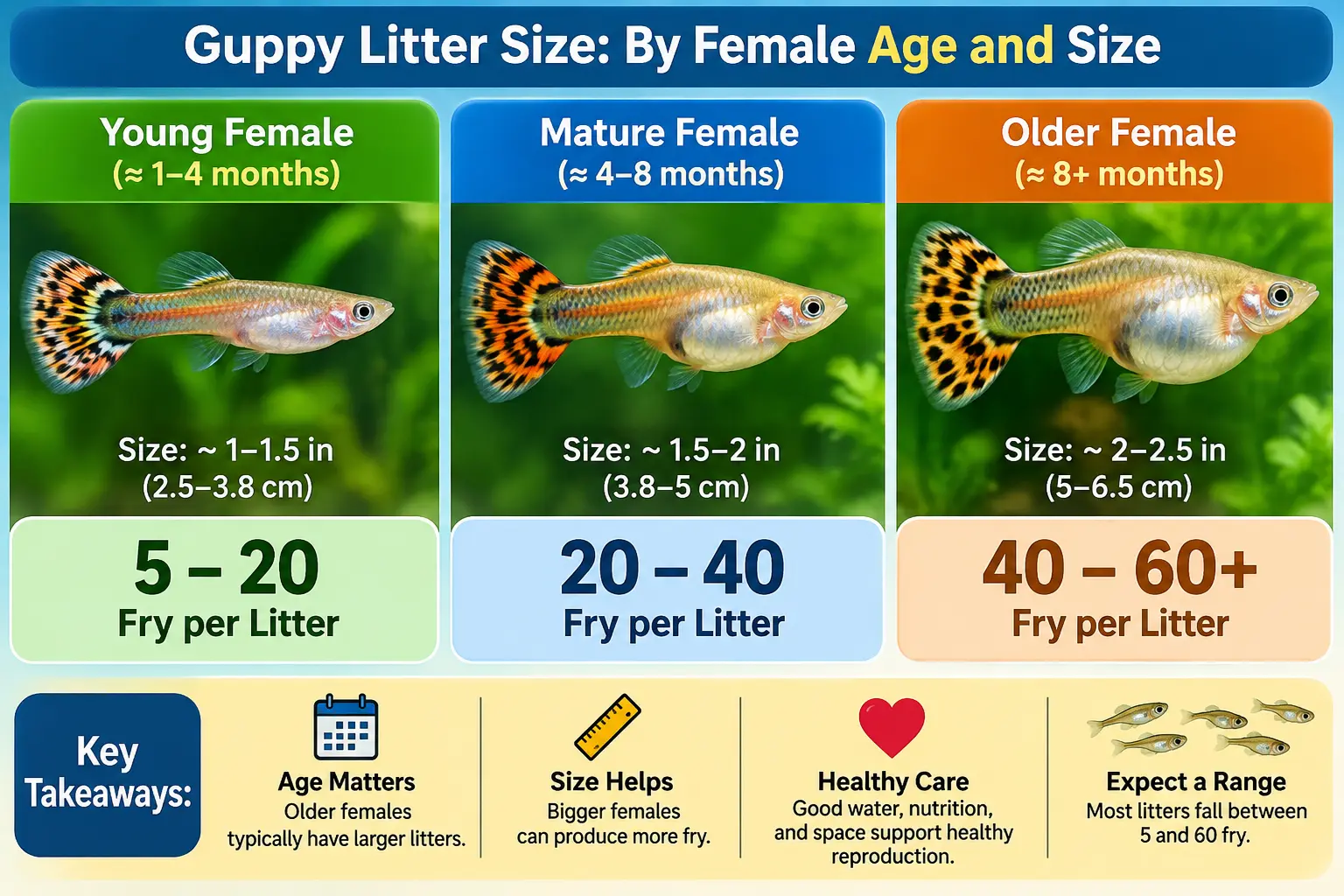
Most guppy fish have 20–40 fry per brood. A young or small female may drop 5–20 babies, while a mature female with plenty of room in her body can produce 40 fry or more. In rare cases, a large healthy female may give birth to more than 100 fry.
Guppies are livebearers, which means the female carries developing young inside her body rather than laying eggs. When she gives birth, the fry are born fully formed and can swim soon afterward.
| Type of female guppy | Typical number of fry per birth |
|---|---|
| Young or first-time mother | 5–20 fry |
| Average healthy adult | 20–40 fry |
| Large, well-fed adult | 40–60 fry |
| Exceptionally large female | 50–100+ fry |
These numbers are helpful guides, not promises. Even two adult guppies from the same tank can have very different brood sizes.
What Is the Average Number of Baby Guppies in a Litter?
The average number of baby guppies in a litter is usually around 20–40, especially for a healthy mature female. Scientific and aquarium references commonly describe domesticated guppy broods as 10–40 fry, with larger females often producing several dozen.
If you are wondering how many fry can a guppy have, think of the female’s body as the main limit. A bigger female has more space to carry developing young, so she can often produce more fry per birth than a small or young fish.
A brood of 30 fry can grow quickly. In a crowded aquarium, that means you may soon need a plan for extra fish, such as a larger tank, a separate grow-out tank, or new homes for the young guppies.
What Factors Affect How Many Fry a Guppy Has?
Several factors determine how many fry a guppy produces during pregnancy, including her age, size, genetics, health, diet, and stress levels. A guppy’s genetics and body size play a major role in brood size, but proper care also matters.
Well-fed females with stable water conditions, plenty of swimming space, and minimal stress tend to produce healthier fry. Factors such as water temperature, overcrowding, disease, and access to nutritious foods can also influence pregnancy and reproductive success.
Understanding these factors can help you prepare your aquarium for each new batch of baby guppies and improve their survival rate. Let’s explore what influences brood size, how to recognize a healthy pregnant guppy, and what you can do to help her deliver healthy fry.
Female Guppy Age and Size
Female guppies usually produce more fry as they mature. A first-time mother often has a smaller brood because her body is still growing and has less space for developing young.
A mature female guppy with a strong body condition can carry more fry. Very old females may produce smaller broods again as their reproductive condition changes.
Genetics and Health
Genetics influence body size, fertility, color strain, and how many young a female can carry. A strong, healthy fish from a productive breeding line may consistently have larger broods than a weak or poorly conditioned fish.
Nutrition matters too. A female that is well fed with a varied diet has more energy to support a healthy pregnancy. Offer quality flakes or micro pellets plus occasional live or frozen foods such as baby brine shrimp and daphnia.
Water Quality and Aquarium Conditions
Clean, stable water supports a healthy pregnancy. Stress from poor water quality, sudden temperature changes, overcrowding, or constant chasing by male guppies can lead to smaller broods, early birth, or health problems.
Use a reliable aquarium test kit—often called a master test kit—to check ammonia, nitrite, nitrate, and pH. Regular partial water changes remove waste and help prevent toxins in the tank from building up. A stable, clean tank provides a better environment for both the pregnant female and her fry.
How Many Fry Do Young Guppies Have Compared to Adults?
Young guppies often have fewer fry than adult guppies. A female’s first brood may contain only 5–20 babies, while an adult female commonly produces 20–40 or more.
| Female type | Usual brood size | What it means |
|---|---|---|
| Very young female | 2–10 fry | Her body is still developing |
| First-time mother | 5–20 fry | Smaller first brood is normal |
| Adult female | 20–40 fry | Most common range |
| Large mature female | 40–60+ fry | More body space and energy reserves |
Do not breed a female too early. Let her grow to a healthy adult size before allowing repeated fish breeding, because early and frequent pregnancies can put unnecessary strain on her body.
Can Guppies Have More Than 100 Fry at Once?
Yes, but it is uncommon. Some references report that a female guppy can drop 2–200 fry, while a typical brood is much smaller—often about 30–60 fry.
A brood over 100 fry is more likely in a large, mature, well-fed female with excellent water conditions. Even then, the female may not release every baby at once. Some fry may be born over several hours, and a stressed female can take up to 8–12 hours or longer to finish the birthing process.
Do not expect 100 fry from every pregnancy. A realistic expectation for many home aquariums is 20–40 healthy fry per birth.
How Often Do Guppies Give Birth to Fry?
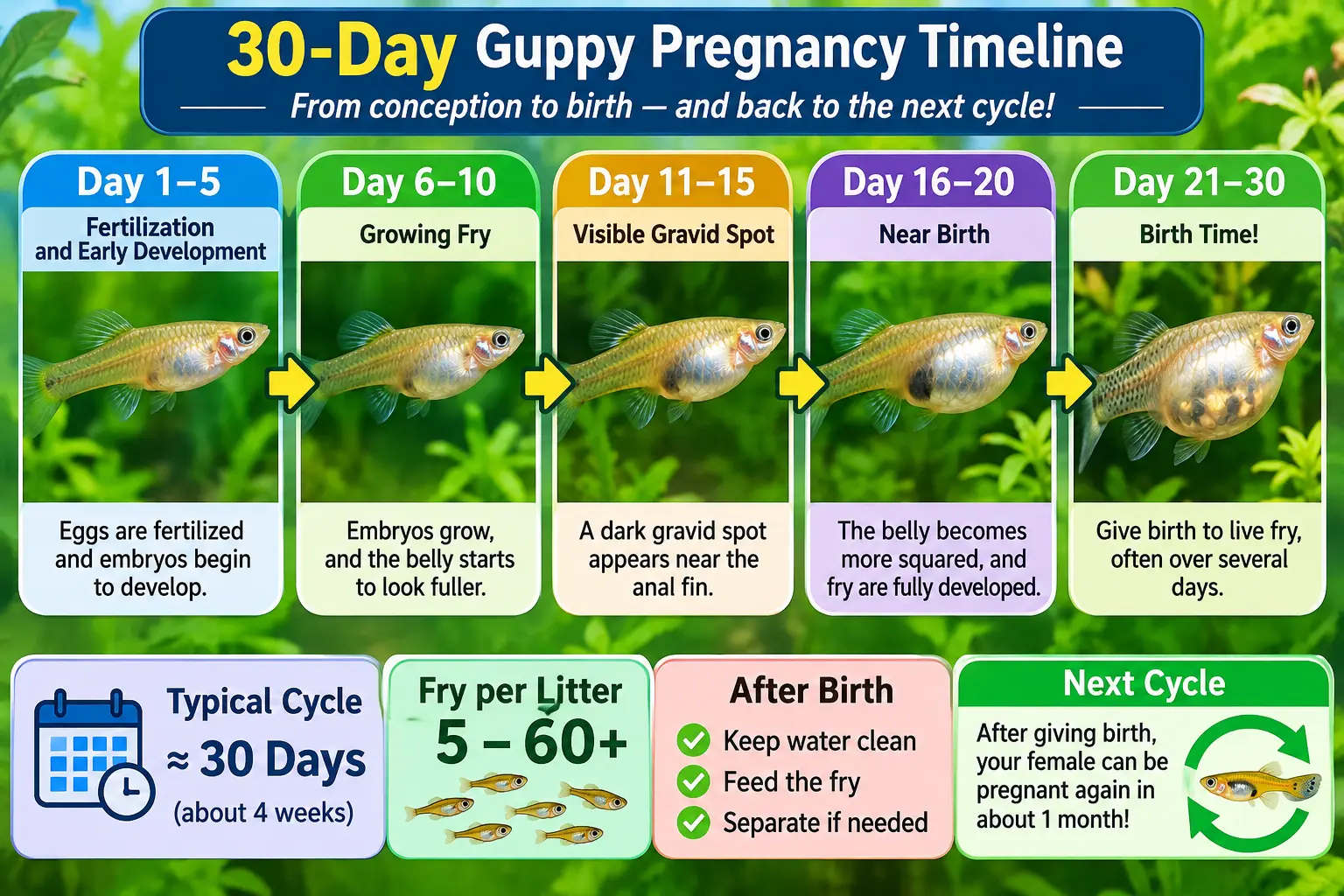
A female guppy can give birth roughly every 21–30 days when conditions are good. Many keepers see a new brood about once a month, although temperature, health, food, and stress can change the timing.
The gestation period for guppies is often around 22–26 days, but it can vary. Warmer, stable water and good nutrition generally support normal development, while poor conditions can delay or disrupt the cycle.
Female guppies can store sperm after mating. That means a single female may continue to produce batches of fry for several months even if you remove the male guppies from the aquarium.
How Many Baby Guppies Survive After Birth?
The number born is not the same as the number that survive. In a community aquarium, many newborn fry are eaten by other fish, including adult guppies and sometimes their own mother.
Survival improves when fry have dense cover, access to tiny food, and protection from hungry tank mates. Java moss, guppy grass, and dense floating plants give newborn fry places to hide. A sponge filter is also useful because it provides gentle filtration without pulling tiny fish into the intake.
A separate fry tank usually gives the best results. It lets you control food, water quality, and predators while the young fish grow large enough to live safely with adult guppies.
Do Guppies Give Birth to All Their Fry at Once?
Usually, no. A guppy gives birth to live young one at a time, often with short pauses between babies. Most births finish within a few hours, but stress can extend the process to 8–12 hours.
Do not keep netting or chasing the female during labor. Move her to a birthing tank or breeder box before she shows clear signs of labor if you plan to separate her, then leave her alone while she gives birth. Stress can interrupt the birthing process and may harm the mother or fry.
Newborn fry may look curled at first, then uncurl and begin swimming. Healthy fry usually swim actively, while weak or stillborn young may sink.
How Can You Help Guppy Fry Survive and Grow?
Baby guppies face several challenges in their first few weeks, including hungry tankmates, poor water quality, and inadequate nutrition. With the right care from day one, you can protect your fry and give them a much better chance of survival.
To help guppy fry survive and grow, provide a safe nursery, stable water conditions, frequent feedings, and proper filtration. Feed them small amounts of high-quality fry food three to five times a day, keep the water clean, and prevent adult guppies from eating them.
Want to raise your guppy fry faster, reduce losses, and help them develop vibrant colors and strong bodies? From choosing the right food and tank setup to maintaining water quality and spotting early health problems, these practical tips will help you care for your baby guppies at every stage. Let’s explore how to give your fry the best possible start.
Provide Hiding Places for Baby Guppies
Adult fish often eat fry, so cover is essential. Add dense floating plants, java moss, guppy grass, or fine-leaved plants before the female gives birth. These give newborn fry safe places to hide from adult guppies and other tank mates.
A breeding box or breeder box can protect fry inside the main tank, but it should not be crowded. For the best fry care, use a properly cycled separate tank with gentle filtration, stable temperature, and plenty of cover.
Choose the Right Food for Guppy Fry
New fry have tiny mouths, so feed them finely crushed flakes, powdered fry food, or baby brine shrimp. Live foods such as baby brine shrimp and daphnia are excellent because they are nutritious and easy for small fish to hunt.
Feed very small amounts several times a day. Remove uneaten food promptly, because leftovers can foul the water quickly in a small fry tank. higuppy
Maintain Safe Water Conditions
Keep the aquarium warm, clean, and stable. Perform frequent small water changes rather than large disruptive changes, especially in a fry-only tank. Use dechlorinated water that matches the tank temperature closely.
A sponge filter protects weak swimmers from strong filter suction. Keep lighting around 8–12 hours per day, and remove dead fry quickly so they do not add waste or toxins to the tank. lovetoknow
How Many Fry Can One Female Guppy Produce in a Year?
A single female guppy can produce a surprising number of young in one year. If she has a brood of 20–40 fry about once a month, she may produce roughly 240–480 fry per year under good conditions.
That estimate assumes regular births and healthy care. In reality, the total changes with the female’s age, rest periods, diet, water quality, and whether you separate males and females. Because females can store sperm, even one female that arrived already pregnant from a pet shop can produce more than one brood.
Plan before you breed guppy fish. A few females can quickly fill a 10-gallon tank or larger aquarium with young fish, so decide early whether you will keep, rehome, trade, or sell the extras.
FAQs
How often do guppies give birth?
Healthy female guppies often give birth every 21–30 days, or about once a month. They can store sperm, so they may have several broods after one mating.
How many babies do guppies have the first time?
A first-time mother commonly has 5–20 fry. The number can be lower or higher depending on her size, age, health, and care.
How long are guppies pregnant?
The gestation period for guppies is usually 21–30 days. Many pregnancies fall around 22–26 days, depending on temperature and the female’s condition.
How many babies can a guppy have at once?
Most guppies have 20–40 fry at a time. Large, healthy females may have 50 fry or more, and rare broods can exceed 100.
How many babies do guppies have in a year?
One female may produce about 240–480 fry per year if she gives birth monthly and averages 20–40 fry per brood. Actual numbers vary widely.
Do guppies lay eggs?
No. Guppies do not lay eggs. They are livebearers and give birth to live, free-swimming fry.
Will adult guppies eat their babies?
Yes. Adult guppies, including the mother, may eat newborn fry. Dense plants, a breeder box, or a separate tank helps keep fry safe.
Can a guppy have babies without a male in the tank?
Yes. A female can store sperm for months, so she may give birth to more than one brood after a male is removed.
How do you know when guppies will give birth?
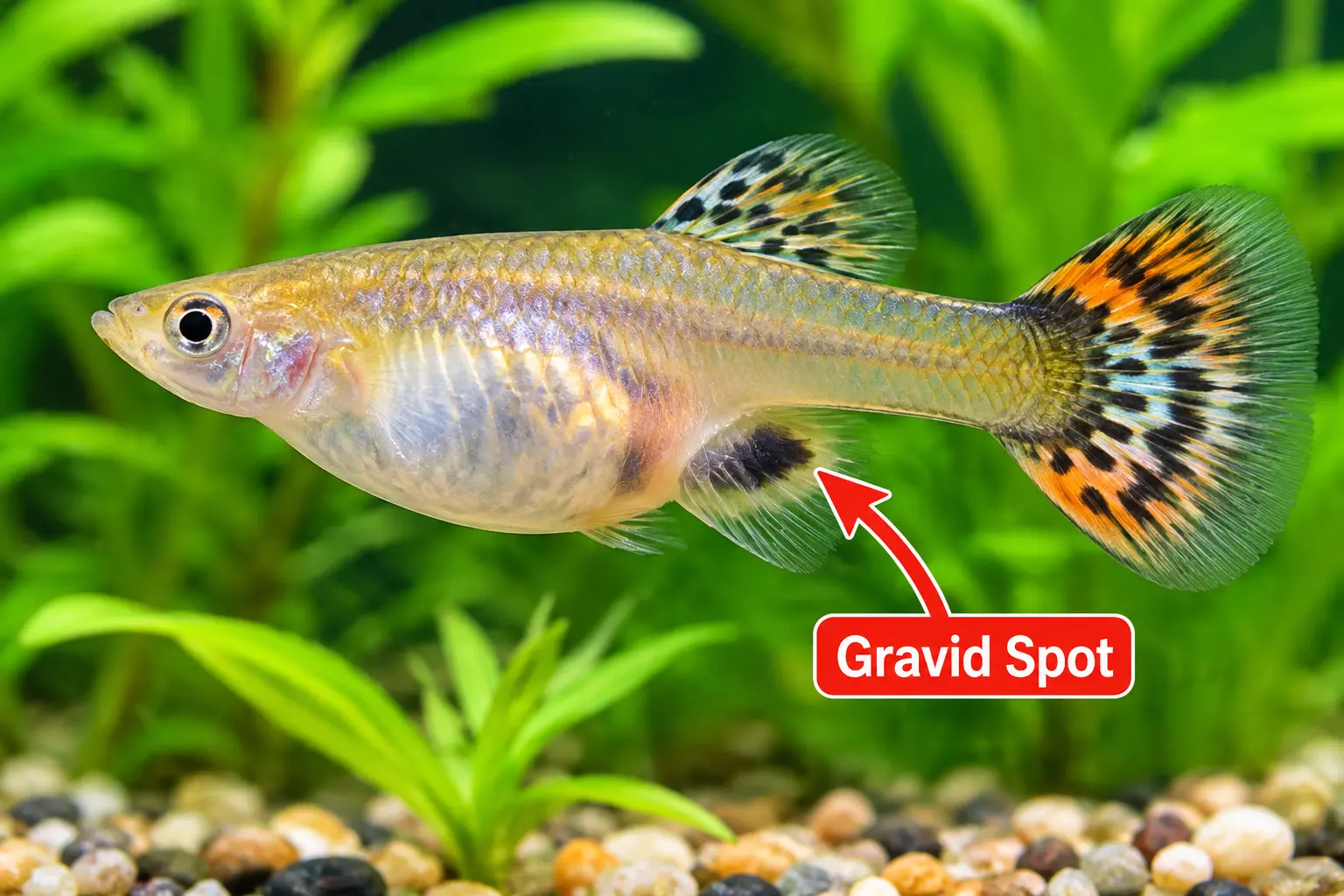
Look for a dark, enlarged gravid spot near the anal fin, a squared-off belly, hiding behavior, and reduced appetite. A guppy may give birth within days once these signs appear; do not squeeze her during the fish birth.
How long before guppy fry can be released?
Guppy fish fry are free-swimming at birth, but keep them protected until they are too large for adult mouths—usually about 4–5 weeks. Avoid placing them near a betta fish or other predator before then.
What affects how many guppy fry survive?
Survival depends on hiding cover, clean water, tiny food, and predators. Dense floating plants, a sponge filter, frequent water changes, and baby brine shrimp help many fish survive; adults may eat fry, so a separate grow-out tank improves results.
How fast will guppy fry grow?
Guppy fish fry grow quickly with warm, clean water and small, frequent meals. They may reach about 1.5–2 cm by 4–8 weeks and near adult size by 3–6 months; many fish can breed as early as 2–3 months.
Conclusion
How Many Fry Do Guppies Have at once? Most healthy adult females have 20–40 fry in one birth, while young mothers often start with 5–20. Large, well-fed females can sometimes produce 50 fry, and exceptional broods may pass 100. Your female’s size, age, genetics, nutrition, and aquarium conditions all shape the final number.
More fry does not always mean more adult guppies. Protect newborn fry with dense floating plants, java moss, a sponge filter, and a separate tank when needed.
Feed tiny amounts of baby brine shrimp or crushed food, keep the water clean, and avoid overcrowding. With good fry care, a single brood can quickly become a thriving group of colorful guppy fish—so plan for the space, food, and homes your new fish will need.
You might also like
- Guppy Fish Breeding 101: Essential Guide For Successful Raising
- How to Tell If a Guppy Is Pregnant? (Exact Signs & Behavior)
- Guppy Fish Swim Bladder Disease: 58 Seconds to Save Your Fish!