How long do cory catfish live in captivity? Most Cory catfish live 5–10 years in a well-maintained freshwater aquarium, although some healthy individuals reach 10–15 years. The lifespan of Cory catfish depends on the species, genetics, water quality, diet, tank size, and how consistently you meet their needs.
Corydoras catfish—often called corys or cories—are peaceful, bottom-dwelling aquarium fish from South America. They are highly social, omnivorous scavengers that sift through the substrate for food. With the right setup, they can become long-lived members of a peaceful community tank rather than short-term additions.
How Long Do Cory Catfish Live?
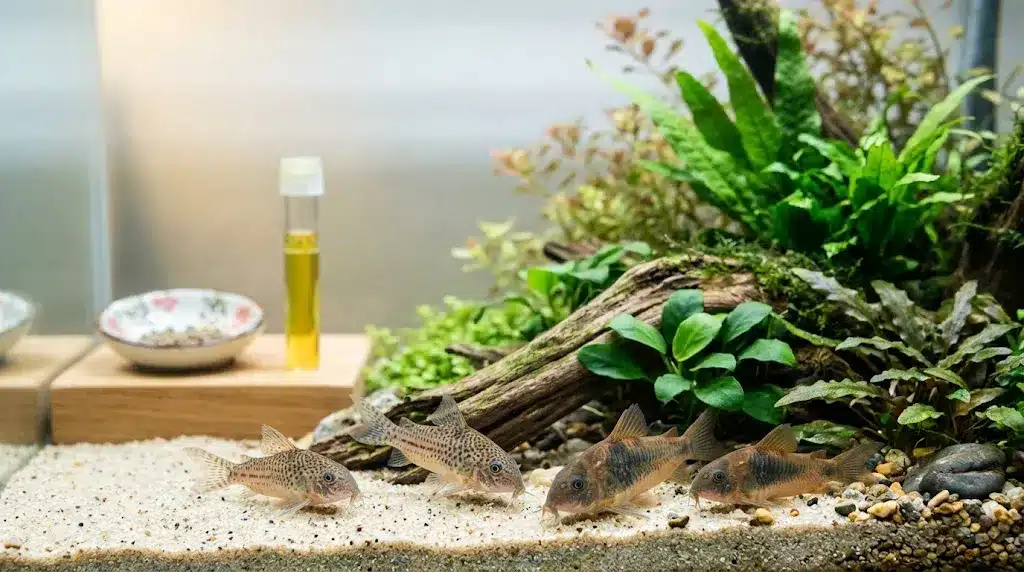
The typical Corydoras lifespan is 5–10 years in captivity. Some aquarists report bronze corys, peppered corys, and other hardy varieties living 15 years old or longer, but those cases require excellent water conditions, stable temperatures, low stress, and a varied diet.
Aquarium Versus Wild Lifespan
In the wild, predation, seasonal changes, parasites, competition, and habitat disruption can create shorter lifespans. A home aquarium removes many of those risks, but it introduces others: ammonia spikes, poor filtration, unsuitable substrate, overcrowding, and incompatible tank mates.
A cory catfish life expectancy of 5–10 years is realistic for a properly cycled, mature aquarium. A neglected tank can shorten that life span dramatically, while excellent care can help a fish exceed the average.
Lifespan Varies by Species
The lifespan of cory catfish in aquarium varies by species. Larger, commonly bred species such as Corydoras aeneus often handle aquarium life well, while smaller or more specialized species may need cooler water, softer conditions, or more careful feeding.
There are more than 160 recognized Corydoras species, and their natural habitats range across South America. Their scientific name is Corydoras, and the genus includes many popular catfish species in the aquarium trade.
What Factors Affect a Cory Catfish’s Lifespan?
The secret to a long-lived Cories lies in stable water parameters, a nutritious and varied diet, suitable tank mates, and a clean, spacious aquarium.
Aquarium care experts such as Dr. Neale Monks, an experienced aquatic veterinarian and fishkeeping author, emphasize the importance of understanding fish biology and maintaining appropriate aquarium conditions. These fundamentals can help prevent common health problems and support a healthier, longer life.
But good care involves more than simply feeding your Cory Catfish and cleaning the tank. Small mistakes in water quality, nutrition, or habitat design can gradually shorten their lifespan.
So, let’s explore the key factors that influence Cory Catfish longevity and discover practical ways to help your little aquarium companions thrive for years to come!
Water Quality and Aquarium Maintenance
Water quality is the single biggest factor in the lifespan of Cory catfish in aquarium. Ammonia and nitrite should remain at 0 ppm; nitrate should stay low through regular water changes and effective filtration.
Corys spend much of their time near the bottom, where detritus, uneaten food, and waste can collect. A gravel vacuum or siphon should clean the substrate without disturbing it too deeply. Aqueon recommends weekly 10% water changes or 25% changes every two weeks, depending on stocking and filtration.
Diet and Nutritional Balance
Corydoras are omnivorous, not strict algae eaters. They need a complete diet, not just leftovers from other fish. Sinking pellets, shrimp pellets, bottom-feeder wafers, frozen bloodworms, daphnia, and occasional blanched vegetables can support steady growth and immune health.
A quality pellet or wafer should form the staple diet. Variety matters, but overfeeding harms water quality and can lead to obesity, poor oxygen levels, and bacterial problems.
Tank Size, Stress, and Environment
Corys are schooling fish and should live in groups. A 20-gallon aquarium is a common starting point for a small group, while a 30-gallon tank gives most species more stable space and room for tank mates.
Stress comes from more than aggression. It can come from unstable temperatures, strong current, poor hiding places, frequent handling, and constant competition for food. A calm, planted freshwater aquarium with open bottom space helps corys behave naturally.
Genetics and Species Differences
Genetics matter. Fish from responsible breeders or reputable aquarium stores often have a better start than poorly raised or heavily stressed imports. Species differences also matter: a pygmy cory has different space, temperature, and social needs than a bronze cory or sterbai cory.
How Long Do Different Cory Catfish Species Live?
No single lifespan applies to every Corydoras species. The table below gives practical aquarium expectations, but individual care can move the result upward or downward.
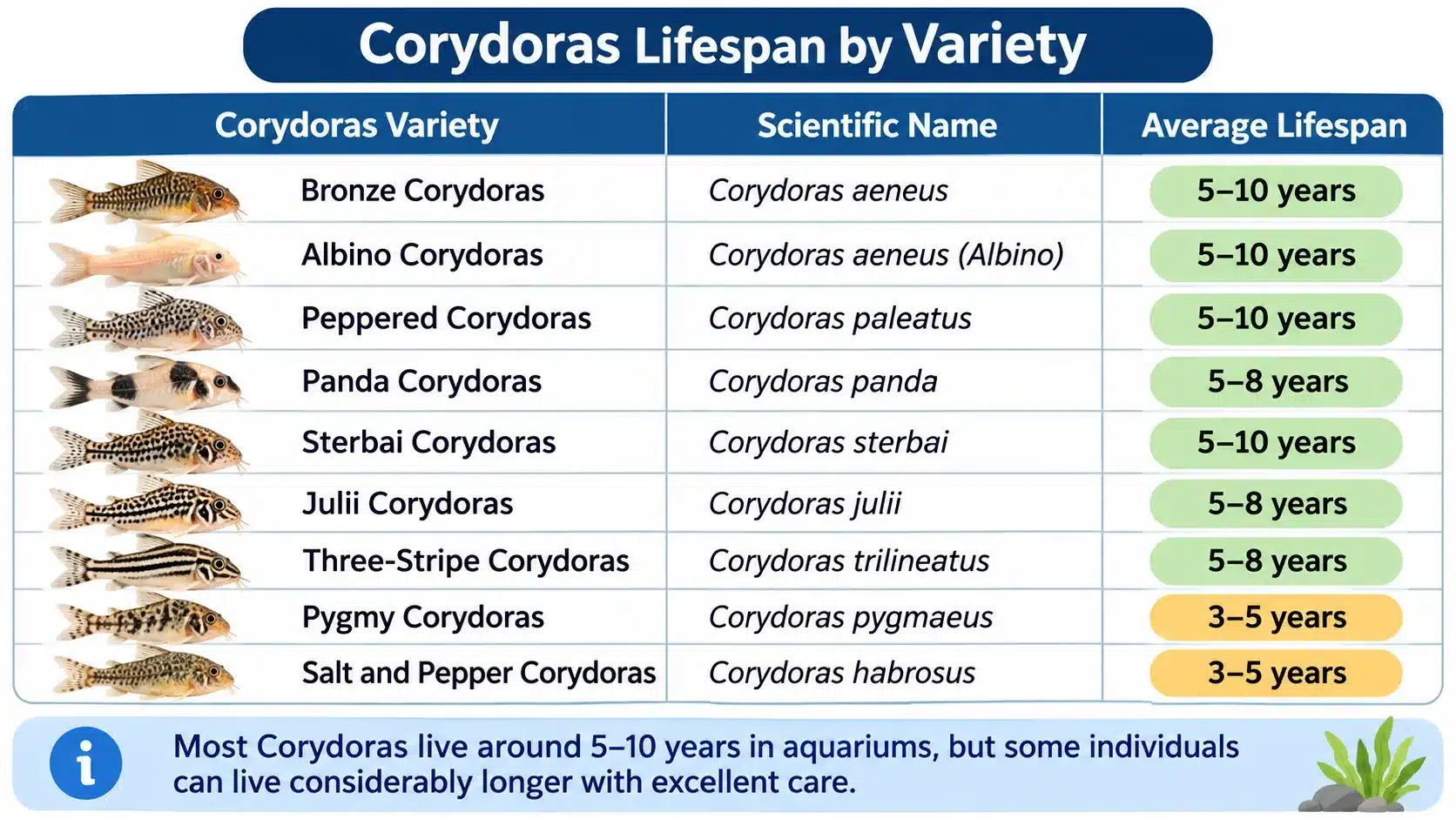
| Corydoras variety | Typical aquarium lifespan | Notes |
|---|---|---|
| Bronze Cory catfish (Corydoras aeneus) | 5–10 years, sometimes 10–15 years | Hardy, widely bred, and adaptable; the albino cory is usually a color form of this species. |
| Panda Cory catfish (Corydoras panda) | 5–8 years | A smaller panda cory prefers cooler, stable water and clean, fine substrate. |
| Albino Cory catfish | 5–10 years | Usually an albino bronze or peppered cory, so its life expectancy follows the parent species. |
| Peppered Cory catfish (Corydoras paleatus) | 5–10 years, sometimes longer | One of the more adaptable corydoras species; keep water cool and stable. |
| Julii Cory catfish | 5–8 years | Needs clean water, gentle flow, and a secure group; often confused with similar spotted species. |
| Sterbai Cory catfish (Corydoras sterbai) | 5–10 years | A warm-water species that appreciates clean, oxygen-rich water and fine substrate. |
| Pygmy Cory catfish (Corydoras pygmaeus) | 3–5 years or longer with excellent care | Tiny, active, and highly social; needs a species-appropriate group rather than a large single fish. |
Bronze Corydoras Catfish Lifespan
The Bronze Cory catfish lifespan is often 5–10 years, and well-kept bronze corys may live beyond a decade. Corydoras aeneus is one of the most common aquarium-trade species, which makes healthy, tank-bred specimens easier to find.
Panda Cory Catfish Lifespan
The Panda Corydoras Lifespan is commonly around 7–8 years when the fish remains in stable, cooler water. Some sources list 5–8 years, while individual reports can be longer when temperature, diet, and substrate are managed well.
Albino Cory Catfish Lifespan
The Albino Cory catfish lifespan is usually 5–10 years. Albino corys are generally color varieties of bronze or peppered corys, so their care needs and life expectancy closely match those species.
Ideal Tank Conditions for a Longer Cory Catfish Lifespan
What makes the difference between a Cory Catfish that lives just a few years and one that thrives for a decade or longer? Ideal Tank Conditions for a Longer Corydora Lifespan start with clean, stable water, suitable temperatures, a soft substrate, and plenty of hiding places. These peaceful bottom dwellers need the right environment for keeping corydoras healthy, active, and stress-free.
Maintain a temperature of around 72–78°F (22–26°C), keep ammonia and nitrite at 0 ppm, and provide a well-filtered, cycled aquarium with regular water changes.
Recommended Aquarium Size
Choose a tank with a large footprint, not just a tall shape. Corys use the bottom and middle of the aquarium, so horizontal swimming room matters more than height.
- Use at least 20 gallons for a small group of common corys.
- Choose 29–30 gallons or more for a larger group or a mixed community tank.
- Use a species-appropriate setup for a pygmy cory group, which still needs swimming room and stable water.
- Avoid bowls, tiny desktop tanks, and overcrowded setups.
Ideal Water Temperature and pH
For many captive-bred corys, keep the water temperature around 72–78°F (22–26°C) and pH near 6.5–7.8. Aqueon lists 74–80°F and pH 7.0–8.0 as suitable for many captive-bred cory cats, while wild-caught fish may prefer softer, more acidic water.
The key is stability. Rapid temperature swings stress fish and weaken their immune systems. Panda corys and peppered corys often do better at the cooler end of their suitable temperature range.
Water Hardness and Filtration
Most aquarium corys tolerate a broad range of hardness, but they need clean, oxygen-rich water. Use a filter that provides biological filtration and gentle to moderate flow; avoid a current so strong that small corys struggle to rest or feed.
Live plants, an air stone, and surface agitation can support dissolved oxygen. Corys occasionally swim upward to gulp air, but constant gasping can signal low oxygen or a water-quality problem.
Substrate and Hiding Places
Use fine substrates such as smooth sand or rounded fine gravel. Corys use sensitive barbels to search for food, and sharp gravel can injure those barbels and invite infection.
Add driftwood, smooth stones, live plants, and broad leaves to create hiding places. A planted tank also gives the aquarium a more natural look while providing cover for shy fish.
What Do Cory Catfish Eat to Stay Healthy?
What do Cories eat to stay active, and happy in a home aquarium? These peaceful bottom-dwelling fish need more than leftover fish food to thrive. A balanced diet supports their growth, strengthens their immune systems, and helps them maintain their natural scavenging behavior.
Cories thrive on high-quality sinking pellets and wafers, supplemented with protein-rich foods such as bloodworms, brine shrimp, and daphnia. They also benefit from occasional vegetable-based foods and varied diets that provide essential nutrients.
But which foods should you feed your Cory Catfish daily, and which treats should you offer only occasionally? Can they eat vegetables, algae wafers, or frozen foods? Let’s explore the best foods, feeding schedules, portion sizes, and common dietary mistakes to help your Cory Catfish enjoy a long, healthy life!
High-Quality Sinking Pellets and Wafers
Feed a staple of sinking pellets or wafers made for bottom-dwelling omnivores. These foods reach the substrate, where corys naturally feed, instead of floating away for midwater fish to eat first.
Algae wafers can be part of the diet, but they should not replace protein-rich sinking food. Corys are not a replacement for a cleanup crew; they still need deliberate feeding.
Frozen and Live Foods
Offer frozen bloodworms, daphnia, brine shrimp, or small live foods occasionally. These foods add variety and can encourage natural foraging behavior.
Avoid relying on one food. A varied diet supports better color, energy, breeding condition, and long-term health.
Feeding Frequency and Portion Sizes
Feed adult corys once daily, or split the food into two small meals. Give only what the group finishes within a few minutes. Aqueon recommends feeding once or twice daily and removing uneaten food after 2–3 minutes. aqueon
Juveniles may need smaller, more frequent meals. Watch body shape: a gently rounded belly is healthy, while a sunken belly or constantly bloated appearance can signal a problem.
Common Feeding Mistakes to Avoid
- Feeding only floating flakes, which faster fish may eat first.
- Assuming corys can live on leftover food or algae alone.
- Adding too much food, which raises ammonia and nitrate.
- Feeding large wafers that small corys cannot break apart.
- Ignoring the substrate, where rotting food can damage water quality.
Common Health Problems That Can Shorten a Cory Catfish’s Life
The most common health problems include ich, fin rot, bacterial infections, parasitic diseases, swim bladder disorders, and stress-related illnesses. Poor water conditions, especially ammonia or nitrite buildup, can make these problems worse.
According to established aquatic veterinary guidance, including resources from fish health expert Dr. Edward J. Noga, early diagnosis and proper treatment play essential roles in protecting aquarium fish.
Recognizing the warning signs can help you prevent minor health issues from becoming life-threatening conditions. From identifying unusual swimming behavior to spotting infections and maintaining healthy water parameters, understanding these problems can make a real difference.
Fin Rot and Bacterial Infections
Fin rot can make pectoral fins, tail fins, or dorsal fins look ragged, frayed, or shortened. It often follows stress, injury, or poor water conditions.
Red blotch disease, skin sores, and bacterial infections can also develop when waste builds up in the substrate. Clean water, gentle handling, and quarantine for new fish reduce the risk.
Barbel Damage and Infections
Barbel erosion is one of the most preventable cory health issues. Rough gravel, dirty substrate, and bacterial infection can wear down the sensitive barbels corys use to find food.
Switching to smooth sand, improving filtration, and keeping nitrate low can help mild cases. Severe barbel loss is harder to reverse, so prevention matters more than treatment.
Ich and Other Parasitic Diseases
Ich appears as small white spots on the body or fins. Affected fish may flash against objects, breathe rapidly, hide, or lose interest in food.
Quarantine new fish before adding them to a community tank. This gives you time to spot parasites, bacterial issues, or poor condition before they spread.
Stress-Related Health Problems
Stress weakens immunity and makes illness more likely. Common stress sources include bullying, overcrowding, unstable temperature, poor oxygen levels, and living alone without a proper group.
Early Warning Signs of Illness
Watch for:
- Loss of appetite
- Clamped or damaged fins
- Rapid breathing or constant surface gasping
- White spots, red patches, or sores
- Lethargy or unusual hiding
- Frayed barbels
- A swollen or sunken belly
Early action usually produces better results than waiting until a fish stops eating.
How to Tell If Your Cory Catfish Is Healthy or Aging
Signs of a Healthy, Active Cory Catfish
A healthy cory has clear eyes, intact fins, smooth skin, a normal appetite, and active bottom-foraging behavior. It should move with its group, sift the substrate, and respond to food. chewy
Physical Changes Associated With Aging
Older corys may move more slowly, rest more often, or show slight fading in colors and patterns. These changes alone do not always mean illness.
Changes in Swimming and Feeding Behavior
An aging cory may take longer to reach food or spend more time resting. A sick cory usually shows a clearer change: refusing food, breathing heavily, isolating itself, or developing visible damage.
How to Distinguish Normal Aging From Illness
Normal aging is gradual. Illness tends to appear quickly or worsen over days. Test ammonia, nitrite, nitrate, and temperature whenever behavior changes suddenly.
Do Cory Catfish Live Longer in Groups?
If you keep these peaceful bottom-dwelling fish, you may wonder whether keeping several together improves their health and lifespan. Corydoras catfish thrive in social groups, and their companions play an important role in reducing stress and encouraging natural behaviors.
Cory Catfish can live healthier, less stressful lives in groups because they feel safer around their own species. Aquarists generally recommend keeping at least six Cories fish of the same species.
Good water quality, proper nutrition, adequate tank space, and consistent care also contribute to their longevity, which typically ranges from 5 to 10 years or longer for some species.
But how exactly does group living affect their lifespan, and what happens when you keep a Cory Catfish alone? Let’s explore the science behind their social behavior, the ideal group size, and practical aquarium care tips to help your Cory Catfish live a longer, happier life.
Why Corydoras Are Social Fish
Corydoras are highly social shoaling fish. In the wild, they often live in groups, and aquarium corys show more natural behavior when kept with their own kind.
Recommended Group Size
Keep at least six corys of the same species whenever tank size allows. Larger groups often look more confident and display more natural shoaling behavior.
How Loneliness and Stress Affect Their Well-Being
A single cory may hide constantly, eat poorly, or become stressed. That stress can contribute to disease and a shorter life span.
Choosing Compatible Tank Mates
Choose peaceful community fish that will not nip fins, outcompete corys for food, or prey on them. Small tetras, rasboras, peaceful livebearers, and similarly calm fish can work well. Avoid large, aggressive, or overly boisterous tank mates.
A pleco can share a tank with corys in the right setup, but it needs enough space, food, and filtration. Do not treat corys as cleaners for a pleco or any other fish.
How to Help Your Cory Catfish Live Longer
Maintain Consistent Water Quality
Cycle the aquarium before adding fish. Test water regularly, keep ammonia and nitrite at zero, and use conditioned water for changes.
Provide a Balanced and Varied Diet
Use sinking pellets as the base diet, then rotate in frozen or live foods. Do not depend on algae wafers or leftover flakes.
Avoid Overcrowding and Aggressive Tank Mates
Stock conservatively. More fish means more waste, more competition, and less room for natural behavior.
Perform Regular Aquarium Maintenance
Vacuum the substrate surface, remove uneaten food, rinse or replace filter media as appropriate, and perform scheduled water changes. Consistency matters more than occasional large cleanings.
Reduce Stress and Provide a Suitable Habitat
Give corys a planted, shaded, calm aquarium with soft substrate, hiding places, and a proper group. Avoid frequent rearranging, rough netting, and sudden changes in water conditions.
Breeding and Life Cycle
Corys can spawn in a home aquarium, though breeding success varies by species. A female cory may lay sticky eggs on glass, leaves, rocks, or plants; viable eggs can hatch within several days.
Corydoras generally do not provide parental care. If you want fry to survive, move eggs to a separate rearing tank or protect them from adult fish. Fry need tiny foods such as infusoria, micro worms, or finely crushed food before moving to larger meals.
Frequently Asked Questions About Corydoras Catfish Lifespan
Can Cory catfish live for 10 years?
Yes. Many cories live 6 to 10 years or longer with clean water, a stable temperature, a varied diet, and low stress. Some bronze and peppered corys have been reported to reach 15 years old.
What is the oldest recorded Cory catfish?
There is no single universally verified record for every Corydoras species. Hobbyist reports commonly describe corys living beyond 10 years, with some reaching 15 years old under excellent care.
Do male or female Cory catfish live longer?
There is no reliable evidence that one sex consistently lives longer. Care, genetics, species, and tank conditions matter more than sex.
Why did my Cory catfish die suddenly?
Sudden death often traces back to ammonia or nitrite exposure, poor acclimation, disease, low dissolved oxygen, extreme temperature changes, or an underlying problem that was not visible earlier. Test the water immediately and check filtration, temperature, and tank mates.
Can Cory catfish survive without a heater?
Some species can tolerate room-temperature water, but most aquarium corys do better with a heater that prevents temperature swings. Panda and peppered corys often prefer cooler water, while sterbai corys prefer warmer conditions.
How can I tell how old my Cory catfish is?
You usually cannot determine exact age from appearance alone. Size, color, activity, and fin condition offer clues, but they vary by species, diet, and care history.
What is the life expectancy of the panda corydoras?
The panda cory life expectancy is commonly 5–8 years in captivity. Stable, cooler water and a clean sand substrate support the best results.
How long do cory catfish live in a tank?
In a tank, Cories commonly live 5–10 years. Excellent care can help some individuals reach 10–15 years.
What is the memory span of a panda cory?
There is no well-established scientific figure for a panda cory’s memory span. Like many fish, corys can learn feeding routines and recognize familiar patterns, but precise memory duration is not reliably documented.
How long do Cory catfish white live?
If you mean an albino cory, expect roughly 5–10 years. Albino corys are usually color variants of bronze or peppered corys, so their lifespan follows the underlying species.
What is the longest a Cory catfish can live in captivity?
Some corys have lived 15 years or longer in captivity. That is not a guarantee, but it shows what consistent water quality, good genetics, proper diet, and low stress can achieve.
How long does it take for cory catfish to reach full size?
Most cory catfish reach full size in 6–12 months, though larger species may take up to 18 months. Growth depends on species, diet, water quality, and tank space.aquifarm
What are the signs that a cory catfish is happy?
A happy cory actively forages, eats well, swims with its group, has clear eyes and intact fins, and shows normal resting behavior. It should not hide constantly or gasp at the surface.
Conclusion
The lifespan of Cory catfish is not fixed by species alone. Most corys live 5–10 years in a healthy freshwater aquarium, and well-cared-for individuals can reach 10–15 years. The difference usually comes down to daily habits: stable water temperature, clean substrate, effective filtration, a varied omnivorous diet, and a proper group of peaceful tank mates.
Keep at least six corys, use fine sand or smooth gravel, feed sinking pellets and wafers, and remove waste before it builds up. Watch for barbel damage, fin problems, white spots, and changes in appetite or swimming. When you meet those needs consistently, your corys become more than bottom-dwelling scavengers—they become long-lived, active members of a peaceful community aquarium. The best way to extend the lifespan of Cory catfish is simple: prevent stress before it becomes disease.
You might also like
- How Long Do Cory Catfish Live for? – Cat fish life span (FAQ)
- Punctatus Cory Catfish Profile: Care, Diet, Lifespan & More
- Gold Laser Cory Catfish: Size, Lifespan, Breeding & (More)
- Cory Catfish Temperature – The Ultimate Care Guide for 2023
- What Do Spotted Raphael Catfish Eat: (A Comprehensive Guide)