What is the best temp for goldfish aquarium? The best tank temperature for goldfish is usually 65–75°F (18–24°C) for a healthy indoor aquarium. For the most reliable results, keep fancy goldfish near 68–74°F (20–23°C) and common goldfish, comets, and shubunkins near 60–70°F (16–21°C).
Ideal Goldfish Water Temperature matters because these cold-water fish need stable conditions, clean water, and enough oxygen in the water to stay active and healthy.
Goldfish are not tropical fish. A warmer tank may make them eat more and produce more waste, while a tank that is too cold can slow their metabolism. The goal is not to make the aquarium “warm enough” for tropical species; it is to keep the tank water steady within the right temperature range for your specific goldfish.
What Is the Best Tank Temperature for Goldfish?
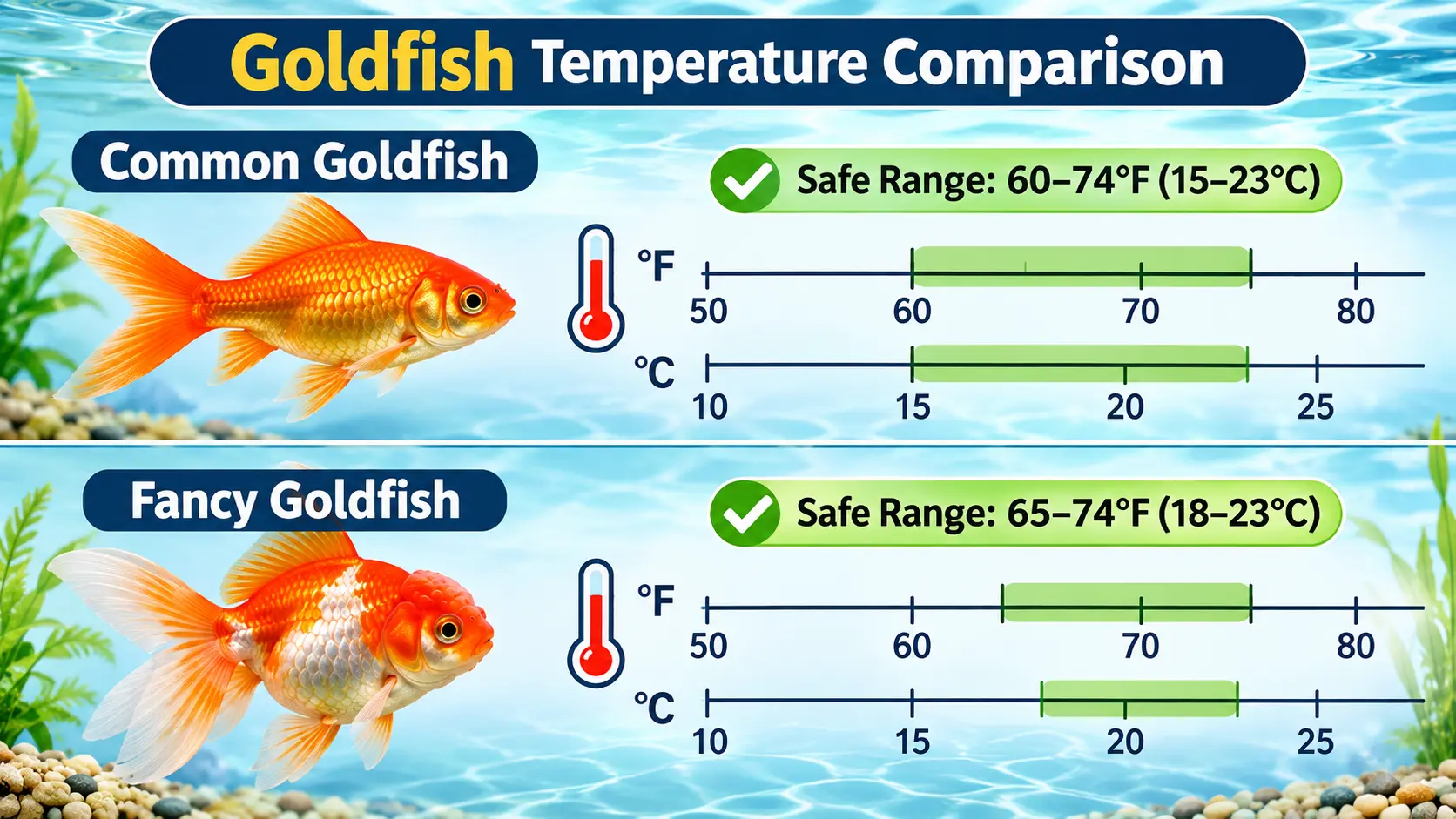
The best water temperature for goldfish depends on the type you keep, the room temperature, and how stable your aquarium stays throughout the day. A good target for most pet goldfish is the mid 60s to low 70s in degrees Fahrenheit, with only small changes from day to day.
Ideal Goldfish Water Temperature in Fahrenheit and Celsius
| Goldfish type | Ideal temperature range | Celsius range | Best use |
|---|---|---|---|
| Fancy goldfish, including oranda, fantail, ryukin, and ranchu | 68–74°F | 20–23°C | Indoor aquarium |
| Common goldfish, comet, and shubunkin | 60–70°F | 16–21°C | Aquarium or outdoor pond |
| General indoor range for many goldfish | 65–75°F | 18–24°C | Stable, filtered fish tank |
Aqueon recommends 68–74°F for fancy goldfish and 60–70°F for comets and shubunkins. PetMD uses a broader 65–75°F range for goldfish kept indoors.
Why Maintaining a Stable Temperature Matters
Goldfish can tolerate a fairly wide temperature range, but they do not handle sudden swings well. OATA notes that rapid changes in water temperature can cause stress and lead to disease.
Keep the temperature within about 2°F (1°C) over 24 hours. A stable aquarium temperature supports normal digestion, immune function, and breathing; unstable tank water can make even healthy fish act stressed.
Ideal Tank Temperature for Different Types of Goldfish
“Goldfish” is not one single care category. Slim-bodied fish and round-bodied fancy varieties have different swimming styles, body shapes, and comfort goldfish tank temperature range.
Common Goldfish Temperature Water Requirements
Common goldfish, comet goldfish, and shubunkins are active, single-tailed fish. They do best in cooler water, usually 60–70°F (16–21°C).
These fish are strong swimmers and can do well in a large aquarium or outdoor pond. In a pond, they may tolerate colder water during winter, but they still need deep enough water, good filtration, and protection from freezing conditions.
Fancy Goldfish Temperature Requirements
The best temperature for fancy goldfish is usually 68–74°F (20–23°C). Fancy varieties include orandas, fantails, ryukins, and ranchus. Their rounded bodies and long fins make them slower swimmers, so they often do better in a slightly warmer and very stable indoor aquarium.
Do not keep fast comet goldfish with slower fancy goldfish if you can avoid it. OATA warns that comets may outcompete fancies for food and sometimes nip the fins of slower fish.
How Does Water Temperature Affect Goldfish Health?
Water temperature changes how fast a goldfish’s body works. When the water becomes warmer, goldfish become more active, need more food, breathe faster, and produce more waste.petmd
That extra waste raises ammonia and nitrite risk if the filter system is not powerful enough. Beneficial bacteria process fish waste, but a new tank may not yet have a mature bacterial colony. Test for ammonia, nitrite, and nitrate every week, especially after adding new fish.
Warmer water also holds less dissolved oxygen. Add an air stone or increase surface movement if your fish gather near the surface, gasp, or seem lethargic during hot weather. Aqueon specifically recommends extra aeration when goldfish are kept at warmer temperatures.
Can Goldfish Live in Cold Water?
Yes. Goldfish are cold-water fish, and many can live without a heater in a room that stays within their preferred range. RSPCA advises a range of 10–21°C (50–70°F) and says a heater is normally unnecessary for goldfish. rspca.org
However, “cold water” does not mean freezing water or a tank placed beside a window. Avoid drafts, direct sunlight, radiators, and heat vents. These conditions can cause the tank water to change too quickly.
An outdoor pond can work well for common goldfish, comets, and shubunkins. Fancy goldfish are usually better suited to a controlled indoor aquarium because they are less tolerant of poor water conditions and extreme seasonal swings.
Is 80°F Too Hot for a Goldfish Tank?
Yes, 80°F (27°C) is too hot for most goldfish tanks. It sits above the recommended range for both fancy and common goldfish.
At 80°F, the warmer water can lower dissolved oxygen, increase waste production, and make fish more vulnerable to poor water quality. Goldfish may eat more, swim rapidly, gasp at the surface, or become stressed.
If your tank reaches 80°F, do not add ice directly to the aquarium. Instead, reduce lighting, improve surface agitation, keep the room cooler, and make any cooling change gradually. Aqueon advises making temperature changes slowly.aqueon
Do Goldfish Need a Heater in Their Aquarium?
Many goldfish do not need a heater. If your home keeps the aquarium within the proper temperature range, a heater may create more risk than benefit.
A heater makes sense when:
- Your room drops below the safe range for your goldfish type.
- Nighttime temperatures cause large swings.
- You keep fancy goldfish in a cool basement, garage, or poorly heated room.
- You need to prevent the tank from falling below the mid 60s.
Use an adjustable, thermostat-controlled heater rather than a preset tropical heater. A preset set near 78°F is too warm for goldfish. PetMD recommends a thermostat-controlled heater and a daily thermometer check.petmd
How to Monitor and Maintain the Perfect Goldfish Tank Temperature
Use a separate aquarium thermometer, not only the dial on the heater. Check the temperature at the same time every day, and write down the reading so you can spot patterns.
Daily temperature routine
- Read the thermometer once in the morning and once in the evening.
- Record the temperature and look for changes greater than 2°F in a day.
- Keep the tank away from sunlight, heaters, air conditioners, and drafts.
- Test water parameters weekly, including ammonia, nitrite, nitrate, and pH.
- Perform regular partial water changes using a siphon vacuum to remove waste from the substrate.
- Treat replacement tap water with a water conditioner to remove chlorine or chloramine before adding it to the tank.
OATA recommends weekly water testing and a partial water change of about 25% for unheated aquariums. ornamentalfish
Tank setup that supports stable temperatures
A larger aquarium holds temperature more steadily than a small bowl. Give adult common goldfish, comets, and shubunkins at least 20 gallons per fish; give adult fancy goldfish at least 10 gallons per fish.
Use a filter rated for a tank larger than your actual aquarium. Goldfish create a lot of waste, so strong filtration, regular cleaning, and good water movement help maintain water quality.
Signs Your Goldfish Tank Is Too Hot or Too Cold
| Problem | Common signs | What to do |
|---|---|---|
| Tank too hot | Gasping at the surface, rapid breathing, restlessness, reduced oxygen signs | Cool the room, reduce lighting, increase surface agitation, and lower the temperature slowly |
| Tank too cold | Lethargic fish, slow swimming, poor appetite, fish resting near the bottom | Check the room temperature and use a thermostat-controlled heater if needed |
| Unstable temperature | Fish seem stressed after day-night changes; temperature moves more than 2°F daily | Move the tank away from drafts or heat sources and insulate the room-side of the aquarium if appropriate |
| Poor water quality alongside temperature issues | Cloudy water, ammonia or nitrite above zero, fin damage, unusual swimming | Test the water, perform a partial water change if needed, and review feeding and filtration |
A goldfish that becomes lethargic, stops eating, or gasps needs more than a temperature adjustment. Check ammonia, nitrite, and nitrate as well, because temperature stress and poor water quality often happen together.
How to Safely Adjust Goldfish Tank Temperature
Never pour hot or cold water directly into an established aquarium. Sudden changes can shock your fish and disrupt the tank’s biological balance.
Safe adjustment steps
- Change the temperature by no more than 1–2°F per day.
- Use a reliable thermometer to confirm the actual tank temperature.
- Adjust the room temperature first when possible.
- If you use a heater, set it gradually and monitor it daily.
- When adding new fish, float the sealed bag in the aquarium for 15–20 minutes, then slowly add small amounts of tank water to the bag before releasing the fish.
- Avoid placing the tank near windows, radiators, vents, or direct sunlight.
New fish are especially sensitive to unstable water. Slow acclimation reduces stress and helps them adjust to the aquarium temp for goldfish and water parameters in their new home.
Goldfish Fish Ideal Temperature FAQs
What Temperature Is Best for Goldfish to Thrive?
What is the best aquarium water temperature for goldfish? For most indoor pet goldfish, 65–75°F (18–24°C) is a practical range. Fancy goldfish do best around 68–74°F, while common goldfish, comets, and shubunkins do well around 60–70°F.
Can Goldfish Survive at 75°F?
Yes, goldfish can survive at 75°F, especially if the temperature stays stable and oxygen levels remain good. It is at the upper end of the indoor range, so watch for faster breathing, increased hunger, and more waste.
What Is the Lowest Temperature Goldfish Can Tolerate?
Goldfish can tolerate lower temperatures than many tropical fish, particularly in an outdoor pond. Still, avoid rapid drops and do not rely on survival alone; keep indoor fancy goldfish above the low 60s whenever possible.
Should I Turn Off My Goldfish Tank Heater at Night?
Usually, no. Turning a heater off at night can cause the tank water to cool quickly. Keep the heater on if your room temperature drops below the target range, and check the thermometer daily.
Can Goldfish Live With Tropical Fish?
Not usually. Tropical fish often need warmer water, while goldfish prefer cooler, stable conditions. Keeping them together can create temperature, food, and water-quality problems. Goldfish are not suited to tropical aquariums.
Do Goldfish Need More Food in Warmer Water?
They may need more food because their metabolism speeds up in warmer water. Feed small amounts, remove uneaten food, and avoid overfeeding; extra food increases waste and can raise ammonia.
Can goldfish live in warm water?
Goldfish can tolerate a higher temperature for short periods, but warm water reduces oxygen and raises waste production. Keep a goldfish’s tank near its optimum temperature instead of relying on warm water.
What is the most common cause of goldfish death?
Poor water quality is the most common cause, especially ammonia and nitrite from overfeeding, small tanks, or weak filtration. Regular water changes and testing protect kept goldfish.
Is 78 degrees too hot for a goldfish?
Yes. At 78°F, the water is warmer than the ideal range for most goldfish. It can cause stress, lower oxygen, and faster waste buildup, so reduce the goldfish temperature water gradually.
Do goldfish stop eating when they are cold?
They may eat less or become less active in colder water because digestion slows. Feed less in low aquarium temp for goldfish, and avoid feeding when the water is very cold.
Can goldfish survive in cold water?
Yes. Goldfish are cold-water fish and can survive cooler water, but they should never be frozen or exposed to sudden temperature drops. In an outdoor pond, keep an opening in the ice for oxygen exchange.
How can you keep a goldfish tank temperature stable?
Keep the aquarium away from windows, radiators, and drafts. Use a larger tank, check a thermometer daily, and match replacement water to the tank temperature; use a thermostat-controlled heater only if needed.
Conclusion
The right aquarium temperature for goldfish is not about making the tank tropical. It is about matching the temperature to your fish type and keeping it steady. Fancy goldfish generally thrive at 68–74°F, while common goldfish, comets, and shubunkins prefer 60–70°F. A stable tank, clean water, strong filtration, and enough oxygen matter just as much as the number on the thermometer.
Check the temperature daily, test ammonia, nitrite, and nitrate weekly, and make every adjustment slowly. If your home stays within the proper range, your goldfish may not need a heater. If the room becomes too cold, use a thermostat-controlled heater rather than a preset tropical setting. With the right temperature range, regular water changes, and careful goldfish care, your goldies can stay active, comfortable, and healthy for years.
You might also like
- TOP 10 Smallest Breed of Goldfish That You Can Keep As Pets
- Goldfish with Big Heads: The Only Guide You’ll Ever Need
- How to Breeding Goldfish at Home? (7 Proven & Easy Tips)
- Can Goldfish Live in a Bowl? (7 Reasons Why Bowls Are Cruel)
- Can Guppies Live with Goldfish Peacefully Without Eating?
- Can Goldfish Thrive in a Pond Without a Pump: Risky Reality
- Tank Requirements for Goldfish: (Care Basics & Expert Tips)