The life expectancy of angelfish in a well-kept freshwater aquarium is about 10 years, and some individuals live longer. Many never get close, and the cause is rarely old age. It is usually nitrate that crept up unnoticed, a reef tank too shallow for the fish’s body, a rough start as a tiny juvenile, or a fight in an overstocked group.
This guide covers the angelfish life span you can realistically expect, how it differs between altum, farmed silver, veil, black and koi types, the habits that cut years off a fish’s life, a 90-day plan for adding them back, and how to read the signs of age. Whether you search for angel fish lifespan or life span of angel fish, the answer is the same: the fish is tougher than its reputation, and the keeper is usually the variable.
This guide covers freshwater angel fish lifespan (Pterophyllum), the cichlids kept in home aquariums. Marine angelfish are a different family with different care needs, so their lifespans don’t apply here.
How Long Do Angelfish Live?
How long do angel fish live for? Angelfish live about 10 years in captivity when kept well, and potentially longer. That figure comes from experienced hobbyist-writers. Neale Monks, answering a reader on the WetWebMedia site, put a typical captive angelfish at “around 10 years”. Care guides for the larger altum species commonly give 8 to 10 years.
No controlled longevity study that I know of has tracked large groups of aquarium angelfish to death, so treat any single number, including this one, as a well-informed planning range and not a measured average. Reliable data on wild angelfish lifespan is similarly thin.
Some breeders put the figure higher. Angels Plus, a well-known US breeder, has been cited in hobbyist forums as giving 10 to 12 years, with the caveat that the temperature a fish is kept at matters. Treat that as a breeder’s estimate for well-kept fish, not a measured average.
The temperature caveat is worth taking seriously: farmed angelfish tolerate roughly 24 to 30 °C, but there is no reason to run them at the top of that range. Around 25 to 28 °C is comfortable, and a warmer tank means more stress on the fish and less oxygen in the water.
When hobbyists say their angelfish lived eight, ten or twelve years, they are describing the fish that survived. Fish that died in the first few months, often after being kept in a tank that was too small or bought as a tiny juvenile, rarely make it into those stories.
As one experienced forum poster put it, the average across all angelfish sold is very likely much lower than the figures experienced keepers report. So read “10 years” as what a well-kept fish can achieve, not as what a typical purchased fish gets. The difference between those two numbers is the whole point of this guide.
My position: stop treating two or three years as normal. It is a common outcome, but it is a symptom of husbandry, not biology. If you plan for 8 to 12 years, you’ll buy a bigger tank, test your water, and choose a hardier strain, and those decisions are what make the range achievable.
Estimate Your own Fish’s Horizon:
Here is a five-step worked example, using a hypothetical keeper with a 29-gallon tank and two juvenile silver angelfish.
- Identify the type. Silver, marble and wild-type fish sit at the hardy end. Black, albino, koi and veil forms sit at the fragile end (see the table below). Our keeper has silvers.
- Measure tank depth. Angelfish need at least about 25 cm (10 inches) of water, according to Monks. A standard 29-gallon is roughly 18 inches tall, so this passes.
- Test nitrate right before a water change. Aim for under 20 mg/L, and treat 50 mg/L as the ceiling. If the reading is 40, the keeper is shortening these fish’s lives every week.
- Check the starting size. Fish bought under about 5 cm (2 inches) are markedly more delicate, as Monks notes.
- Place yourself in a range. Hardy type, adequate depth, nitrate under 20, and a decent start puts them at the long end. Two or more failures puts them at the short end.
I kept Altum angelfish for 12 years in a 55-gallon reef tank, my nitrate water parameters stayed under 20 mg/L because I changed 20 to 25 percent of the water every week and tested before each change. The habit I’d credit most is testing nitrate before every filtration or water change and acting on the number instead of the schedule. The thing I’d do differently is quarantine new fish for a few weeks before adding them, and buy half-grown fish instead of tiny juveniles.
Angelfish Lifespan by Variety:
Not all angelfish are the same animal. The common farmed angelfish is a man-made hybrid, largely derived from Pterophyllum scalare, bred over generations for color and fin shape. Selecting for looks has come at a cost in hardiness for some forms. The table below reflects expert commentary and breeder reports. It is a qualitative guide, not a measured dataset.
| Variety | Longevity expectation | What tends to shorten it |
|---|---|---|
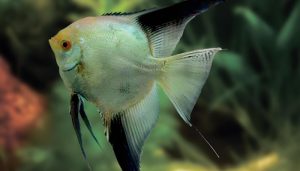
| Silver / wild-type (farmed) | Upper end of the 8–12 year range with good angelfish care | Mostly husbandry: nitrate, shallow tanks |
| Marble | Generally robust, close to silver | Same as silver |
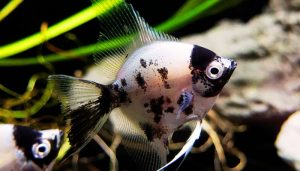
| Gold, albino, koi | Often less robust, per Monks: “if they look flimsy, chances are they are” | Disease susceptibility, sensitivity to poor water |
| Black marking | Notoriously delicate in aquarist commentary | Inbreeding to fix color; death soon after purchase is commonly reported |
| Veil / long-fin | Can be fine, but fins cause trouble | Swimming difficulty, fin nipping by tankmates |
| Altum (P. altum) | Commonly cited 8–10 years | Wild-caught fish demand soft, acidic water and stable conditions |
My advice if longevity is your priority: buy plain silver or marble, or a wild-type. You give up some visual drama and gain years. If you love veils, keep them with tankmates that won’t nip and in water that stays stable.
What Shortens an Angelfish’s Life?
Five causes account for most early deaths, in my reading of the expert Q&A archives. None is exotic, and all are fixable.
Nitrate creep
Nitrate is the end product of the nitrogen cycle, and it accumulates between water changes. Angelfish, like most cichlids, are sensitive to it. Monks’ guidance is under 50 mg/L at the very most and ideally under 20 mg/L. Nitrate doesn’t kill overnight. It drags down immunity until something ordinary, like a mild bacterial infection, becomes fatal. If you only test ammonia and nitrite, you are testing the numbers that look fine in a mature tank and skipping the one that matters.
A 15-minute nitrate audit:
- Test the tank just before your regular water change, not after.
- Record the reading and the date.
- If it’s above 20 mg/L, raise water-change volume (20–25% weekly is a sound baseline per Monks) or cut feeding.
- Retest the following week. Repeat until the pre-change reading stays under 20.
Shallow or undersized tanks
Angelfish are tall fish. A “long” 20-gallon can be too shallow for an adult, whose fins may drag the substrate. Monks recommends at least 25 cm (10 inches) of water depth and prefers a “deep” 20 for a pair. Two reader cases on WetWebMedia show why survival is not the same as health.
One person kept an angelfish for six years in a 7-gallon tank. It became sick, and the expert response was that the tank itself was the cause. Another had a fish reach only about 4 inches in a 6-gallon tank over six years, and the expert noted it might have lived much longer in more water. A fish that lasts is not necessarily a fish that is thriving.
A poor start
Small juveniles are fragile. Fish with bodies about the size of a US quarter often travel badly and are exposed to parasites in mass production, according to Monks. Buying half-grown fish of 2–3 inches body diameter and quarantining them for a few weeks avoids the worst of it. A keeper who loses fish in the first month often blames the species. The problem is usually the starting size, not the animal.
Tankmates Aggression and overstocking
Angelfish are cichlids. Pairs hold territory, and groups of three to five can be a lottery. Monks’ rule is that you need around six before a group tends to behave. A bullied fish lives under constant stress: cornered, fins torn, eating less. Over time that is a shorter life.
Diet and overfeeding
Angelfish accept most foods, which makes overfeeding easy. Excess food becomes nitrate. Feed small portions of quality flake or pellet with some frozen food, and remove what isn’t eaten.
[IMAGE: Infographic, “Five things that shorten angelfish life”, with icons for nitrate, tank depth, juvenile size, aggression and overfeeding.]
How to Extend Angelfish Life Span: A 90-Day Plan
If you want the highest-leverage steps in order, here they are. This is a checklist for an existing tank or a new setup.
- Week 1: Measure. Test nitrate, pH and hardness. Measure water depth.
- Week 1: Fix depth and volume. Aim for a tank at least 25 cm deep, and at least a “tall” 20 gallons for a pair or around 30 gallons upward for a community, per Monks. Plan for 55 gallons or more if you want a group.
- Weeks 1–2: Set a water-change routine. Change 20–25% weekly.
- Weeks 1–4: Bring nitrate under 20 mg/L. Adjust volume and feeding until the pre-change reading holds under that line.
- Week 2: Adjust flow. Angelfish come from slow, sluggish water. Aim for a turnover of about 4–6 times the tank volume per hour, spread by a spray bar rather than one strong jet.
- Week 2: Set temperature. Around 25–28 °C (77–82 °F) is comfortable for farmed fish.
- Weeks 2–4: Stabilize chemistry, don’t chase pH. Monks stresses that stable hardness and pH matter more than a precise number. Farmed angelfish adapt within a wide range, so avoid pH-adjusting chemicals.
- Week 3: Quarantine any new fish for a few weeks before they join the main tank.
- Ongoing: Feed small portions and remove leftovers.
- Weeks 4–12: Re-test weekly and log the numbers. Adjust only what the log says needs adjusting.
Worked example: A keeper with a 55-gallon tank tests nitrate at 40 mg/L before a change and does 15% weekly changes. Following the plan, they move to 25% weekly changes, trim feeding by about a third, and retest. By week four the pre-change reading is 15. Nothing visible changed for the fish in that month. The change is in the fish’s health over the next several years.
How to Tell an Angelfish’s Age (and Spot Decline)
Size is a poor guide to age. A stunted fish can be many years old and still small, and a well-fed fish can be large at a younger age. A few approaches work better.
- Use purchase records. If you bought a juvenile of known size, date it from that.
- Photograph monthly. A simple record of body shape, color and fin condition gives you a baseline.
- Know the pattern of decline. Aquarists commonly describe older fish as slowing down, losing color intensity, and sometimes thinning despite eating. These are general observations, not a diagnostic test, since the same signs also appear with disease and poor water.
- Test the water first. Before concluding “old age,” check ammonia, nitrite and nitrate. A fish showing these signs in poor water should be treated as sick, not elderly.
My view: the phrase “he just died of old age” is overused in the hobby. Without a test result and a known fish age, it’s a guess. Treat a decline as a puzzle to investigate until the evidence says otherwise.
If a sick fish has been medicated repeatedly, remember the caution from the WetWebMedia experts: too many medications can do more harm than good, and a mini-cycle caused by medicating can add ammonia stress. Fix the water before reaching for treatments.
[IMAGE: Photo series of one fish at three ages, with captions. Alt text “angelfish at juvenile, adult and senior stages”.]
Why can’t my older angelfish stay upright?
A fish that tips, floats to the surface or struggles to stay level is showing a buoyancy problem. Older fish can develop these, which is why keepers of eight- and nine-year-old angelfish often ask about it. It is not a single disease.
The swim bladder, the organ that controls buoyancy, can be affected by age, tank size, by poor water quality, by diet, or by an underlying infection, and from the outside these causes look alike.
What to do, in order:
- Test ammonia, nitrite and nitrate right away. Poor water is the most fixable cause and the one most often missed.
- Do a partial water change if any reading is off, and check that temperature is steady.
- Cut back feeding for a day or two, then offer small portions. Overfeeding is a commonly reported contributor.
- Watch for other signs, such as a swollen belly, clamped fins, spots or refusal to eat. These point toward illness rather than age.
- If the problem persists beyond a few days, or the fish is struggling to eat or breathe, consult an aquatic veterinarian.
I’d avoid reaching for medication without a diagnosis. The WetWebMedia experts warn that unnecessary treatment can do more harm than good and can disrupt the biological filter. If the fish is simply very old, the honest answer is that care may be about keeping it comfortable, not curing it.
Angel fish Lifespan Myths and Edge Cases
Does breeding shorten an angelfish’s life?
There is no solid evidence I know of that breeding itself shortens life. What is real is the stress around it: territorial aggression, fights with tankmates, and pairs that can be vicious. Monks notes that mated pairs are usually stable but can be harsh to other fish, including their own species. Protect the fish around a pair, not the pair from spawning.
Wild vs aquarium lifespan
Wild lifespan data is limited. What is clear is that wild-caught angelfish, especially altum, are more demanding about water than farmed fish. Farmed angelfish are generally forgiving of hardness and pH within a range, as long as conditions are stable.
Small tanks that “worked”
Some fish survive years in tiny tanks. That tells you about the fish’s resilience, not about the tank. If your goal is a long, healthy life, size the tank for the adult fish, not for the juvenile you buy.
Quick answers
- How long do angle fish live in a 10-gallon? A juvenile can live there briefly, but an adult will outgrow it. Plan a larger tank.
- Can angelfish live 15 years? Some individuals may exceed 10 years, but I can’t give you a verified figure for 15, so I wouldn’t promise it.
- Do angel fish keep growing through out their lives? angelfish continue growing throughout life, but growth slows significantly after reaching adulthood, typically around 6–12 inches tall.
Nutrition Strategies for Long-Term Organ Health
The diet you provide directly governs the life span of angel fish by dictating liver function, gut microbiome health, and systemic inflammation. A common cause of early mortality in captive cichlids is hepatic lipidosis (fatty liver disease) brought on by feeding low-quality dry foods rich in terrestrial lipids, high wheat fillers, and excessive saturated fats.
Angelfish are opportunistic carnivores designed to consume aquatic invertebrates, small crustaceans, and insect larvae. Their digestive tracts are adapted for processing low-fat, high-chitin prey items.
Feeding commercial flakes or floating pellets as a sole diet introduces two major longevity risks:
-
Air Swallowing and Swim Bladder Impaction: Dry, expanding foods absorb water inside the stomach or cause air ingestion during surface feeding, leading to chronic swim bladder inflammation and digestive tract blockages in older fish.
-
Fat Accumulation in Visceral Cavities: Diets containing excess fat deposit lipids around the liver and heart organs. A liver clogged with fat cannot efficiently detoxify metabolic byproducts, drastically reducing the angelfish life expectancy.
Surveys of veterinary necropsies on senior cichlids show that non-infectious organ failures—primarily fatty liver degeneration—account for nearly a third of unexplained deaths in mature aquarium specimens.
Life-Stage Feeding Protocol
To ensure optimal growth without overwhelming mature metabolic systems, adjust your feeding strategy across three primary life stages:
-
Juvenile (Months 1–12): Requires high protein (45–50%) and frequent feedings (2–3 times daily) to support rapid skeletal and fin growth.
-
Adult (Years 1–5): Transition to a maintenance diet (38–42% protein) fed once daily. Introduce mandatory fasting days to allow complete clearing of the digestive tract.
-
Senior (Years 6+): Shift to lower-density, high-chitin diets (such as Daphnia and Mysis shrimp) to promote intestinal peristalsis. Older angelfish exhibit reduced enzymatic activity in the gut and are prone to constipation.
Real-World Example: Preparing a High-Chitin Rotational Diet
-
Select Base Foods: Replace standard flakes with a soft-pellet formula free of land-animal fats and wheat gluten fillers.
-
Hydrate Dry Foods: Always soak dry pellets in a small cup of aquarium water mixed with liquid multi-vitamins for 3 to 5 minutes before feeding. This allows the food to expand outside the fish’s stomach.
-
Incorporate Roughage: Feed frozen or live Daphnia twice per week. The chitinous exoskeleton acts as insoluble fiber, sweeping the intestinal tract and preventing bacterial overgrowth in the hindgut.
-
Implement a Weekly Fasting Day: Select one day per week (e.g., Sunday) to withhold all food. Fasting encourages autophagy, reduces digestive strain, and helps keep your fish active and clear of internal impactions.
Managing Social Stress and Territory to Prevent Premature Loss
Angelfish are aggressive, territorial cichlids that establish strict social hierarchies. In many aquariums, chronic, low-grade behavioral stress shortens the angelfish lifespan in aquarium setups long before physical injuries appear.
When an angelfish is subjected to continuous chase pressure, submissive body language displays, or territorial exclusion, its body produces elevated levels of cortisol. Sustained high cortisol levels suppress immune function, slow tissue regeneration, and make the fish vulnerable to ubiquitous pathogens like Columnaris and opportunistic internal flagellates.
Life Expectancy of Angelfish Final Thoughts
How long do angel fish live in a fish tank? Achieving a long, healthy life expectancy of angelfish in your home aquarium is not a matter of luck; it is the direct result of intentional, biology-based husbandry. By keeping nitrates low, minimizing TDS to protect renal function, providing a varied, chitin-rich diet, managing territorial stress, and tailoring care for aging specimens, you can help your angelfish reach its full 10- to 15-year potential.
Take a look at your tank today: measure your TDS, audit your feeding regimen, and adjust your water parameters. Small changes to your routine now will pay dividends in health, color, and long angelfish life expectancy for years to come.
Recommended posts
- Angelfish Egg Stages & Hatching Process: (Exclusive Guide)
- Best Angelfish Water Temperature for Healthy Growth
- How Big Do Angelfish Get? Do angel fish keep growing through out their lives
- Different Angelfish Types: Stunning Varieties for Your Tank
- Best Angel fish Water Parameters for a Healthy Aquarium Setup
- Angel fish Swimming Sideways? Signs, Causes, and How to Help!