Angelfish Fin Rot Treatment: Step-by-Step Recovery Guide. Noticing your angelfish’s fins looking ragged or discolored? This common bacterial or fungal infection can be deadly if ignored. How can you restore your fish’s health and prevent future outbreaks?
The key to recovery lies in swift action. Clean water, antibacterial treatments, and proper nutrition play crucial roles in healing. Renowned aquarist Dr. Timothy Hovanec emphasizes that early detection and a stress-free environment drastically improve recovery rates.
But there’s more to it than just medication. Understanding the root cause is essential to prevent recurrence. Let’s dive into the detailed recovery steps and expert-backed tips to help your angelfish thrive again.
Does Angelfish Have Fin Rot?
Yes, angelfish can suffer from fin rot, a common issue among aquarium fish. Fin rot often occurs due to poor water quality, which can lead to stress and weakened immune systems in affected fish.
If you notice your angel fish displaying signs of fin rot, it’s essential to act quickly. Keeping the water parameters stable, including ammonia, nitrite, and nitrate levels, is crucial for preventing fin rot in fish. Regular water changes can help maintain clean water, significantly reducing the risk of illness in your fish tank.
Additionally, angelfish can be more vulnerable to fin rot when kept in overcrowded conditions or when they are exposed to aggressive tank mates.
If you suspect your angelfish has fin rot, it’s advisable to isolate the sick fish in a quarantine tank for treatment. By ensuring a controlled environment with optimal water quality, you can help your fish recover effectively from this condition.
What Does Fin Rot Look Like on an Angelfish: (Angelfish Fin Rot Pictures)
Fin rot manifests as frayed, discolored, or decaying fins on angelfish. You may notice that the edges of the fish’s fins appear torn or ragged, and in more severe cases, edges of the fins may become completely eroded.
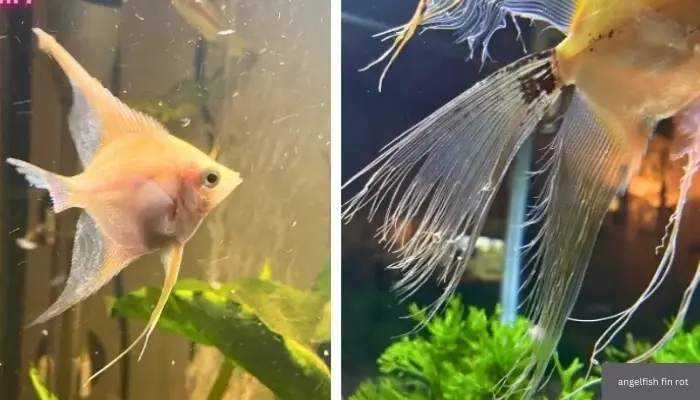
The affected fish may also laying in bottom of the tank, and exhibit a darkened appearance, sometimes accompanied by a whitish or fuzzy growth that indicates a potential fungal infection. Early recognition of these signs is vital to treat fin rot effectively, as delay can lead to further deterioration of the fish’s health.
In addition to the visual indicators, angelfish suffering from fin rot may also exhibit behavioral changes, such as lethargy, loss of appetite, or hiding more than usual.
Monitoring your fish for these symptoms can help you identify fin rot early and take the necessary steps to treat and prevent angel fish fin rot. Keeping a close eye on their damage fins and tail and overall behavior will ensure you can intervene swiftly and maintain a healthy aquatic environment.
Reasons of Angelfish Fin Rot:
Several factors contribute to the development of fin rot in angelfish. its often caused by a dirty tank water, which can stem from inadequate filtration, infrequent water changes, and overcrowding in the fish tank.
Elevated levels of ammonia, nitrite, and nitrate can stress fish and weaken their immune systems, making them more susceptible to bacterial infections that lead to fin rot. Additionally, fin nipping by other fish can exacerbate the problem, causing physical damage to base of the fins.
Furthermore, exposure to other sick fish can introduce pathogens into the aquarium, increasing the likelihood of diseases spreading.
To prevent fin rot, it is essential to maintain optimal water conditions and avoid overstocking the tank. Regular water testing and changes, along with proper tank cleaning, can help mitigate these risks and promote the overall health of your angel fish.
How to Treat Fin Rot in Angelfish?
Treating fin rot in angelfish involves a combination of improving water quality and administering appropriate medications. First, perform a water change to remove any harmful toxins from the tank water.
Aim for at least a 25% water change every week to keep the water clean and healthy. Next, consider adding aquarium salt to the tank, as it can help promote healing and reduce stress on the fish. However, be cautious with dosage and monitor your fish closely, as not all aquarium fish tolerate salt well.
In addition to these steps, using medications specifically designed for treating fin rot angelfish, such as Melafix or API products, can be beneficial. These antibiotics target the bacterial infections that cause fin rot and assist in the recovery of your fish’s dorsal fins.
Always follow the directions on the medication label and observe your angel fish for any signs of improvement or adverse reactions. By combining these treatment methods, you can effectively treat fin rot and promote healing in your fish.
How Long to Use Pimafix for Fin Rot on Angelfish?
Pimafix is a popular treatment for fin rot that many aquarists use due to its effectiveness in combating fungal infections. Typically, the recommended duration for using Pimafix is about seven days, but this may vary based on the severity of the infection and the specific needs of your angel fish.
It’s crucial to follow the dosage instructions provided by the manufacturer and observe the fish closely throughout the treatment period. During the treatment with Pimafix, continue to maintain regular water changes to support the healing process.
If you do not see any improvement in your angelfish’s condition after the initial treatment, it may be necessary to consult with an aquatic veterinarian for further advice. Monitoring the fish’s fins for signs of recovery and ensuring a clean, stress-free environment will greatly aid in their recovery from fin rot.
How to Cure a Bicolor Angelfish Fins Rot
Curing fin rot in a bicolor angelfish follows similar principles as treating other angelfish. Begin by isolating the affected fish in a quarantine tank to prevent the spread of fin rot to other tank mates.
Assess the water quality in both the main tank and quarantine tank, making necessary adjustments to ammonia, nitrite, and nitrate levels. Performing regular water changes and adding aquarium salt can help facilitate healing and reduce stress for the bicolor angel fish.
In addition to maintaining optimal water conditions, consider using medications like Melafix or API antibiotics specifically formulated to treat fin rot.
Apply these treatments following the manufacturer’s recommendations and monitor the fish closely for any signs of improvement. With proper care and attention to water quality, your bicolor angelfish can recover from fin rot and return to a healthy state, contributing to a vibrant aquarium environment.
Conclusion about fin rot in fish
In conclusion, fin rot is a common issue among freshwater fish like betta fish, often resulting from poor care and exposure to other fish in the tank. This fish disease manifests as torn fins and can be contagious if not addressed promptly. To help prevent fin rot, it’s crucial to keep your tank clean and change the water every week, ensuring that you use dechlorinated tap water and test your water regularly. A general guideline is to use 1 teaspoon of salt per gallon and consider adding a few drops of tea tree oil for additional treatment.
If your fish seems to be developing fin rot, administer over-the-counter medication and consider antifungal treatments if the situation escalates. Remember that feeding your fish appropriately and avoiding overfeeding is essential for maintaining optimal health. If treatment is successful, you should notice improvements within a few days, and the fish’s fins are grown back to full health. Regular maintenance and monitoring can significantly reduce the chances of Angelfish fin rot in your tank.
Recommended posts
- Top 5 Common Angelfish Diseases & How to Cure Them Fast
- The Complete Guide to Angelfish Tank Setup and Breeding Tips
- Angelfish pH Levels: Best Water Conditions for Healthy Fish
- Do Angelfish Bite? Myths, Facts & How to Keep Them Peaceful
- Can Angelfish Live with Betta? (Compatibility & Tank Setup)
- Angelfish Hole the Head Disease (Causes & Best Treatment)
- Angelfish Eye Bulging Treatment: Causes & Quick Fixes
- Will Angel fish Fins Grow Back: (Recovery & Care Tips)