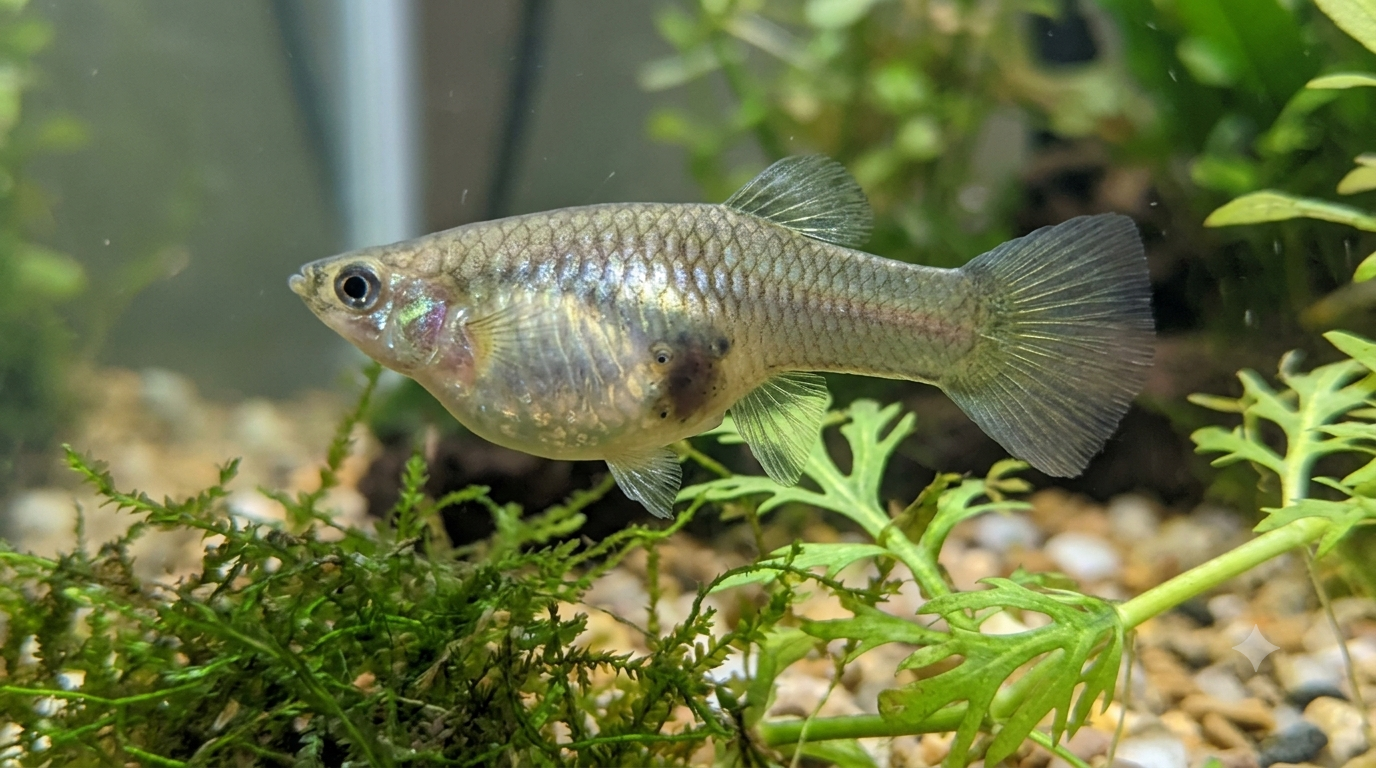
If you’re keeping an “alien betta,” you’re working with something a little different – and that changes how you plan a spawn.
Most alien bettas are captive-bred hybrids, not a distinct wild species.
They typically carry domestic Betta splendens ancestry crossed with one or more related wild species, often cited as B. smaragdina, B. mahachaiensis, or B. stiktos. Because the exact lineage is frequently unclear, the label alone tells you very little about behavior, size, or temperament of the individual in front of you.
What that means for breeding:
Temperament varies more. Domestic bettas have been shaped over roughly a century of selective breeding – originally for aggression, and more recently for color and finnage. Hybrids sit closer to wild-type behavior, which can mean more skittishness, more wariness, and less predictable tolerance of a mate. Treat each alien betta as an individual, and be readier to separate than you would be with a well-documented domestic pair.
Body shape and finnage differ. Alien bettas often show shorter fins and striking metallic, net-like, or iridescent scales rather than the exaggerated finnage of fancy B. splendens strains. Short fins can make fin-nipping injuries less dramatic, but it doesn’t make aggression safer.
Growth and fry size can be less predictable. Hybrid lines may vary in how quickly fry grow and how easily they take prepared foods, so budget extra time and flexibility in your fry feeding plan.
Verify before you pair. Ask the seller what they know about the fish’s parentage and how it’s been housed. Avoid mixing species of uncertain origin if you care about line purity, and don’t assume two “alien bettas” from different sources will breed true.
The essentials don’t change. The breeding tank, divider method, conditioning, temperature, and fry care we’ve covered all apply. Start there, then adjust to the individual.
In short: care for an alien betta like a betta, but plan for its behavior like an individual. That single mindset shift is the difference between a smooth spawn and a stressful one.
Suggested image: A short-finned alien betta showing metallic, net-patterned iridescent scales beside a long-finned domestic halfmoon for comparison. Alt text: “Alien betta with short fins and metallic iridescent net-like scales shown beside a long-finned domestic Betta splendens for comparison.”
Count the fry stages from when the fry start free-swimming, not from the day of spawning – temperature and condition shift these numbers, so use behavior alongside the calendar.
Stage
Typical timing
Your focus
Conditioning
1–2 weeks before
Separate tanks, rich diet, calm conditions
Introduction
Day 0
Divider method; watch for breeding bars and nesting
Spawning
Day 0–1
Supervise; expect the nuptial embrace over 1–4 hours
Female removal
End of spawning
Move her to a warm recovery tank immediately
Hatching
24–36 hours after spawn
Male tends nest; keep water calm and warm
Free-swimming
~2–3 days after hatch
Remove the male; begin infusoria
Baby brine shrimp
~Day 5–10 free-swimming
Introduce BBS as soon as fry can swallow it
Grow-out feeding
Weeks 2–8
Small frequent meals, careful water changes
Sexing
~8 weeks
Watch for male flaring and chasing
Jarring males
8–10 weeks
Separate on observed aggression, not age alone
Quick Betta Care Refresher
Breeding success rides on solid everyday husbandry – so here’s the condensed version. (This page covers spawning; for the full day-to-day routine, see our complete alien betta care guide.)
Tank size: at least 5 gallons for one betta; 10 gallons or more gives steadier water quality and room for aquascaping.
Temperature: keep it warm and stable at 75–82°F (24–28°C), with a heater and a lid.
Diet: a quality betta pellet as the staple, with frozen or live foods such as brine shrimp, daphnia, and bloodworms offered regularly. Bettas are carnivores – they can’t live on plant matter.
Water changes: about 25% weekly, matched to tank temperature, to keep nitrate low and water clean. Keep ammonia and nitrite at 0.
Tank mates: choose cautiously. Males are territorial, so many keepers house a single male alone; a 10-gallon-plus tank with peaceful mid-water fish gives the best odds. Compatibility in alien hybrids is less predictable, so have a backup plan.
Filtration: gentle and low-flow. Bettas evolved in calm, warm, low-oxygen water and are stressed by strong current.
Good water, good food, and stable warmth are the same foundations your fry will need from their first days.
FAQ: betta breeding questions
How do bettas breed?
Bettas breed through external fertilization. After the male builds a bubble nest and the female shows she’s receptive, he wraps around her in the nuptial embrace; she releases eggs a few at a time and he fertilizes them in the water. He then gathers the eggs and places them in his nest, where they hatch in roughly 24–36 hours.
How long does the whole betta breeding process take?
Plan on 1–2 weeks of conditioning, one to a few days of introduction behind a divider, a spawning session of up to about four hours, hatching in 24–36 hours, and free-swimming fry within about three days of hatching. The real commitment comes after that: roughly 8–12 weeks of daily fry care before males are ready to be jarred.
How big should a betta breeding tank be?
A 5–10 gallon tank with 4–6 inches of water is the standard. It’s shallow enough for fry to reach the surface and find food, warm and stable enough to hold temperature, and small enough to manage with frequent water changes. Always use a tight-fitting lid.
Can I breed bettas in a 5-gallon tank?
Yes – 5 gallons is workable for a single spawn, but a 10-gallon tank gives you more margin for water quality and more room to grow fry out. If you go small, be diligent with water changes and plan where the juveniles will go next.
How many babies does a betta have?
Clutch size varies widely. Sources describe anywhere from about a dozen to several hundred eggs per spawn, with commercial farms averaging around 300 eggs per event. In practice, the number of fry that survive to adulthood is far smaller than the number of eggs laid.
Do bettas die after breeding?
No – but the process does carry risk. A male can seriously injure a female, and a female left in the tank after spawning may be killed by him. Remove the female promptly once egg-laying ends, keep an eye on the male while he tends the nest, and separate him when the fry become free-swimming.
Is betta breeding suitable for beginners?
It can be, if you prepare properly. How to breed bettas for beginners really comes down to three things: conditioned adults, a dedicated and cycled breeding tank, and live food cultures ready before the spawn. If you can’t yet provide steady warmth, daily maintenance, and a plan for dozens of juveniles, it’s worth waiting a cycle or two.
Why is female betta fish breeding riskier than it looks?
Because the female has the least control in the tank. She can be chased, nipped, and cornered, and after spawning she’s often driven off the nest. Giving her a retreat, supervising the introduction closely, and pulling her out the moment egg-laying stops are the three habits that protect her most.
Suggested image: A well-planted, heated 10-gallon betta tank with a single male patrolling near a floating nest. Alt text: “Planted 10-gallon betta tank with a heater, gentle filter, and a single male betta swimming near a floating bubble nest.”
Alien Betta fish is an attractive and popular pet choice but requires specialized care. Use a small tank, give them plenty of hiding places, feed your betta alien fish live or frozen food, and keep the water temperature between 76 and 82 degrees Fahrenheit. With proper care, your domesticated betta fish will thrive and provide you with years of enjoyment.
I am the founder of infishtank.com, a devoted wife and mother, and an avid fish enthusiast. My aim is to assist fellow fish lovers worldwide in understanding how to properly care for and breed their pet fish.