What fish can live with Oscars without becoming a meal or getting bullied? Oscars can live with other fish, but only with large, sturdy companions in a spacious aquarium.
The best tank mates for Oscars are usually big silver dollars, robust plecos, severums, geophagus, and selected large catfish—yet no combination is guaranteed because Oscar fish compatibility depends on the individual fish, tank size, and adult size.
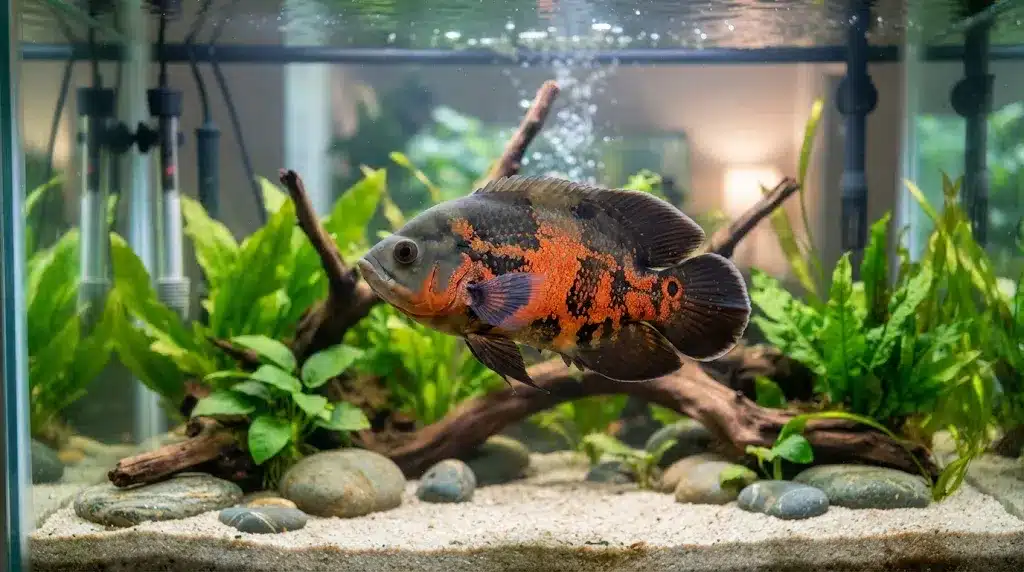
Oscars are large South American cichlids with big mouths, strong personalities, and a heavy bioload. They can eat small fish, uproot plants, rearrange décor, and become territorial during breeding.
A good tank gives them plenty of room, strong filtration, stable water conditions, and companions that are not small enough to fit in their mouth.
Still, not every large fish belongs in an Oscar aquarium, and some combinations work far better than others. In this care guide, you’ll discover the best Oscar tank mates, fish you should avoid, and practical tips for keeping aggression under control. Let’s find out which fish can share your Oscar’s tank safely and successfully.
Can Oscar Fish Live With Other Fish?
Yes. Oscars can live with other aquarium fish, but they are not easy community fish. They are predatory, territorial, and grow very fast, so they need tank mates that are too large to swallow, able to compete for food, and comfortable in warm freshwater.
Oscars are not always aggressive, but they can become more territorial when spawning or when space is limited. Aquarium Co-Op notes that Oscars can live with larger peaceful fish such as silver dollars, certain plecos, and medium-sized South American cichlids.
The safest approach is to plan the aquarium around the adult size of every fish—not the size they are when you buy them. Oscars grow extremely fast and can reach 10–12 inches or more, while some proposed companions grow even larger.
What Makes a Good Tank Mate for Oscar Fish?
A good tank mate for an Oscar is large, active, sturdy, and able to live in the same water conditions. It should not be delicate, slow-moving, long-finned, or small enough to fit inside an Oscar’s mouth.
Look for these traits:
- Large adult size: A companion should be too big for the Oscar to eat.
- Similar water needs: Oscars do well around 74–80°F and pH 6–8.
- Strong body shape: Deep-bodied or armored fish handle accidental bumps better than slender fish.
- Peaceful or moderately assertive temperament: Avoid fish that constantly challenge the Oscar.
- High activity level: Active fish are less likely to be treated as prey.
- Room to escape: A large tank with open swimming space and visual barriers reduces conflict.
Avoid assuming that a “cleanup crew” solves aggression or water-quality problems. Plecos and catfish still add waste, and no fish replaces water changes or a filtration system that can handle the bioload.
10 Best Fish That Can Live With Oscars
Choosing the best fish that can live with Oscars takes more than picking large, attractive tankmates for oscar fish. Oscars grow big, defend their territory, and often mistake smaller fish for food, so compatibility, temperament, and tank size matter.
Still, not every large fish makes a good Oscar companion, and some combinations can end in aggression or stress. From peaceful schooling fish to tough bottom-dwellers, let’s explore the safest tank mates, their compatibility, and the aquarium setup you need to help your Oscar community thrive.
These are possible Oscar fish tank mates, not guaranteed matches. Every aquarium is different, and an Oscar may accept a companion for months before suddenly turning aggressive.
| Fish | Adult size | Temperament | Minimum tank consideration | Compatibility risk |
|---|---|---|---|---|
| Silver dollar fish | 5–8 inches | Peaceful, schooling | School of 5–6; 125 gallons or larger | Low to medium |
| Common pleco | 12–24+ inches | Mostly peaceful, territorial at rest | Very large tank; powerful filtration | Medium |
| Severum cichlid | 8–12 inches | Generally calm, can be territorial | 125 gallons or larger | Medium |
| Jack Dempsey cichlid | 8–10 inches | Aggressive, territorial | 125 gallons or larger; similar size | Medium to high |
| Firemouth cichlid | 5–6 inches | Territorial, smaller than Oscars | 125 gallons or larger; close monitoring | Medium to high |
| Bichir | Species-dependent; often 12–30 inches | Predatory, bottom-dwelling | Very large tank; secure lid | Medium |
| Clown loach | 12–16 inches | Peaceful, social | Group of 5+; very large long-term tank | Medium |
| Tinfoil barb | 12–14 inches | Active, schooling | School; 125 gallons or larger | Medium |
| Geophagus cichlid | 8–12 inches | Mostly peaceful, sand-sifting | 125 gallons or larger; sandy areas | Medium |
| Large Synodontis catfish | 6–12+ inches, species-dependent | Nocturnal, sturdy | Large tank; hiding caves | Medium |
Silver Dollar Fish
Silver dollars are one of the more common companions for Oscar cichlids. Their deep bodies, speed, and schooling behavior make them harder for an Oscar to target than small, slow fish.
Keep at least five or six silver dollars together. A group spreads attention across several fish and creates a more natural, active display. They are beautiful fish, but they still need a big tank because a school produces significant waste.
Common Pleco
A common pleco can live with an Oscar in a large aquarium, but it is not an automatic choice. Common plecos grow very large, produce a heavy bioload, and may compete for resting space along the bottom.
Choose a pleco only if your tank size and filtration can support its full adult size. Do not rely on it to keep the tank clean; regular water changes and gravel vacuuming remain essential. tropicaltreasureswyo
Severum Cichlid
Severums are medium-to-large South American cichlids that can sometimes share space with Oscars. They are usually calmer than Oscars, but they can still become territorial.
Add a severum only when both fish are similar in size or the severum is already large and confident. Provide driftwood, rocks, and open swimming lanes so neither fish feels trapped.
Jack Dempsey Cichlid
A Jack Dempsey can live with an Oscar, but this is a higher-risk pairing. Jack Dempseys are Central American cichlids with strong territorial instincts, and two dominant fish may fight over space.
Use this combination only in a large tank, ideally 125 gallons or more, with plenty of line-of-sight breaks. Introduce them at similar sizes and keep a separate tank or rehoming plan ready.
Firemouth Cichlid
Firemouth cichlids are Central American cichlids that sometimes live with Oscars, but they are not a dependable choice. An adult Oscar is much larger and can injure or stress a firemouth.
If you try this pairing, use a big tank, provide caves and visual barriers, and watch closely. Do not add a small firemouth to an established adult Oscar tank.
Bichir
Bichirs are unusual, prehistoric-looking fish that can sometimes live with Oscars. They are bottom dwellers, have armored bodies, and are usually too large for an Oscar to swallow.
They are not beginner fish. Bichirs need a secure lid because they can escape, and their adult size varies greatly by species. Research the exact species before adding one.
Clown Loach
Clown loaches are peaceful, social fish that can coexist with Oscars in exceptional setups. They grow much larger than many people expect and should live in a group, not alone.
A single clown loach in a 75-gallon tank is not a good long-term plan. Clown loaches need a larger tank, a proper group, stable warm water, and excellent filtration.
Tinfoil Barb
Tinfoil barbs are fast, large schooling fish that can work with Oscars in a very spacious aquarium. Their speed and size make them less vulnerable than small fish.
They need a school and a large swimming area. Because they grow big and stay active, they are better suited to a 125-gallon or larger tank than a 55-gallon or 75-gallon setup.
Geophagus Cichlid
Geophagus cichlids are peaceful South American sand-sifting fish. They can make attractive companions for Oscars in a large, well-planned tank.
Use a soft sand substrate so they can sift naturally. Avoid sharp gravel, and make sure the tank has enough bottom space for both the geophagus and the Oscar.
Large Synodontis Catfish
Large Synodontis catfish can be possible Oscar companions because they are armored, nocturnal, and usually avoid open-water conflict. Their exact adult size depends on the species.
Provide caves, driftwood, and shaded resting areas. Do not choose a tiny Synodontis species simply because it is a catfish; it still needs to be large enough to avoid becoming prey.
What Fish Should You Never Keep With Oscars?
Do not keep Oscars with small fish, delicate fish, or highly aggressive fish. Oscars are opportunistic eaters and can swallow anything small enough to fit in their mouth.
Avoid these tank mates for a tiger oscar:
- Goldfish: They prefer cooler water and produce heavy waste.
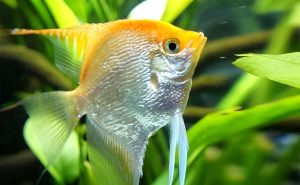
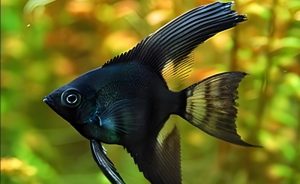
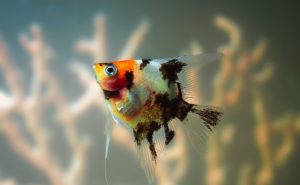
- Angelfish: Their long fins and slower movement make them vulnerable.
- Neon tetras, guppies, and small tetras: They are likely to become food.
- Corydoras catfish: They are too small and live on the bottom, where an Oscar may harass them.
- Shrimp and snails: Most will be eaten; a snail may survive only if it is too large to swallow.
- African cichlids: Many need harder, more alkaline water and different social behavior than South American cichlids.
- Flowerhorns and very aggressive Central American cichlids: These can seriously injure an Oscar.
- Betta fish, gouramis, and other long-finned fish: They are slow-moving and easy targets.
A fish does not need to be tiny to be unsafe. A slow fish, a fragile fish, or a fish that cannot defend its territory can still suffer in an Oscar aquarium.
Can Two Oscar Fish Live Together?
Two Oscars can live together, but it is not guaranteed. Some pairs get along well; others fight constantly, especially as they mature or begin breeding.
For two Oscars, plan on a 90–100 gallon tank at minimum, though 125 gallons gives more room for territory and retreat. Oscars can form strong pairs, but they can also bully a third Oscar, so never assume that raising them together guarantees peace.
If you keep two Oscars, watch for chasing, torn fins, hiding, reduced eating, and constant blocking near caves or filters. Be ready to separate them if aggression does not stop.
How Big Should an Oscar Community Tank Be?
A single adult Oscar needs at least a 75-gallon tank, while an Oscar community tank should generally be 125 gallons or larger. A 55-gallon tank is too small for an adult Oscar and is not a good foundation for tankmates.
Tank size and setup matter more than the number of fish on a compatibility chart. A big tank gives fish room to avoid each other, reduces territorial stress, and makes it easier for filtration to handle the bioload.
For a practical 125-gallon community, consider:
- One adult Oscar
- Five or six silver dollars
- One large, appropriately sized pleco or Synodontis catfish
- Strong canister filtration
- Bare minimum décor, with rounded rocks and driftwood
- A secure lid
This is only an example. Do not add every species at once, and never stock based on juvenile size alone.
Ideal Water Parameters for Oscars and Their Tank Mates
Oscars are hardy, but stable water quality matters more than chasing a perfect number. Keep the water warm, clean, and well oxygenated.
| Parameter | Good target |
|---|---|
| Temperature | 74–80°F (23–27°C) |
| pH | 6–8 |
| Ammonia | 0 ppm |
| Nitrite | 0 ppm |
| Nitrate | Keep low through water changes |
| Filtration | Oversized and able to handle the bioload |
Oscars eat a lot and create a lot of waste. Use a filtration system rated for a larger tank than the one you own, clean mechanical media regularly, and perform consistent water changes.
A varied diet also supports long-term health; quality cichlid pellets, frozen foods, and occasional treats such as brine shrimp can help provide a variety of foods.
How to Introduce New Fish to an Oscar Tank Safely
Introduce new fish slowly and always have a backup plan. Even a species with a good compatibility reputation may not suit your specific Oscar.
- Quarantine the new fish. Keep it in a separate tank for several weeks to protect your established fish.
- Match sizes carefully. Do not add a small fish to an adult Oscar tank.
- Rearrange the tank. Move rocks and décor before adding the newcomer so existing territories reset.
- Add the new fish during a calm period. Turn down bright lights and avoid feeding immediately beforehand.
- Feed the Oscar first. A well-fed Oscar is less likely to view a new fish as food.
- Watch for 30–60 minutes. Look for chasing, cornering, fin damage, or repeated attacks.
- Observe for several days. Aggression can begin after the initial introduction.
- Remove the new fish if needed. Do not wait for serious injury.
A new tank mate should be robust and close in size to the Oscar. A fish that is less than two-thirds of the Oscar’s length may be at higher risk, especially if it is slender or slow-moving.
Signs Your Oscar Is Attacking or Bullying Other Fish
Oscars can be full of personality without being violent, but bullying can escalate quickly. Watch for these warning signs:
- Constant chasing or ramming
- Torn, ragged, or missing fins
- Scales missing or visible injuries
- One fish hiding all day
- A fish refusing food
- Rapid breathing or stress coloring
- One fish trapped near the filter, corner, or surface
- Repeated blocking near caves or territories
Separate the fish if injuries appear or if one fish cannot eat or rest. A larger tank can reduce conflict, but it does not fix incompatible personalities.
Frequently Asked Questions About Oscar Fish Tank Mates
Can Oscars Live With Angelfish?
No. Angelfish are usually a poor match because they are slow-moving, long-finned, and often smaller than an adult Oscar. An Oscar may nip their fins or injure them.
Can Oscars Live With Goldfish?
No. Goldfish prefer cooler water, while Oscars need warm tropical water. Goldfish also produce a heavy bioload and may be injured or eaten.
Can Oscars Live With African Cichlids?
Usually no. African cichlids often need harder, more alkaline water and can be highly territorial. Their behavior and water needs do not match most Oscar setups.
Do Oscars Need Tank Mates?
No. One Oscar can live happily alone in a properly sized tank. A solo Oscar is often the simplest and lowest-risk option, especially in a 75-gallon aquarium.
Will Oscar Fish Eat Smaller Tank Mates?
Yes. Oscars will eat fish that are small enough to fit in their mouth. This includes many tetras, guppies, small catfish, shrimp, and small snails.
What fish go with Oscars?
Large silver dollars, certain plecos, severums, geophagus, large Synodontis catfish, and some bichirs are possible companions for oscar fish. Compatibility still depends on individual temperament, adult size, and tank space.
What can I keep an Oscar with?
Keep an Oscar with fish that are large, fast or armored, and comfortable in warm freshwater. Avoid small, delicate, slow-moving, or overly aggressive fish.
Can Oscars live with Geophagus tapajos?
Possibly, but only in a large, mature aquarium. Geophagus tapajos are generally peaceful sand-sifters, but they still need space, clean water, and protection from bullying.
Will glow fish fight with Oscar fish?
Glow fish are usually small tetras or danios. They are too small and vulnerable to live safely with an Oscar, so fighting is not the main concern—predation is.
What fish can live with Oscar fish?
Fish that can live with Oscar Cichlids include silver dollars, common plecos, severums, geophagus, large Synodontis catfish, clown loaches, tinfoil barbs, and some bichirs. None are risk-free.
Will a catfish survive with Oscars?
Some large catfish can, but many cannot. Avoid small catfish such as corydoras. Large Synodontis catfish or appropriately sized plecos have a better chance, but only with enough space and hiding places.
What type of fish can I put in with my adult Oscar?
Choose a fish that is nearly as large as your Oscar, sturdy, and able to live in the same warm water. Silver dollars, severums, geophagus, and large plecos are more realistic options than small community fish.
Can Oscars live with 1 kuhli loach in a 75-gallon tank?
No. A kuhli loach is too small, slender, and vulnerable. It may hide constantly, become stressed, or be eaten. A 75-gallon tank is also already a minimum-size home for one Oscar.
Can Oscars live with rainbow fish in a 75-gallon tank?
No. Most rainbowfish are too small and active to be safe with an adult Oscar. They may fit in the Oscar’s mouth, and a 75-gallon tank does not provide enough long-term space for a secure mixed community.
What fish go well with Oscars, and what makes a good tankmate?
Large silver dollars, severums, geophagus, and sturdy plecos can work. To keep an Oscar fish successfully, choose larger fish, provide a spacious tank setup, and monitor behavior closely.
Can Koi live with Oscars?
No. Koi need cooler, outdoor pond conditions, while Oscars need warm tropical water and a larger tank indoors.
Can I keep a single Oscar?
Yes. One Oscar can thrive alone if you have the right tank setup. If aggression or space becomes an issue, you may need a bigger tank.
Can small fish live safely with Oscars?
No. Oscars are predators and may eat fish small enough to fit in their mouth. Choose larger fish instead.
How can I tell if an Oscar tankmate pairing is not working?
Watch for chasing, torn fins, hiding, missed meals, or injuries. Separate them if aggression continues.
What Fish Can Live with Oscars Conclusion
Choosing what fish can live with Oscar fish comes down to adult size, temperament, tank space, and constant observation. Oscars are big, intelligent South American cichlids that can be wonderful pets, but they are also powerful predators with a heavy bioload.
The best Oscar fish tank mates are large silver dollars, sturdy plecos, severums, geophagus, and selected large catfish—but only in a properly sized aquarium with strong filtration and stable water conditions.
No fish is guaranteed to get along with an Oscar. A combination that works in one fish tank may fail in another because every Oscar has its own personality. Start with one Oscar, choose companions carefully, introduce them slowly, and keep a backup plan ready.
If you cannot provide a 125-gallon or larger community tank, a single Oscar is often the best and safest choice. With the right tank size and setup, Oscars can live peacefully with carefully selected companions and become the bold, beautiful centerpiece of a freshwater aquarium.
You might also like
- Where Do Oscar Fish Come From! (Origins & Natural Habitat)
- Best Oscar Fish Habitat: Aquarium Setup & Care Guide
- Best Tiger Oscar Cichlid Food – Top Diet & Nutrition Guide
- Do Oscar Fish Have Teeth? Understanding Their Unique Bite
- Blue Face Brichardii Fish and Oscar Fish: Care and Compatibility
- Do Oscars Eat Other Fish: (Understanding Their Behavior)
- Are Oscar Fish Saltwater or Freshwater? Essential Care and Facts
- Oscar Fish Tank Setup: Step-by-Step Guide for Beginners