What do nerite snails eat? If you’re considering adding nerite snails to your aquarium, knowing what these little mollusks like to eat to provide the best possible care is essential.
Nerite snails are popular among hobbyists for their algae-eating capabilities and ability to keep aquariums clean. However, their diet goes beyond just munching on algae.
In this comprehensive nerite snails guide guide, we’ll explore the dietary preferences of nerite snails and provide tips for ensuring they have a well-balanced and nutritious diet.
From algae wafers to fresh vegetables, nerite snails have a diverse palate that can be easily accommodated in a home aquarium. Understanding their nutritional needs and feeding habits is crucial for keeping them healthy and thriving.
Whether you’re a beginner or an experienced aquarist, this guide will provide valuable insights into what nerite snails eat, how often they should be fed, and what to avoid in their diet.
By the end, you’ll have all the information you need to ensure optimal care for your nerite snails and maintain a vibrant and balanced aquarium ecosystem.
Nerite Snails Are Great Tank Cleaners
Nerite snails are fantastic tank cleaners and a popular choice for freshwater aquariums. They are known for their voracious appetite for algae, which helps keep the fish tank clean and free of unsightly green growth.
These snails are also very efficient at cleaning the glass walls of the tank, consuming any algae or debris that may accumulate.
In addition to their cleaning abilities, nerite snails are peaceful and non-aggressive, making them a great addition to community tanks.
They are easy to care for and do not require much maintenance, making them perfect for beginner aquarium enthusiasts.
Another bonus is that they come in various attractive shell patterns, adding color to the tank. Overall, nerite snails are an excellent choice for anyone looking to keep their aquarium clean and beautiful without much effort.
Different Types Of Nerite Snails For Freshwater Tanks
Nerite snails are popular freshwater aquarium snails known for their algae-eating abilities and beautiful shell patterns. They are peaceful and relatively low-maintenance, making them ideal for beginner aquarists.
Here are some of the most common types of nerite snails for freshwater tanks:
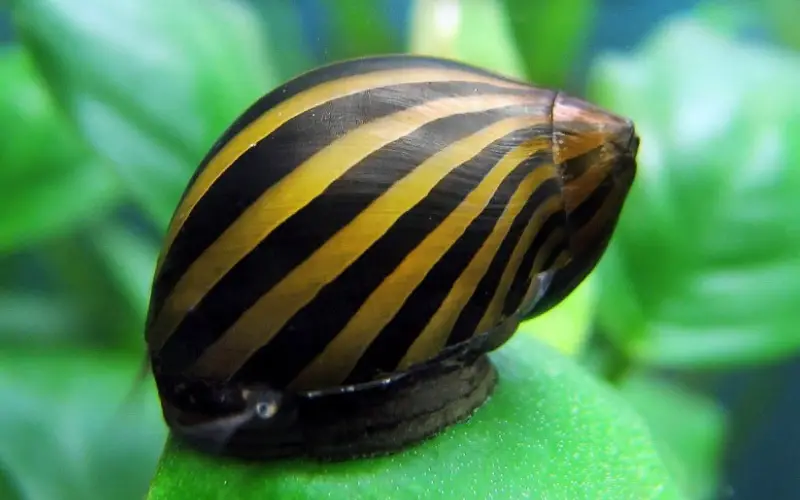
- Zebra Nerite Snail (Neritina natalensis): This is the most popular type of nerite snail, known for its distinctive black and gold striping pattern. They are hardy and can grow up to 1 inch in diameter.
- Tiger Nerite Snail (Vittina semiconica): These snails have a beautiful tiger-like pattern of brown and yellow stripes. They are slightly smaller than Zebra Nerite Snails, growing to 0.75 inches in diameter.
- Olive Nerite Snail (Neritina cantharus): These snails have a smooth, olive-green shell with occasional brown markings. They are the smallest of the common nerite snails, growing up to 0.5 inches in diameter.
- Black Racer Nerite Snail (Neritina turrita): These snails have a long, slender black or dark brown shell. They are active swimmers and can grow up to 1 inch in diameter.
- Horned Nerite Snail (Nerita chamaeleon): These snails have a unique, horned projection on the front of their shell. They are the largest of the common nerite snails, up to 1.5 inches in diameter.
Other less common types of nerite snails include the following:
- Chocolate Nerite Snail (Neritina clenchi): These snails have a smooth, chocolate-brown shell.
- Red Leopard Nerite Snail (Neritina pulligera): These snails have a red shell with black spots.
- Reticulated Nerite Snail (Neritina reticulata): These snails have a net-like pattern on their shell.
When choosing nerite snails for your aquarium, it is crucial to consider the size of your tank and the other inhabitants. Nerite snails are generally peaceful but may compete with other herbivores for food. They are also escape artists, so make sure your tank has a tight-fitting lid.
What Do Nerite Snails Eat Besides Algae? (Feeding Nerite Snails)
What does nerite snail eat? In addition to algae, Nerite snails can also eat a variety of other organic materials and detritus found in the aquarium. This includes leftover fish food, decaying plant matter, and even small particles of fish waste.
Some hobbyists supplement their Nerite snails’ diet with algae wafers, blanched vegetables like zucchini or cucumber, and commercial snail food. Providing a balanced diet for Nerite snails is vital to ensure their health and well-being.
While they primarily feed on algae, offering a variety of food sources will help them thrive in the aquarium environment. It’s also essential to monitor the amount of food given to the snails, as overfeeding can lead to water quality issues.
By offering a diverse diet and monitoring their food intake, Nerite snails can be a valuable addition to the aquarium ecosystem.
How many Nerite snails per gallon?
The recommended number of Nerite snails per gallon of water in a freshwater aquarium is typically around 1 snail per 2-5 gallons. These snails are known for their ability to help control algae growth and keep the aquarium clean, making them popular choices for aquarium enthusiasts.
However, it’s important not to overcrowd the tank with snails as this can lead to water quality issues and cause competition for food and space.
Overpopulation of snails can also lead to excess waste, creating imbalances in the tank’s ecosystem. It’s always best to research the specific needs of the type of snail you plan to keep and consider factors such as tank size, water quality, and other inhabitants before adding any new snails to your aquarium.
As always, it’s crucial to monitor the health and behavior of your snails regularly to ensure they are thriving in their environment.
Compatible Nerite Snail Tank Mates
When considering tank mates for Neritidae snails, choosing compatible species in terms of water parameters, behavior, and size is essential. Neritidae snails are generally peaceful and well-suited for community aquariums. Here are some compatible tank mates for Neritidae snails:
Community Fish: Many peaceful community fish can coexist with Neritidae snails. Some suitable options include tetras (neon tetras or ember tetras), rasboras, guppies, mollies, platies, and small peaceful catfish like Corydoras.
Shrimp: Most dwarf species, such as Cherry or Amano, can live alongside Neritidae snails. Shrimp are generally peaceful and won’t bother the snails.
Livebearers: Fish from the Poeciliidae family, like guppies, mollies, and platies, are compatible with Neritidae snails. These livebearers are generally peaceful and can tolerate the same water conditions as the snails.
Some Bottom-Dwelling Fish: Certain bottom-dwelling fish, like Corydoras catfish or Otocinclus catfish, can coexist with Neritidae snails. These fish are peaceful and won’t disturb the snails.
Remember to consider your tank’s size and each species’ specific needs. Provide adequate hiding spots and ensure that the water parameters, such as water temperature, pH, and hardness, are suitable for all the species you choose.
Nerite Snail Care – Water Parameters, Habitat & Tank Size
Nerite snails are popular aquarium pets known for their algae-eating abilities and striking shell patterns. Regarding water parameters, these snails require stable and clean water conditions.
The ideal temperature for nerite snails is between 72 and 78°F, with a pH level of 7.5 to 8.5 and a water hardness of 5 to 12 dKH. Maintaining good water quality is essential by performing regular water changes and monitoring ammonia and nitrate levels in the tank.
Regarding habitat, nerite snails prefer a well-established tank with plenty of surfaces for grazing, such as rocks, driftwood, and live aquarium plants. They also need access to calcium for shell growth, so it is recommended to include pieces of cuttlebone or calcium-rich substrates in the tank.
As for tank size, a minimum of 5 gallons is suitable for a small group of nerite snails, but larger tanks are preferred for providing ample space and stability. Overall, providing the correct water parameters, habitat, and tank size is essential for the well-being and longevity of nerite snails in captivity.
Nerite Snail Eggs & Reproduction: (Breeding Nerite Snails)
Nerite snails are popular choices for freshwater aquariums due to their algae-eating abilities. However, one aspect that can sometimes surprise new owners is the presence of nerite snail eggs. Here’s what you need to know about nerite snail eggs and reproduction:
– Do Nerite Snails Reproduce in Freshwater?
While nerite snails can lay eggs in freshwater, these eggs will not hatch. The larvae require brackish water (a mix of fresh and saltwater) to develop and survive. So, while you may see little white capsules on your aquarium decorations, rest assured they won’t become a snail explosion.
– What Do Nerite Snail Eggs Look Like?
Nerite snail eggs are tiny, white capsules that resemble sesame seeds. They are typically laid on hard surfaces like glass, rocks, driftwood, and aquarium decorations. Each capsule can contain multiple eggs, ranging from 30 to 100.
– Should I Remove Nerite Snail Eggs?
Removing nerite snail eggs is only necessary if you find them aesthetically displeasing. Since they won’t hatch in freshwater, they pose no harm to your tank’s inhabitants. However, if you want to remove them, you can carefully scrape them off with a razor blade or credit card. Be gentle, as you don’t want to damage the surface they’re attached to.
– Can I Get Nerite Snails That Don’t Lay Eggs?
Unfortunately, no. It can still lay eggs even if you have only one nerite snail. While the eggs won’t hatch, they can still be unsightly. If you oppose egg-laying, consider other algae-eating options like Siamese algae eaters or Amano shrimp.
Additional Tips:
- If you’re concerned about a potential snail population boom, you can keep only male nerite snails. However, sexing nerite snails is notoriously tricky, so this method isn’t foolproof.
- Provide your nerite snails with a varied diet of algae and biofilm to keep them healthy and happy.
- Maintain good water quality in your aquarium to ensure the health of your nerite snails and other tank inhabitants.
What Do Baby Nerite Snails Eat?
Baby nerite snails eat the same things as adult nerite snails, primarily herbivores. Their primary food source is algae, making them excellent additions to aquariums as they help keep the tank clean. If there’s not enough algae growth in the tank, you can supplement their diet with:
- Sinking algae wafers are readily available at most pet stores and provide essential nutrients for nerite snails.
- Blanched vegetables: Blanch spinach, zucchini, or carrots to soften them up and make them more accessible for the snails to eat.
- Biofilm: This is a thin layer of microorganisms that grows on surfaces in the tank. While not as nutritious as algae, biofilm can still provide some food for nerite snails.
Commonly Asked Questions about Nerite Snails Diet & Food Sources (FAQs)
What do I feed my Nerite snail?
Nerite snails eat algae in your tank, But if your tank lacks algae, it’s a good idea to offer blanched veggies (zucchini, spinach) or algae wafers for a happy snail.
How many Nerite snails should be kept together?
Nerite snails should be kept together in groups of at least three to five individuals to ensure social interaction and a balanced ecosystem.
Can you overfeed a Nerite snail?
Overfeeding won’t harm your Nerite snail directly, but it can foul your tank! They’ll munch what they need and leave excess food to decompose, impacting water quality. Opt for algae wafers or blanched veggies sparingly if your tank lacks algae.
Will Nerite snails eat brown algae?
Nerite snails happily devour brown algae, including diatoms. They’re like tiny vacuum cleaners for your tank, especially fond of soft brown patches on glass or under substrate. Consider them algae-busting buddies!
What are the best snails for eating brown algae?
Top brown algae champers: Nerite snails (diatom munchers!), Astraea snails (algae ninjas!), and Mexican Turbo snails (power cleaners!). Pick based on tank size and preference.
What type of algae do Nerite snails eat?
Nerite snails are algae buffets! They gobble up brown, film algae, and soft green algae. Even tackling pesky green spot algae. They’re your handy tank cleaners, leaving glass and decorations sparkling.
Can two Nerite snails live together?
Absolutely! Nerite snails are peaceful pals, so two happily share a tank. Remember, more snails mean less algae for each, so adjust numbers based on your tank’s algae growth.
What do Nerite snails need in a tank?
Happy Nerites need Algae to munch (or veggies!), Stable water (72-78°F, pH 7.5+), sponge filters, Hiding spots, live plants & surfaces to roam, & sometimes Calcium boost for strong shells!
Conclusion
In conclusion, understanding what does nerite snail eat is crucial for their overall health and the vitality of your aquarium. These tiny yet captivating creatures have a varied diet of algae, biofilm, and decaying plant matter. You can ensure their longevity, vibrant colors, and active behavior by providing them with a well-balanced and nutritious diet. Adding algae wafers or blanched vegetables as supplementary food sources will help meet their nutritional requirements.
Whether you’re a seasoned aquarist or a beginner, taking the time to comprehend and cater to the dietary needs of nerite snails is essential for creating a thriving aquatic ecosystem. So, go ahead and dive into the fascinating world of nerite snails, and watch as they gracefully contribute to the beauty and balance of your aquarium. Understanding what do nerite snails eat is the key to their happiness and the success of your aquarium.
You might also like
- Nerite Snails 101: The Only Care Guide You’ll Ever Need!
- Do Mystery Snails Eat Algae: The Truth About Snails & Algae!
- Preventing Nerite Snail Eggs in Your Aquarium: 3 Secret Ways
- Horned Nerite Snails 101: A Comprehensive Guide for Beginners
- How Long Does a Nerite Snail Live: a Comprehensive Care Guide
- How Many Nerite Snails Per Gallon Tank: (Find Out the Safe Limit)
- How Big Do Nerite Snails Get in Aquarium: The Ultimate Care Guide
- Best Food for Nerite Snails: Care Guide for Healthy Aquarium Snail
- Do Nerite Snails Eat Live Plants (The Shocking Fact)