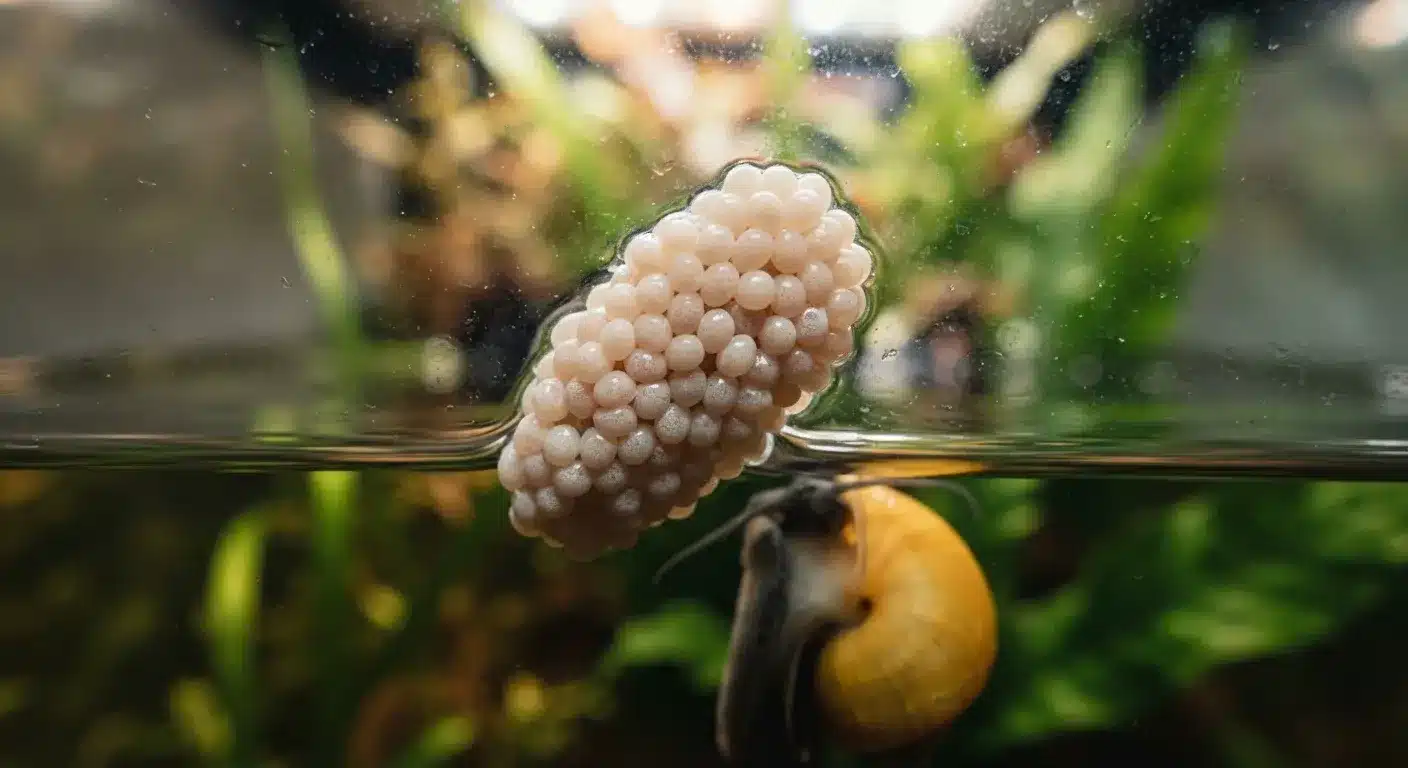
Mystery snail eggs are small, pinkish egg masses that mystery snails deposit above the waterline, usually on the tank lid or glass. They need warm, humid air rather than direct contact with water. If you found a cluster on the glass and wondered what to do next, you are in the right place.
This apple snail care guide walks you through identification, fertility checks, hatching timelines, and baby snail care. You will learn how to spot a healthy mystery snail clutch, avoid the mistakes that kill developing eggs, and decide whether to keep or remove the eggs.
Whether you keep one snail or a whole breeding setup, these practical steps help you raise strong, healthy babies.
What Do Mystery Snail Eggs Look Like?
Mystery snail eggs look like a firm, pink-to-tan cluster stuck to a hard surface above the water. They resemble a small raspberry or a blob of bubble gum. The cluster is called a mystery snail clutch, and it stands out against glass, plastic, or wood.
Color, Size, Shape, and Texture of Mystery Snail Eggs
Fresh eggs usually appear bright pink, pale pink, or cream. Golden mystery snail eggs often look lighter and more peach-colored, while blue mystery snail eggs can appear pale pink or slightly gray. Color depends on the parent snail’s genetics and the age of the clutch.
A typical mystery snail egg clutch measures about 2–5 cm and contains 25–100 eggs, though larger clutches can hold 50–200 or more. The eggs feel hard and slightly chalky on the outside. Each egg sits inside a small capsule that protects the developing embryo.
The shape is usually oval or rounded, and the surface looks bumpy rather than smooth. A healthy clutch stays firm. A dried, crumbly, or mushy clutch usually signals a problem.
How Many Eggs Are in a Mystery Snail Clutch?
Most mystery snail clutches contain 50–150 eggs, with some large ones reaching 200 or more. Not every egg is fertile. A single clutch may produce dozens of babies even when many eggs fail.
Clutch size depends on the female’s age, diet, and health. Older females sometimes lay smaller clutches. Well-fed snails in stable water conditions often produce larger ones.
Where Do Mystery Snails Lay Their Eggs?
Mystery snails lay their eggs above the waterline, not underwater. The female climbs toward the top of the tank and deposits the clutch on a dry surface. This behavior separates mystery snails from many other snail species that lay eggs underwater.
Why Mystery Snails Lay Eggs Above the Waterline
Mystery snail eggs need humid air, not liquid water. The eggs absorb moisture from the damp air between the water surface and the tank lid. If the clutch stays underwater, the developing embryos can drown.
This is why the space above the water line matters so much. A tight-fitting lid traps evaporation and creates the proper humidity. The eggs stay moist without being soaked.
Common Places to Find Egg Clutches in an Aquarium
You will usually find mystery snail eggs in aquarium setups on:
- The inside of the lid
- Tank walls just above the waterline
- The rim of a filter or heater
- Driftwood or aquarium plants near the surface
- Floating decor or a piece of styrofoam
Some snails lay eggs on the aquarium light fixture or hood. Others deposit clutches above the water on the glass near the filter outlet. If you have seen eggs on the floor outside the tank, the female may have laid them on the lid and they fell.
Are Mystery Snail Eggs Fertile?
Not all mystery snail eggs are fertile. A female can lay eggs without a male, but those eggs will not develop. Fertile mystery snail eggs usually change color and texture as the embryo grows.
Signs of Fertilized Mystery Snail Eggs
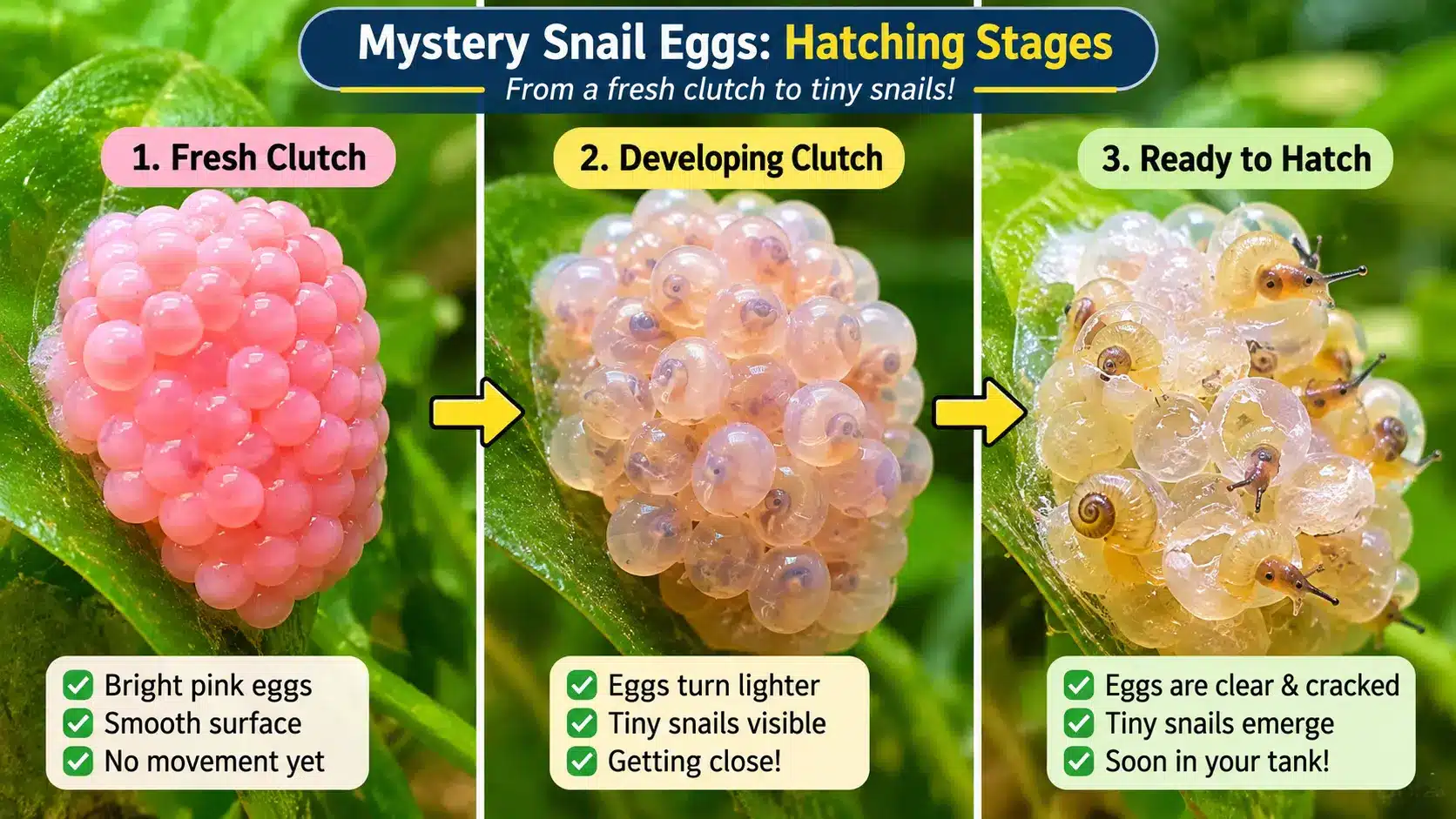
A fertile clutch starts pink or cream and slowly turns darker or chalkier. After a week or so, you may notice tiny dark dots inside the eggs. Those dots are developing embryos.
The clutch should stay firm and plump. It may look slightly larger as the eggs absorb moisture. A fertile mystery snail egg clutch also holds its shape instead of collapsing.
How to Tell If a Mystery Snail Egg Clutch Is Unfertilized
Infertile eggs often stay bright pink or white for weeks without changing. They may shrink, dry out, or grow fuzzy mold. If the clutch turns mushy or smells bad, it has failed.
You can gently press a small area with a clean finger. Fertile eggs feel firm. Infertile eggs may feel hollow or break apart too easily. When in doubt, wait another week before removing the clutch.
How Long Do Mystery Snail Eggs Take to Hatch?
Mystery snail eggs usually hatch in 2–4 weeks. Temperature and humidity control the exact timing. Warmer, humid conditions speed development, while cool or dry air slows it down.
Mystery Snail Egg Development Timeline
Here is a simple timeline for apple snail eggs hatching:
- Days 1–3: Fresh clutch is pink, soft, and firmly attached.
- Days 4–7: The outer shell hardens and becomes chalky.
- Days 8–14: Tiny dark spots appear inside the eggs.
- Days 15–21: Eggs look darker and the clutch may swell slightly.
- Days 21–28: Babies begin to emerge, often over several days.
At 75–82°F, most clutches hatch within 2–3 weeks. Cooler rooms can push hatching past four weeks.
Signs That Mystery Snail Eggs Are About to Hatch
The clutch may look darker and slightly damp. You might see tiny snails moving inside the eggs. Small holes can appear on the surface. Soon after, tiny babies crawl out and drop toward the water.
Do not rush the process. A clutch can hatch over several days. Some eggs may hatch early while others lag behind.
How to Hatch Mystery Snail Eggs Successfully
Successful hatching comes down to three things: warmth, humidity, and stable conditions. You do not need fancy equipment. A covered tank often provides everything the eggs need.
Maintaining the Right Temperature and Humidity
Keep the air above the water at 75–82°F and humidity around 75–85%. A tight lid traps moisture from the aquarium water. Avoid blowing a fan directly at the tank or leaving the lid open for long periods.
If the room is very dry, you can build a simple mystery snail egg incubator. Use a small plastic container with holes in the lid for airflow. Place a damp paper towel inside, but do not let it touch the eggs. Keep the container warm and check humidity levels daily.
Should You Leave the Eggs in the Aquarium or Move Them?
Leave the eggs in place when possible. The tank already provides steady warmth and humidity. Moving the clutch adds risk.
Move the eggs only if they sit in a dangerous spot, such as near a filter intake or where water splashes constantly. You can gently scrape the clutch loose with a razor blade or fingernail. Place it in a breeder box above the waterline or in a dedicated incubator.
If you move the clutch, keep the same side facing up. Do not submerge it. Handle it gently and avoid pressing on the eggs.
Can Mystery Snail Eggs Get Wet?
Mystery snail eggs can get lightly misted, but they should not sit in water. A brief splash is usually fine. Constant wetness is not.
Why Submerging Mystery Snail Eggs Can Be Dangerous
Submerging mystery snail eggs for extended periods can drown the embryos. The eggs need air exchange through the porous shell. Water fills those air spaces and blocks oxygen.
A clutch that falls into the aquarium water may still survive if you rescue it quickly. Remove it from the water and place it above the waterline. Do not scrub or dry it roughly.
How to Prevent Egg Clutches From Drying Out
Keep the tank lid closed to hold humidity. Check the clutch every day. If the surface looks chalky and dry, mist it lightly from a spray bottle. Do not soak it.
A damp paper towel placed near the clutch, not on it, can raise local humidity. Make sure the towel does not touch the eggs directly.
Why Are My Mystery Snail Eggs Turning White or Moldy?
Color changes are normal during incubation. Mold is not. Learning the difference helps you avoid removing a healthy clutch too soon.
Normal Color Changes During Egg Development
A fresh clutch may be bright pink, pinkish, or cream. Over time, it can turn pale, chalky, or slightly gray. These changes often mean the embryo is developing.
Some eggs may change color at different rates. A few white eggs inside a pink clutch are usually nothing to worry about.
Signs of a Failed or Damaged Egg Clutch
A failed clutch may turn fuzzy, green, or black. It may collapse or smell rotten. Mold usually appears as white or gray fuzz on the surface.
If only a small patch is moldy, you can gently remove that part with a cotton swab. If the whole clutch is mushy or covered in mold, discard it. Wash your hands afterward.
How to Care for Baby Mystery Snails After Hatching
Baby mystery snails are tiny but hardy. They need food, calcium, clean water, and protection from hungry tank mates.
What Do Newly Hatched Mystery Snails Eat?
Hatchlings graze on biofilm, algae, and leftover food. You can offer blanched vegetables such as zucchini, spinach, or cucumber. A sinking pellet designed for bottom feeders also works well.
Add calcium to support healthy shell development. Cuttlebone, crushed coral, or a calcium-rich snail food helps. Keep water quality stable with regular water changes.
Ideal Aquarium Conditions for Baby Mystery Snails
Keep the tank warm, clean, and well-oxygenated. A temperature of 76–82°F works well. Avoid sudden swings in pH or hardness. furrycritter
Baby mystery snails do best in a mature tank with plenty of biofilm and aquarium plants. Live plants give them surfaces to graze on and places to hide.
Protecting Hatchlings From Fish and Filter Intakes
Small fish may eat tiny babies. If you want to raise a large number, move the hatchlings to a breeder box or a dedicated grow-out tank. Cover filter intakes with a sponge pre-filter.
Check the filter and decorations before cleaning. Tiny babies can hide in cracks or cling to the glass.
How to Remove Mystery Snail Eggs Safely
Sometimes you need to remove the clutch. Maybe you do not want more snails, or the eggs sit in a bad spot. Removal is simple when you do it carefully.
When and How to Remove an Egg Clutch
Remove the clutch if it is moldy, fallen into the water, or in danger of being knocked loose. You can also remove it if you do not want babies.
Use a razor blade or plastic scraper to gently lift the clutch from the glass. Work slowly to avoid crushing the eggs. If you plan to hatch them, place the clutch above the waterline in a safe container.
How to Prevent Mystery Snails From Reproducing
Mystery snails can lay eggs often, so removing clutches is the easiest way to control the population. Check the lid and tank walls every week. Remove the clutch before it hatches.
Do not release unwanted snails into local waterways. Dispose of eggs humanely by freezing them for at least 24 hours, then throwing them away. This prevents a snail invasion and protects local ecosystems.
Mystery Snail Eggs vs. Nerite Snail Eggs
Mystery snail eggs are pink and laid above the water. Nerite snail eggs are small, white, and usually stuck to hard surfaces underwater. Nerite eggs also need brackish water to hatch, so they rarely produce babies in a freshwater tank.
This difference matters for aquarium enthusiasts who want to control breeding. A mystery snail clutch can produce dozens of babies in freshwater. A nerite clutch usually just leaves white specks on driftwood and glass.
Frequently Asked Questions About Mystery Snail Eggs
Do Mystery Snails Lay Eggs Without a Male?
Yes. Female mystery snails can lay eggs without a male. Those eggs will be infertile and will not hatch. A single female can still produce clutches, which surprises many new keepers.
How Often Do Mystery Snails Lay Eggs?
Healthy females can lay eggs every 4–6 weeks during warm months. Some produce clutches every few weeks. Others may go months without laying.
Can Mystery Snail Eggs Hatch Without a Mother?
Yes. Once the female lays the clutch, the eggs develop on their own. The mother does not care for the eggs. Your job is to keep temperature and humidity stable.
Do All Mystery Snail Eggs Hatch?
No. Many eggs are infertile or fail to develop. A good hatch rate is often 50–80%. Mold, dry air, and cool temperatures reduce success.
Should I Keep or Remove Mystery Snail Eggs?
Keep the eggs if you want babies and have space for them. Remove the clutch if your fish tank is already crowded or you do not want more apple snails. A 10 gallon tank can support only a few adult mystery snails, so plan ahead.
What do I do if my mystery snail lays eggs?
Leave the clutch above the waterline and keep the tank lid closed. Do not submerge the eggs in your aquarium. Maintain warm, humid air and check the clutch every few days for mold or color changes.
How can I tell if mystery snail eggs are viable?
Viable eggs stay firm and slowly turn chalky or darker. Tiny dark spots appear inside after about a week. Eggs that stay bright white, shrink, or grow fuzzy mold are usually infertile.
How can my mystery snail lay eggs without a mate?
Female mystery snails can lay infertile eggs without a male. They may also store sperm from an earlier mate. Breeding mystery snails usually requires both sexes, but a single female can still surprise you with a clutch.
How should I care for mystery snail eggs?
Keep the eggs at 75–82°F with high humidity. Leave them above the waterline, mist lightly if they look dry, and avoid moving them. Remove moldy eggs gently and never soak the clutch.
How should I care for baby mystery snails after they hatch?
Feed biofilm, blanched vegetables, and sinking pellets. Add calcium for shell growth and keep water clean. Every aquarist should cover filter intakes and protect tiny babies from small fish.
Conclusion
Hatching Mystery Snail Eggs in Aquarium setups is easier when you work with the snail’s natural behavior. Leave the clutch above the waterline, keep the lid closed, and maintain warm, humid air. Check the eggs every few days for color changes, mold, or tiny moving babies. Most clutches hatch in two to four weeks.
Once the mystery snail eggs hatching in aquarium, and babies appear, offer calcium-rich food, keep the water clean, and protect them from fish and filter intakes. If you do not want more snails, remove the clutch early and dispose of it responsibly. With a little patience, you can turn one pink clutch into a tank full of healthy young mystery snails.
You might also like
- Mystery Snail Reproduction Process 101 (Expert Care Tips)
- How Long Do Mystery Snails Live: (Unveiling the Mystery)