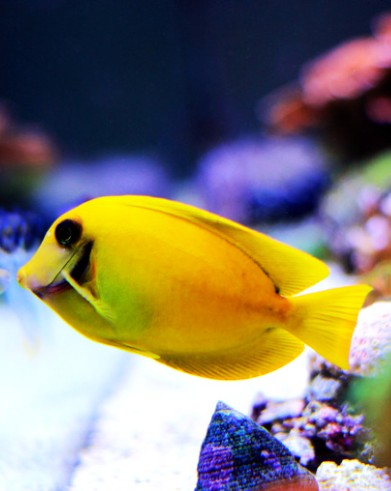
The Lemonpeel Angelfish, known for its vibrant yellow hue and striking blue highlights, is a captivating addition to any marine aquarium. Native to the coral reefs of the Indo-Pacific region, this species not only enchants aquarists with its stunning appearance but also exhibits a fascinating personality that can add life to your underwater landscape.
The Lemonpeel Angel fish boasts a bright yellow coloration adorned with sky-blue accents on its lips, around its eyes, on the pectoral fins, and at the edges of the dorsal, caudal, and blue edges anal fins.
However, caring for a Lemon peel Angelfish requires a thoughtful approach, as they have specific needs related to tank conditions, diet, and social interactions.
Choosing the right tank mates is crucial, as these fish can display territorial behavior, especially in smaller spaces.
In this guide, we will delve into the essential aspects of Lemonpeel Angel fish care, including their dietary requirements, ideal tank setups, and compatible companions, ensuring that your aquatic environment is both harmonious and thriving.
Whether you are a seasoned aquarist or a beginner, understanding these factors will help you create a vibrant habitat for your pygmy Angelfish.
Lemonpeel Angelfish Origin and Distribution
The centropyge flavissima Angelfish is primarily found in the Indo-Pacific region, particularly in the Indian Ocean. This fish thrives in warm, shallow waters where it can easily access its favorite habitats.
It typically inhabits coral reefs, among polyped stony corals and marine algae, providing ample grazing opportunities. As a territorial species, the Lemonpeel Angelfish often establishes a home among live rock, where it can find hiding places to retreat to when threatened.
This adaptability allows it to coexist with various marine organisms, making it a sought-after species for marine aquariums.
Originating from vibrant coral ecosystems, the Lemonpeel Angelfish plays a crucial role in maintaining the health of its habitat. It is commonly spotted near reef structures, where it can graze on algae and small invertebrates.
The fish’s preference for these environments ensures that it contributes to the balance and biodiversity of the aquatic ecosystem. Collectively, Lemonpeel Angelfish are integral to the overall vibrancy of the marine life they inhabit, making their conservation essential for healthy reefs and the many species that rely on them.
Where to find Lemonpeel Angelfish for Sale?
Lemon peel Angel fish are readily available for purchase at many local fish stores and online retailers specializing in saltwater fish. When looking for these gorgeous dwarf angel fish, it is essential to choose a reputable supplier to ensure that the fish are healthy and ethically sourced.
Online platforms often provide extensive fish species profiles, which can help you assess the quality of the specimens being offered. Ensure that juvenile lemonpeel specimens are well acclimated to tank conditions, as this will increase their chances of thriving in your aquarium.
In addition to established fish stores, marine fish expos and aquarium conventions are excellent places to find Lemonpeel Angelfish for sale. These events typically feature a variety of aquatic vendors, showcasing a range of fish species, including the Lemon peel
Angel fish. Purchasing from these events often allows you to speak directly with the breeders or sellers, gaining insights into the fish’s care and compatibility with other tank mates. This personal experience can be invaluable for ensuring that your new addition is a healthy and vibrant member of your saltwater aquarium.
Are False Lemonpeel Angelfish Reef Safe?
The False Lemonpeel Angelfish, while visually similar, is a different species from the genuine centropyge flavissima. When it comes to reef safety, both types of angelfish can exhibit varying behaviors.
Generally, they are considered reef-safe; however, it is crucial to monitor their interactions with smaller fish and delicate corals.
They may nip at clam mantles or graze on certain invertebrates, which can pose a risk in a reef setting. Therefore, it is advisable to introduce them to well-established aquariums with ample hiding places and grazing opportunities.
While many aquarists report success keeping both the Lemonpeel and False Lemonpeel Angelfish in reef environments, individual behaviors can vary. Some specimens may display a more aggressive temperament, particularly during breeding or territorial disputes.
Careful observation of their interactions with other fish species is vital to maintaining harmony in your reef aquarium. Providing plenty of stony corals and live rock can mitigate potential issues, allowing these angelfish to thrive while minimizing their impact on the overall reef ecosystem.
Lemon Peel Angel Fish Tank Mates
Selecting the right tank mates for your Lemonpeel Angelfish can significantly enhance its living conditions in a saltwater aquarium. Ideal companions include smaller, peaceful fish species that won’t compete aggressively for territory.
Fish like clownfish, gobies, and certain wrasses often coexist well with the Lemonpeel Angel fish. Additionally, keeping multiple angelfish in pairs or trios can lead to dynamic interactions, provided there’s enough space and hiding places to reduce territorial disputes.
However, caution should be exercised when introducing new tank mates, as Lemonpeel Angelfish may display territorial behavior, especially in smaller aquariums. It is advisable to introduce them first to a larger tank size with plenty of live rock and aquatic plants. This setup allows all fish to establish their territories and provides ample hiding spots. Monitoring interactions among tank mates is essential to ensure a peaceful coexistence, which will ultimately lead to a thriving marine environment.
Lemon peel Angelfish Care & Diet
Caring for Lemonpeel Angelfish requires attention to their dietary needs and environmental conditions. These fish are omnivorous and thrive on a varied diet, including marine algae, zoanthids, spirulina, and high-quality angelfish preparations.
Supplementing their diet with live foods, such as brine shrimp or mysis shrimp, can help promote healthy growth and vibrant coloration. A well-rounded diet is essential for maintaining their health and vitality in a saltwater aquarium.
Maintaining optimal water quality is also crucial in caring for Lemonpeel Angelfish. Regular water changes and monitoring parameters like pH, salinity, and ammonia levels will help create a stable environment.
They prefer a slightly higher tank temperature, typically between 76°F to 82°F. Providing ample hiding places and territories, along with a spacious tank size, will help reduce stress and promote natural behaviors. By fulfilling these care requirements, your Lemonpeel Angelfish will flourish in your aquarium.
Conclusion
The Lemonpeel Angelfish is a stunning addition to any saltwater aquarium, with its bright yellow body and blue highlights captivating aquarists around the world. Understanding its care needs, compatible tank mates, and dietary requirements is essential for a successful aquarium experience. While they can be territorial, with proper planning and attention to their environment, Lemonpeel Angelfish can coexist harmoniously with various marine species. By providing a well-maintained habitat filled with live rock, stony corals, and plenty of grazing opportunities, you can ensure that these gorgeous dwarf angelfish thrive, contributing to the beauty and diversity of your aquatic ecosystem.
Recommended posts
- Can Angelfish Live with Bettas? (Compatibility & Tank Setup)
- Keeping Angelfish in a Community Tank: Best Tips & Tankmates
- Coral Beauty Angelfish: Care, Diet & Tank Setup Guide
- Angelfish Different Types: Stunning Varieties for Your Tank
- 7 Best Reef Safe Angel fish for Your Tank – A Complete Guide