Guppies breed readily at home when you keep healthy adults in a cycled aquarium, provide warm stable water, and protect newborn fry from hungry tank mates. This guide explains how to breed guppies for beginners, from choosing your first fish to raising strong, colorful young.
Breeding guppies is one of the easiest projects for a new fish hobbyist because guppies are livebearers: females give birth to live young instead of laying eggs.
With the right tank setup, water conditions, feeding routine, and a plan for the fry, you can successfully breed guppies without advanced equipment.
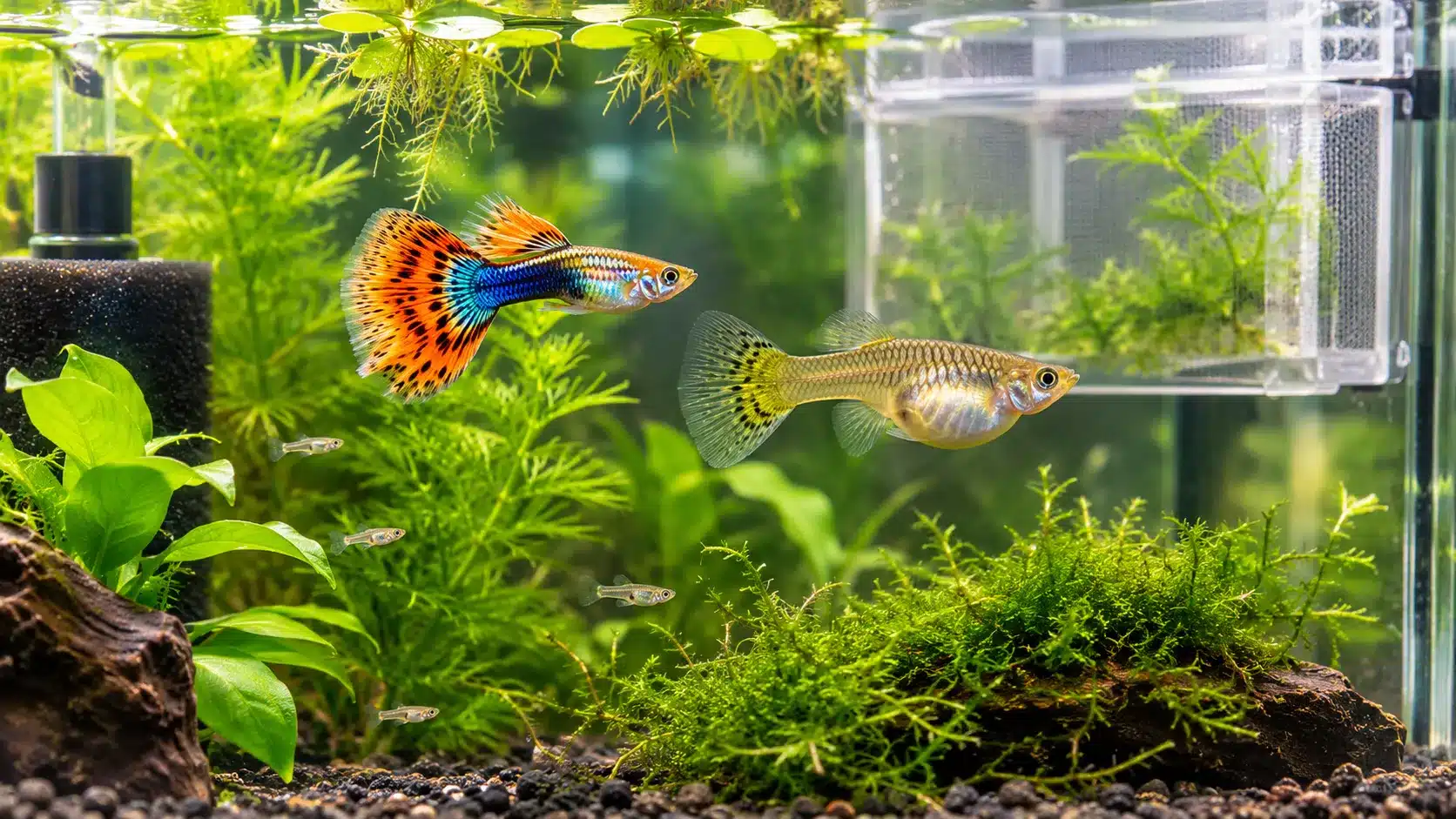
You can successfully breed guppies in a well-maintained aquarium with a male-to-female ratio of 1:2 or 1:3, stable water parameters, and plenty of plants or hiding spots.
Guppies typically give birth to live fry every 21–30 days under suitable conditions. With proper feeding, filtration, and separation from adult fish, you can raise healthy guppy babies right at home.
Ready to start your own guppy breeding project? Let’s dive in and learn how to raise a thriving generation of guppies!
Understanding How Guppies Reproduce
Guppies reproduce through internal fertilization, where males use a specialized anal fin called a gonopodium to transfer sperm to females.
After mating, females typically carry developing fry for around 21–30 days and can even store sperm for future pregnancies. Research by evolutionary biologist Dr. John Endler also highlights the fascinating role of male coloration and female mate choice in guppy reproduction.
But how do male guppies attract females, how can you identify a pregnant guppy, and what happens when she gives birth? This guide explores every stage of guppy reproduction, from courtship and mating to pregnancy and the arrival of baby guppies. Let’s dive in and discover how these colorful little fish create the next generation!
Are Guppies Livebearers or Egg Layers?
Guppies are livebearers. A male guppy fertilizes the female internally, and she carries the developing young inside her body before she gives birth to live young. The fry are born free-swimming and can begin looking for food soon after birth.
This makes guppy fish breeding different from breeding egg-laying tropical fish. You do not need to protect eggs or wait for them to hatch; instead, your main job is to protect small fry from adult guppies and other fish in the community tank.
How Often Do Guppies Breed?
Female guppies can produce a new brood roughly every four weeks when water conditions, food, and temperature are suitable. Gestation commonly lasts about 21 to 30 days, and a healthy female may release 20 to 40 fry per brood, though the number varies with her age, size, and health.
Guppies can store sperm after mating, so a female may continue producing fry even after you remove the male. That is why guppies breeding in a home aquarium can seem constant once males and females share the same tank.
How to Tell Male and Female Guppies Apart
You need to identify the sexes before you start breeding guppies. Male guppy fish are usually smaller, brighter, and more active. They have a narrow, rod-like modified anal fin called a gonopodium, which they use to transfer sperm during mating.
Female guppies are larger, rounder, and often less colorful. Their anal fin is wider and fan-shaped, and mature females often show a dark gravid spot near the vent, just in front of the anal fin.
| Feature | Male guppy | Female guppy |
|---|---|---|
| Body size | Smaller and slimmer | Larger and rounder |
| Color | Usually bright and patterned | Often less colorful |
| Anal fin | Narrow gonopodium | Fan-shaped anal fin |
| Gravid spot | Not present | Often visible when mature or pregnant |
| Breeding role | Fertilizes the female | Carries and gives birth to fry |
Setting Up the Perfect Guppy Breeding Tank
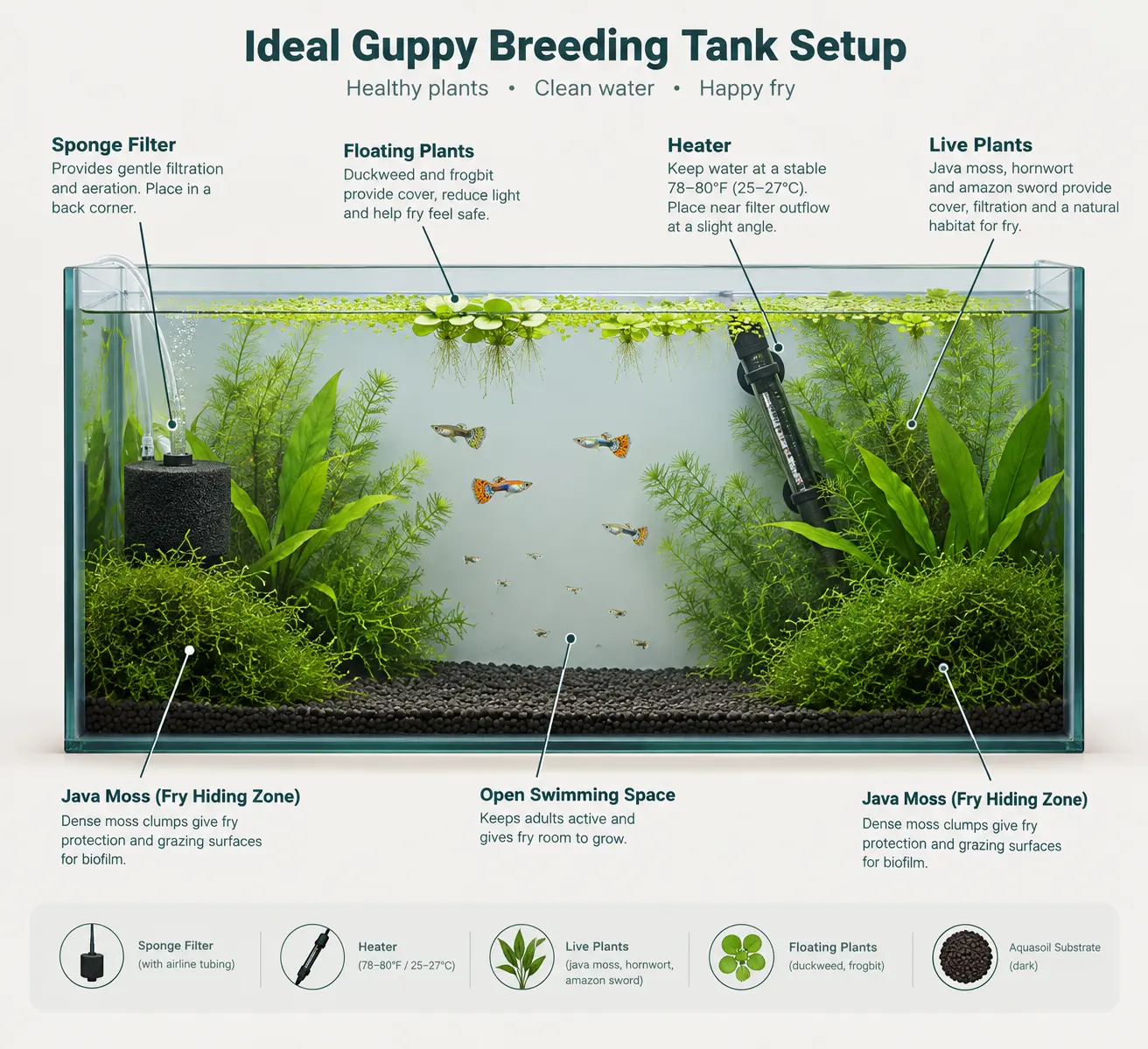
Recommended Tank Size and Equipment
A 10-gallon tank is a practical starting point for a small breeding group, but a 20-gallon aquarium gives you more room as fry grow. Avoid bowls and tiny jars: guppies need stable water, swimming space, and room for plants and filtration.
Your breeding tank setup should include:
- A cycled aquarium with a heater and thermometer.
- A gentle sponge filter, which provides biological filtration without sucking up newborn fry.
- Live plants such as java moss, java fern, hornwort, and guppy grass.
- Floating plants to create shade and hiding spots for fry.
- A lid, because guppies can jump.
- A separate tank or breeder box if you want to raise as many fry as possible.
A planted tank is helpful, but keep plants away from the filter intake. Cover the intake with a sponge or pre-filter so small fry cannot be pulled into the filtration system.
Ideal Water Temperature and Parameters
Keep adult guppies around 76 to 78°F (24 to 25°C). For faster fry growth, many breeders keep a nursery closer to 78 to 80°F (25 to 27°C), but avoid sudden temperature swings.
Guppies prefer slightly alkaline water. Aim for a pH near 7.0 to 8.0 and moderately hard water, roughly 8 to 12 dGH. Stable water parameters matter more than chasing a perfect number.
Do regular partial water changes, remove uneaten food, and test ammonia and nitrite regularly. Clean water helps maintain water quality, supports healthy guppies, and reduces stress during breeding.
Choosing Healthy Guppies for Breeding
Choose active fish with clear eyes, intact fins, steady swimming, and a strong appetite. Avoid fish that look thin, sit near the surface, clamp their fins, or show white spots, red patches, or unusual swimming behavior.
Buy from a reputable fish store or an experienced breeder. If you want a particular look, select a male and females with similar body shape, color, and fin type. This is the beginning of selective breeding.
For a fancy guppy project, keep simple records: date of birth, parents, color, fin shape, and any unusual traits. A breeding log makes it easier to improve quality guppies over several generations.
How to Breed Guppies Step by Step
These colorful freshwater fish reproduce easily under suitable aquarium conditions, making them an excellent choice for beginners. With proper preparation, healthy breeding pairs, and a safe environment, you can raise your own generation of guppies.
To breed guppies, select healthy males and females, maintain a suitable breeding tank, and provide clean, warm water with stable conditions.
A ratio of one male to two or three females helps reduce constant mating pressure on females. Once mating occurs, females typically give birth to 20–50 fry after approximately 21–30 days, although the number and timing can vary.
Choosing the Right Male-to-Female Ratio
Use one male with two or three females. This ratio of males to females reduces constant chasing and gives females time to recover between broods.
Do not place several males with only one or two female guppies. Males may harass females repeatedly, causing stress, injury, or exhaustion. practicalfishkeeping.co
Introducing Guppies and Encouraging Breeding
- Cycle the aquarium before adding fish.
- Add the females first and let them settle for a few days.
- Add one healthy male guppy.
- Feed a varied diet, including quality flake food and occasional protein-rich foods.
- Keep the water warm, clean, and stable.
- Provide plants and hiding places so females can escape persistent males.
Guppies mating usually happens quickly. The male displays his colors, follows the female, and uses his gonopodium to fertilize her internally. If males and females are together in a mature aquarium, breeding may already have occurred before you notice it.
To condition breeders, offer small amounts of food several times daily rather than one large feeding. Include vegetable flakes, standard flakes, and occasional frozen or live foods such as brine shrimp. Guppies are omnivores, so variety supports better health and fertility.
How to Tell If Your Guppy Is Pregnant
Knowing how to tell if your guppy is pregnant helps you prepare for the arrival of newborn fry and protect them from hungry tank mates.
A pregnant guppy typically develops a noticeably rounded belly and a dark gravid spot near her anal fin. As pregnancy progresses, her abdomen may become larger and more squared off near the end of gestation. Most guppies carry their developing fry for approximately 21–30 days, depending on water temperature, health, and environmental conditions.
Common Signs of Pregnancy
A pregnant guppy develops a rounder, boxier abdomen as fry grow. The gravid spot becomes darker and more noticeable, especially close to birth. She may also hide more, swim less, and look restless near plants or decorations.
Other signs include:
- A noticeably squared-off belly.
- A darker gravid spot.
- Reduced appetite shortly before birth.
- Hiding near floating plants or dense moss.
- Frequent resting near the heater or filter.
These signs are useful, but they are not exact. Some females carry fry quietly, while others become more visible only days before they give birth. buceplant
How Long Are Guppies Pregnant?
Guppy pregnancy usually lasts 21 to 30 days. Warmer, stable water often shortens the cycle, while stress, poor water quality, or cooler temperatures can delay birth.
Once a female gives birth, she can become pregnant again quickly, sometimes within hours, because guppies can store sperm. Plan ahead if you do not want hundreds of fry in your main tank.
How to Care for a Pregnant Guppy Before Giving Birth
Move a heavily pregnant female to a quiet nursery tank or breeder box a few days before she looks ready to give birth. A separate tank is the best option because it protects newborn guppies and makes feeding easier.
Keep the nursery calm, warm, and lightly planted. Add java moss, hornwort, or floating plants so newborn fry have immediate hiding spots. Do not chase the female with a net; stress can delay delivery.
Feed small amounts of crushed flake food and finely ground fry food. Remove leftover food quickly so the water stays clean. After she gives birth, return the female to the main tank so she does not eat her young.
How to Care for Baby Guppies (Fry)
Caring for baby guppies requires clean, stable water, frequent small meals, and a safe environment with plenty of hiding places. Feed them high-quality powdered fry food, crushed flakes, or freshly hatched baby brine shrimp several times daily. Maintain a temperature of around 76–80°F (24–27°C), perform regular partial water changes, and protect fry from larger fish.
But how often should you feed baby guppies, when can they join adult fish, and how quickly do they grow? This guide covers everything from setting up a fry tank and choosing the right food to maintaining water quality and preventing common health problems.
What Do Baby Guppies Eat?
New fry can eat immediately. Start with powdered fry food, crushed flake food, or newly hatched baby brine shrimp. Baby brine shrimp are rich in protein and support fast, healthy growth.
As fry grow, offer:
- Powdered fry food.
- Finely crushed flake food.
- Baby brine shrimp.
- Micro worms or other suitable tiny live foods.
- Small amounts of vegetable-based food.
A diet rich in protein helps fry grow, but balance it with vegetable matter. Guppies are omnivores and need more than protein alone.
How Often Should You Feed Guppy Fry?
Feed guppy fry small amounts 3 to 5 times per day. Their stomachs are tiny, and frequent feeding supports steady growth, but overfeeding pollutes the aquarium.
Use the “two-minute rule”: if food remains after a few minutes, feed less next time. Siphon uneaten food during water changes to protect water quality.
How to Protect Newborn Guppies from Adult Fish
Adult guppies, including the mother, may eat newborn fry. Dense java moss, guppy grass, hornwort, and floating plants give small fry places to hide.
For the highest survival rate, raise fry in a separate tank with a sponge filter. If you keep them in the main tank, use a breeder box or provide thick plants, but understand that some fry may still be eaten.
Common Guppy Breeding Mistakes to Avoid
- Keeping males and females together without a plan for fry.
- Using an uncycled tank or skipping water testing.
- Keeping too many males with too few females.
- Overfeeding adults or fry.
- Using strong filter flow that traps or exhausts small fry.
- Leaving a newborn female with adults after birth.
- Breeding closely related fish repeatedly without adding new bloodlines.
- Keeping every fry instead of planning space, food, and homes for them.
Line breeding can help preserve a desired strain, but careless inbreeding can reduce vigor and increase defects. Experienced breeders use careful records, separate lines, and occasional outcrossing to maintain healthy guppies.
Frequently Asked Questions About Breeding Guppies
How Many Babies Can a Guppy Have?
A guppy can have roughly 20 to 40 fry in one brood, though young or small females may have fewer and larger females may have more.
Can Guppies Breed Without a Male?
A female needs a male to start a new pregnancy, but she can store sperm and produce several broods after a single mating.
At What Age Can Guppies Start Breeding?
Guppies can begin breeding at about two to three months old, although many breeders wait until fish are around four months old so they are stronger and more developed.
How Long Does It Take for Baby Guppies to Grow?
Fry grow quickly with warm water, clean conditions, and frequent small meals. Many begin showing adult color around two to three months and can reproduce by about three to four months.
How to Breed Guppy Fish
To breed guppy fish, place one male with two or three females in a cycled, heated aquarium. Provide plants, feed a varied diet, keep the water clean, and move the pregnant female to a nursery before birth.
How Fast Do Guppies Breed?
Guppies breed quickly. A healthy female can give birth about every four weeks, and each brood may contain dozens of fry.
How to Breed Guppies Quickly
To breed guppies quickly, keep the water around 78°F, feed small protein-rich meals, maintain excellent water quality, and use a healthy one-male-to-two-or-three-female group. Do not sacrifice fish health for speed.
How to Breed Guppies at Home
To breed guppies at home, set up a cycled 10-gallon tank or larger, add one male and several females, provide live plants and gentle filtration, and raise fry in a protected nursery.
How easily do guppies breed?
Guppies breed very easily. Provide warm, clean water, good care for guppies, and one male with two or three females. Success with guppies improves when you protect fry and avoid overcrowding.
What can guppies crossbreed with?
Guppies can crossbreed with Endler’s livebearers, but not usually with mollies, platies, or swordtails. Selective breeding within guppy lines produces more predictable colors and fin types.
How do guppies mate?
A male guppy uses his gonopodium to fertilize the female internally. Mating is quick, and females can store sperm to produce several broods later.
How can you tell when a guppy is pregnant and about to give birth?
Look for a rounded, squared belly and darker gravid spot. A pregnant guppy may hide, eat less, and rest near plants. Move her to a quiet nursery or breeder box before birth. Raising guppies is easier when newborn fry have hiding places.
What helps guppies breed?
Warm, stable water around 76–78°F, clean water, a varied diet, live plants, and one male with two or three females help guppies breed. Good care for guppies, including regular water changes, improves success with guppies and supports healthy fry.
Conclusion
Learning how to breed guppies fast at home comes down to preparation, not luck. Start with healthy adults, use a cycled 10-gallon tank or larger, keep one male with two or three females, and maintain warm, clean water. Add live plants, use gentle sponge filtration, and feed a varied diet that includes quality flake food and occasional brine shrimp.
Protect newborn fry with java moss, hornwort, floating plants, or a separate nursery tank. Feed them small amounts several times daily, remove leftovers, and perform regular partial water changes. Track your breeding pair, separate sexes when needed, and avoid overcrowding.
Guppies are rewarding tropical fish because they reproduce readily and let you watch every stage of life. With stable water conditions, good nutrition, and a simple plan for the fry, you can successfully breed guppies, raise strong baby guppies, and enjoy a thriving home aquarium.