Is your goldfish pregnant or has dropsy? A goldfish with a swollen belly is not automatically pregnant. A healthy female may be carrying eggs, but raised, pinecone-like scales, lethargy, loss of appetite, or rapid breathing point to goldfish dropsy, a serious sign that needs prompt veterinary assessment.
The easiest way to tell the difference is to examine your goldfish’s scales, swimming behavior, appetite, and body shape. A pregnant (egg-carrying) female usually develops a rounded belly but maintains normal scales and activity. Dropsy, on the other hand, often causes raised, pinecone-like scales, lethargy, and loss of appetite.
Goldfish do not become pregnant in the way mammals do. They are egg-laying fish species, so a “pregnant goldfish” is usually a gravid female goldfish carrying eggs that will be released and fertilized outside her body.
What Is the Difference Between Goldfish Dropsy and Pregnancy?
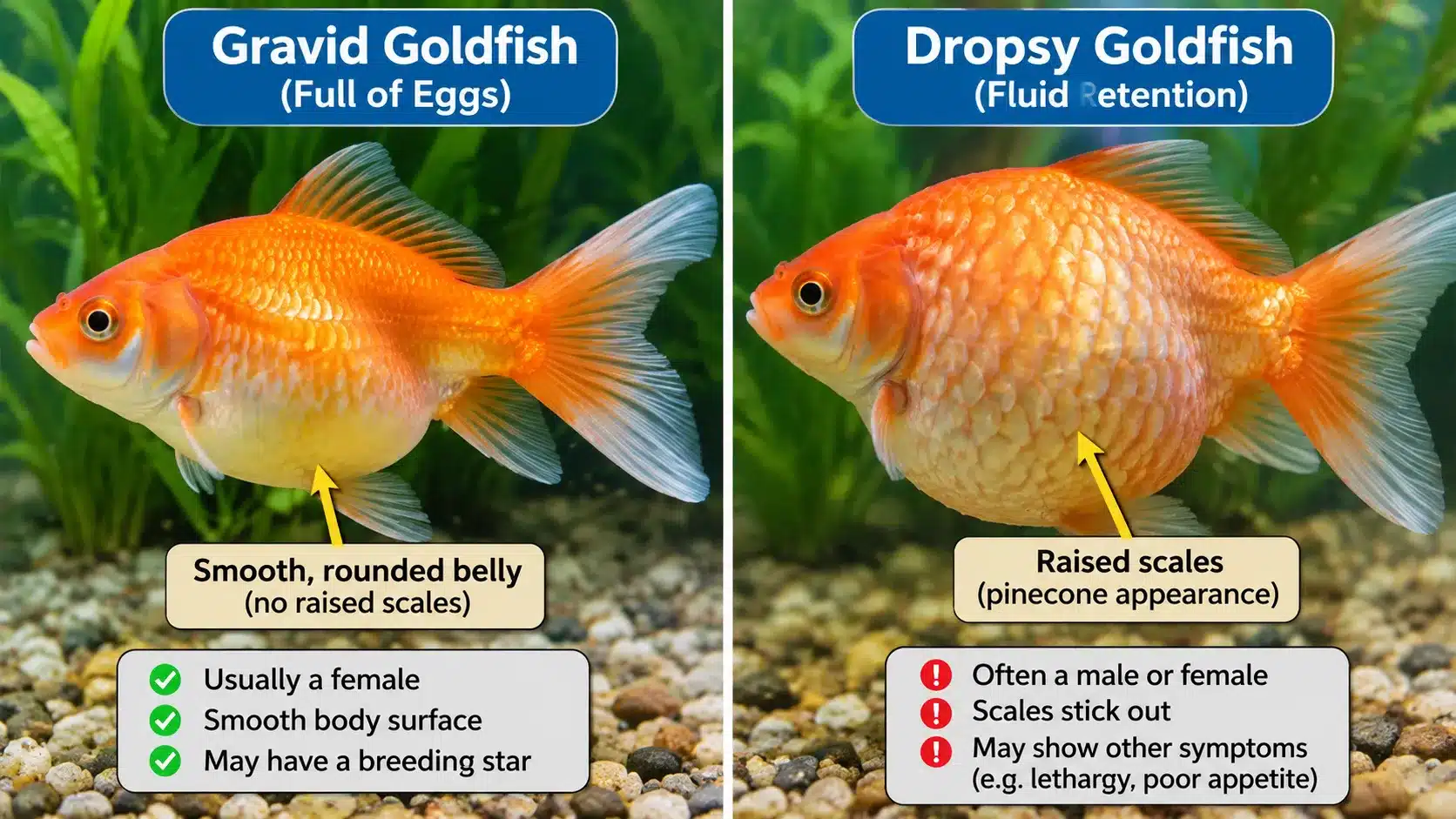
The main difference is scale position and overall health. A goldfish carrying eggs usually has a smooth, gradually rounder belly and continues to eat and swim normally; a goldfish with dropsy often develops scales that stick outward, giving the fish’s body a pinecone appearance.
Dropsy is not a single disease. It is a visible sign of fluid buildup inside the body, often linked to kidney or gill problems, bacterial infection, or poor water quality.
| Feature | Goldfish carrying eggs | Goldfish with dropsy |
|---|---|---|
| Belly | Gradually rounder, often slightly lopsided | Rapidly swollen or distend abdomen |
| Scales | Smooth and lying flat | Raised, pinecone-like scales |
| Appetite | Usually normal | Often reduced or absent |
| Swimming | Usually normal | Lethargy, clamped fins, difficulty swimming |
| Urgency | Monitor and support spawning | Act immediately; seek veterinary help |
Can Goldfish Get Pregnant or Do They Lay Eggs?
Goldfish lay eggs; they do not carry live young. A female goldfish releases eggs into the water, and a male goldfish releases milt to fertilize them externally. Eggs are fertilized only after the female releases them.
So, when people say a “goldfish is pregnant,” they usually mean the female is gravid, or full of mature eggs. A single female can carry eggs without a male present, but the goldfish eggs will not develop into goldfish fry unless a male fertilizes them.
What Are the Early Signs of Dropsy in Goldfish?
Early goldfish dropsy symptoms can be subtle. Watch for a swollen belly that does not improve, reduced appetite, lethargy, clamped fins, or unusual resting at the bottom of the tank.
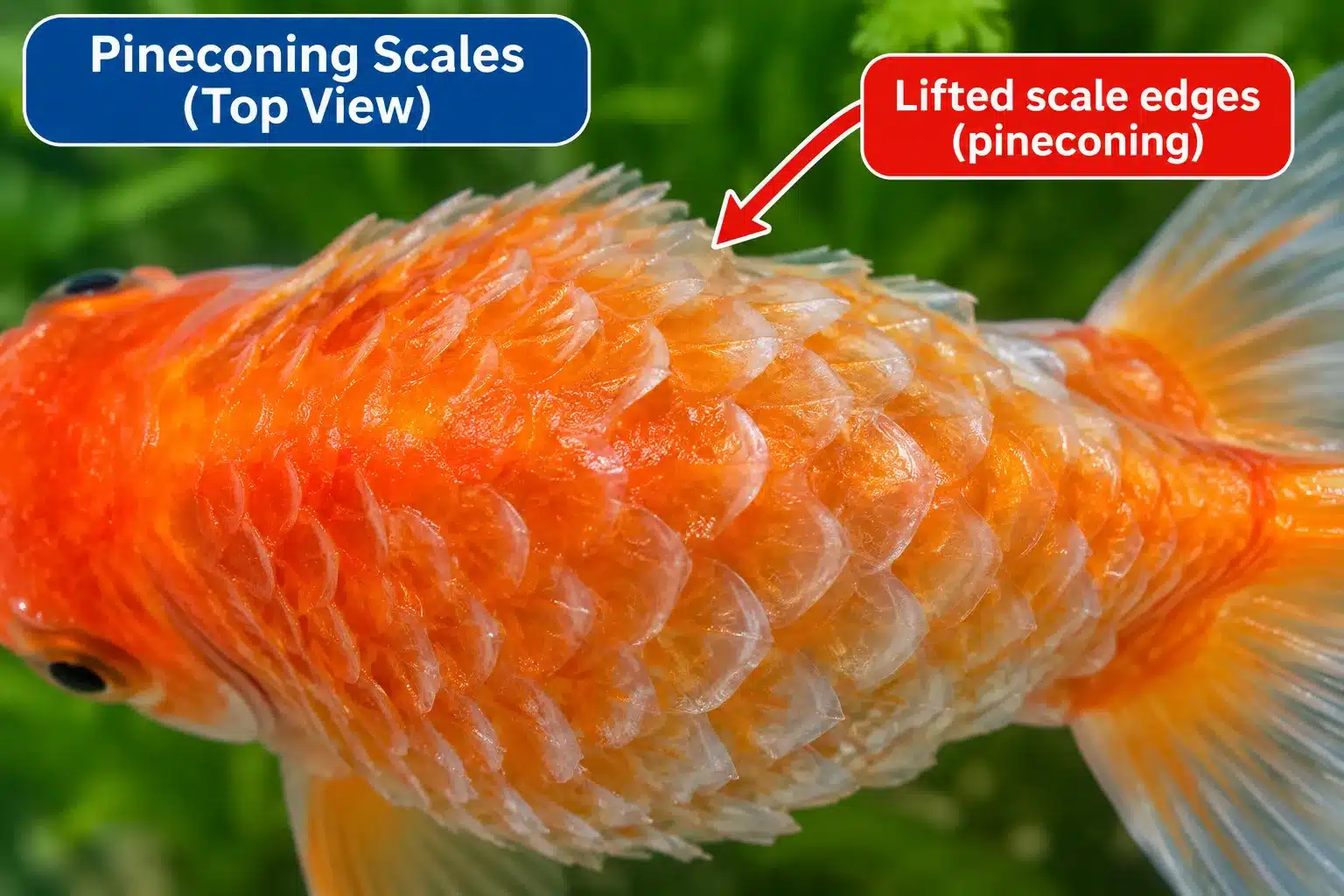
As fluid retention increases, the scales may begin to lift away from the fish’s body. This is called pineconing, or goldfish pinecone disease, and it is a major warning sign rather than a normal part of egg development.
Other possible signs include:
- Bulging eyes
- Pale, red, or irritated gills
- Rapid gill movement or gasping
- Red streaks on the fin or body
- Stringy, pale waste
- Difficulty staying upright or swimming normally
How to Tell If Your Goldfish Is Carrying Eggs
A female goldfish carrying eggs often looks plumper when viewed from above. The swelling usually develops gradually over days or weeks, and she may still eat normally and swim easily.
Her vent, the small opening near the anus, may look slightly rounded or protrude as spawning approaches. A male goldfish may develop small white breeding tubercles near the gill covers and pectoral fins during breeding season; these bumps do not mean the female is sick.
A gravid female may also become more interested in plants, spawning mops, or shallow areas where she can lay eggs. After spawning, her belly should become noticeably less round.
Goldfish Dropsy vs. Pregnant: 7 Key Differences to Look For
Use this checklist when deciding whether your fish needs routine observation or urgent care.
- Speed of swelling: Eggs usually cause gradual fullness; dropsy can cause fast abdominal swelling.
- Scale position: Smooth scales fit egg development; raised scales suggest dropsy.
- Appetite: A gravid female usually eats; a sick fish may refuse food.
- Activity: Egg-carrying fish generally swim normally; dropsy often causes lethargy.
- Eyes and gills: Bulging eyes or pale gills are warning signs, not normal breeding signs.
- Body symmetry: A gravid belly may look slightly lopsided; dropsy can create severe, uneven swelling.
- Other fish: If several fish in your tank look ill, check water conditions and seek veterinary advice.
Belly Shape and Swelling
A goldfish carrying eggs often has a soft, rounded belly that becomes fuller over time. In contrast, dropsy can make the abdomen become swollen quickly and may make the fish look unnaturally bloated.
Raised Scales vs. Smooth Scales
Raised scales are the clearest difference. When scales stand out from the body like a pinecone, fluid has accumulated under the skin and around the body cavity; this requires immediate attention.
Appetite and Swimming Behavior
A healthy gravid goldfish usually continues eating and moving normally. A goldfish with dropsy may stop eating, rest near the bottom of the tank, clamp its fins, or struggle to maintain balance.
Body Shape and Overall Appearance
Egg development tends to create a plump but otherwise healthy-looking fish. Dropsy may cause a distorted body shape, bulging eyes, color loss, or visible redness, especially when an underlying bacterial infection is present.
What Causes a Swollen Belly in Goldfish Besides Dropsy or Eggs?
A swollen belly does not always mean dropsy or eggs. Overfeeding, constipation, internal parasites, tumors, organ problems, and poor water quality can all make a goldfish look bloated.
Bloat can also occur when a fish eats too much dry food or swallows air at the surface. Avoid the temptation to overfeed; offer small portions and remove uneaten food promptly.
Poor water quality is a major stressor. Ammonia and nitrite should be 0 ppm, while nitrate should stay below 20 ppm in a well-maintained aquarium; use a liquid test kit rather than relying on color alone.
How to Treat Dropsy in Goldfish and Improve Their Chances of Recovery
If you see pineconing, treat it as urgent. Isolate the fish in a clean, cycled hospital tank if possible, maintain stable water temperature, provide gentle aeration such as a sponge filter, and contact an aquatic veterinarian promptly.
To treat dropsy safely, a veterinarian must identify the underlying cause. Treatment options may include prescription medication, improved water conditions, supportive care, and carefully managed water salinity; do not add random medications or salt without professional guidance.
Do a partial water change with dechlorinated, temperature-matched water if your test results show ammonia or nitrite. Avoid a complete water change, which can disrupt the biological filter and add stress.
Epsom salts are sometimes discussed for fluid buildup, but the correct amount of salt depends on the diagnosis, fish size, and tank setup. Do not guess a dose; veterinary guidance is safest.
How to Care for a Female Goldfish Carrying Eggs
Support a gravid female with clean water, stable temperatures, a varied diet, and a calm environment. Offer high-quality food in modest portions, and include occasional protein-rich foods such as brine shrimp if appropriate for your goldfish care routine.
Provide spawning sites such as fine-leaved aquatic plants or a spawning mop. If males chase her intensely, separate them or add hiding places to prevent chronic stress and injury.
After the goldfish lays eggs, remove adults if you want to raise goldfish fry, because adults may eat the eggs. Keep the tank clean and monitor water parameters closely during and after spawning.
When Should You Worry About Your Goldfish’s Swollen Belly?
Contact a fish veterinarian or aquatic veterinary service immediately if your goldfish has raised scales, bulging eyes, pale gills, severe lethargy, refusal to eat, or trouble swimming. These signs suggest an underlying health problem, not normal egg development.
Also seek help if more than one fish becomes ill, if ammonia or nitrite is detectable, or if the swelling worsens over 24 to 48 hours. Early diagnosis gives a goldfish with dropsy the best chance of recovery.
Frequently Asked Questions About Goldfish Dropsy or Pregnant
Can a goldfish have dropsy without raised scales?
Yes. Early dropsy may cause a swollen abdomen, lethargy, appetite loss, or abnormal swimming before scales become obviously raised. Raised scales are a serious later sign, not the only possible symptom.
How long does a female goldfish carry eggs?
A female may carry mature eggs for days to weeks, depending on temperature, diet, age, and breeding conditions. Once conditions are right, she may lay eggs quickly, often during warmer water temperatures and after male courtship behavior.
Can a goldfish recover from dropsy?
Sometimes, especially when the underlying cause is found early. Recovery depends on the cause, how quickly treatment begins, and the severity of organ damage; advanced pineconing carries a poor prognosis.
Does a pregnant goldfish eat normally?
Usually, yes. A gravid female often keeps a good appetite, although she may move more slowly as her belly becomes fuller. A sudden loss of appetite with swelling is more concerning.
Should I isolate a goldfish with dropsy?
Yes, if you can provide a clean, cycled hospital tank with gentle filtration and aeration. Isolation makes observation and treatment easier and reduces stress on the sick fish; correct the main tank’s water quality as well.
How long will a fish with dropsy live?
There is no fixed timeline. Some fish improve within days to weeks with early treatment, but severe dropsy disease can cause permanent organ damage or death.
Is dropsy painful for fish?
It is likely uncomfortable because fluid builds inside the body and causes swelling. A fish that stops eating or swims poorly may be in significant distress.
What causes dropsy in goldfish?
It is usually caused by kidney or gill damage from poor water quality, bacterial infection, parasites, poor nutrition, or chronic stress.
How can dropsy in goldfish be prevented?
To diagnose dropsy in fish early and prevent it, keep fish tanks clean, test water regularly, avoid overcrowding, feed a balanced diet, and quarantine new fish.
Conclusion
When you are trying to decide whether your Goldfish Dropsy or Pregnant fish needs help, focus on the whole fish rather than the belly alone. A female goldfish carrying eggs will usually have a smooth, gradually rounder abdomen, a normal appetite, and healthy swimming behavior. A goldfish with dropsy often develops raised, pinecone-like scales, lethargy, clamped fins, pale gills, or a swollen abdomen that worsens quickly.
If you see pineconing, do not wait. Test the water, improve water conditions carefully, isolate the fish if possible, and contact an aquatic veterinarian for diagnosis and treatment options. Good water quality, appropriate feeding, and stable water temperature help prevent dropsy and protect every fish in your tank. Acting early gives your goldfish the best chance to recover.
You might also like
- How Long Are Goldfish Pregnant? (How to Tell & What to Do!)
- Do Pregnant Goldfish Sit at Bottom of the Tank? (Solved)
- What Do Fantail Goldfish Eat: 7 Proven Power Foods to Thrive
- Goldfish Laying Eggs Symptoms: 5 Exciting Behaviors to Look For
- Do Goldfish Lay Eggs or Live Birth: Negative Myths Debunked
- 5 Surefire Golden fish Breeding Signs You Need to Know!
- 5 Easy Steps to Create a Stunning Fantail Goldfish Aquarium!
- Illness in Goldfish: 10 Quick Fixes for Your Sick Goldfish!
- Breeding Fantail Goldfish: 7 Quick Tips for Successful Hatch
- Goldfish Sick Symptoms: 5 Critical Signs to look for (Revealed)
- How to Tell If a Goldfish Is Pregnant: 6 Key Signs (Tested)
- Goldfish Disease Red Spots 101: Causes, Prevention & Treatment