
Choosing the best Cory Catfish types for home aquariums can make a big difference in your tank’s appearance and overall health. The most popular Corydoras Species for home aquariums, are Panda Cory, Bronze Cory, Sterbai Cory, Julii Cory, and Pygmy Cory rank among the most popular cory cat choices for home aquariums.
Each species has unique patterns, adult sizes, temperature preferences, and care requirements. Most Corydoras thrive in groups of at least six, with soft sand or smooth substrate to protect their sensitive barbels.
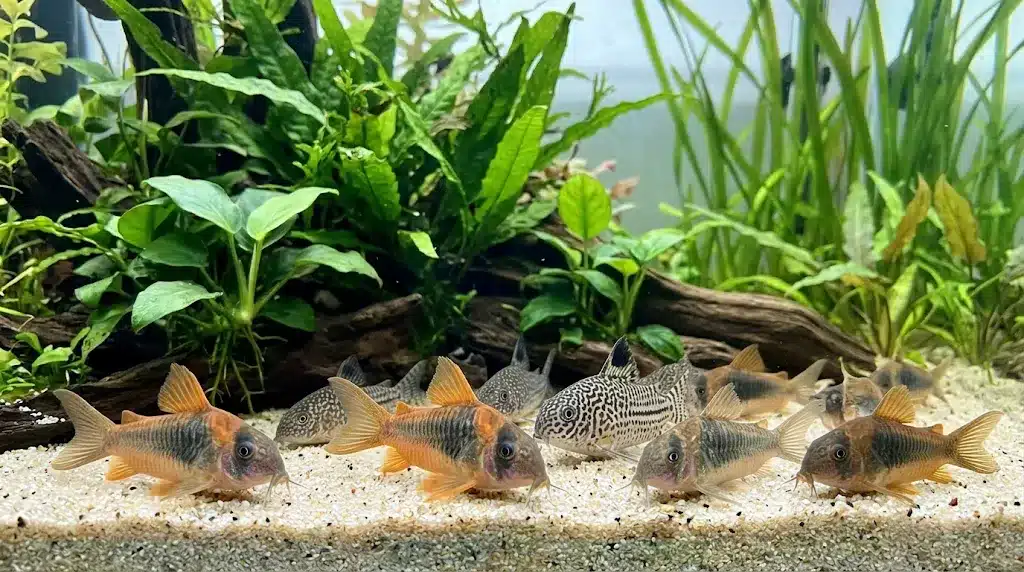
But which Cory Cat fish best matches your tank size, water conditions, and experience level? We’ll explore the most popular corydora types, compare their characteristics, and highlight the care requirements that help them thrive.
Drawing on established aquarium husbandry guidance, including recommendations from Corydoras specialist Ian Fuller, this guide will help you choose the right companions for your freshwater aquarium.
What Are Cory Catfish Species ?
These small, peaceful freshwater fish bring life to the bottom of an aquarium with their playful behavior and social nature. But with so many Corydoras species available, which ones should you choose for your first community tank?
Which Corydoras species are best for beginners? The best Cory catfish for beginners include Bronze Corydoras, Peppered Corydoras, Albino Corydoras, Panda Corydoras, and Pygmy Corydoras. These species offer attractive patterns, manageable care requirements, and peaceful temperaments. Cory catfish also thrive in groups of at least six, with suitable water conditions, a soft substrate, and a well-maintained aquarium.
Understanding Corydoras Catfish
Cory catfish are small, peaceful fish in the catfish family. Most aquarium fish sold as “corydoras” have traditionally been placed in the Corydoras genus, although newer scientific naming has moved several familiar species into genera such as Hoplisoma and Gastrodermus.
They are armored catfish rather than scaleless fish. Their bodies have bony plates, and their pectoral fin spines can lock upright, so they should never be netted roughly or kept with fish that may try to swallow them.
Where Do Cory Catfish Come From?
Different cory cats come from South American rivers, streams, flooded forests, and shallow tributaries. Many live over sand, silt, leaf litter, and plant-covered margins, which is why they do best in an aquarium with a soft substrate and places to explore.
How Many Cory Catfish Species Are There?
There are more than 160 recognized cory species, and hobbyists commonly refer to many related species as corydoras fish types even when their scientific names have changed. A complete corydoras species list contains far more fish than most stores carry, so this catfish care guide focuses on peaceful, commonly available types that work well in smaller freshwater aquariums.
12 Most Popular Cory Catfish Types (cory catfish species list)
These cory catfish varieties are popular because they are attractive, generally peaceful, and available from aquarium stores or breeders. Adult size, temperature needs, and temperament vary, so choose based on your freshwater fish aquarium size and existing community fish—not just color.
| Common name | Scientific name | Adult size | Appearance | Preferred temperature |
|---|---|---|---|---|
| Bronze cory | Corydoras aeneus | 2.5–3 in / 6–7.5 cm | Bronze, green, black, or albino body; hardy and active | 72–79°F / 22–26°C |
| Albino cory | Corydoras aeneus | 2.5–3 in / 6–7.5 cm | Pale pink-white body with red eyes | 70–81°F / 21–27°C |
| Panda cory | Corydoras panda | 1.5–2 in / 4–5 cm | Cream body with black eye mask, dorsal-fin patch, and tail band | 68–77°F / 20–25°C |
| Peppered cory | Corydoras paleatus | 2.5–3 in / 6–7.5 cm | Mottled gray-brown “peppered” pattern with a metallic sheen | 64–78°F / 18–26°C |
| Julii cory | Corydoras julii | 2–2.4 in / 5–6 cm | Fine, separate dark spots over a silver-gray body | 72–79°F / 22–26°C |
| Sterbai cory | Corydoras sterbai | 2.5–2.75 in / 6–7 cm | Dark body with white spots and orange pectoral fins | 75–82°F / 24–28°C |
| Emerald green cory | Often Brochis/Corydoras-related species sold under this name | About 3 in / 7.5 cm | Metallic green-blue sheen; larger and more robust than many corys | 70–81°F / 21–27°C |
| Pygmy cory | Corydoras pygmaeus | About 1 in / 2.5 cm | Tiny silver fish with a dark horizontal line; swims in midwater too | 72–79°F / 22–26°C |
| Three-stripe cory | Corydoras trilineatus | 2–2.5 in / 5–6 cm | Maze-like head markings, dark side stripe, spotted body | 72–78°F / 22–26°C |
| Skunk cory | Corydoras arcuatus | About 2 in / 5 cm | Black stripe from the snout over the back, pale body | 72–79°F / 22–26°C |
| Adolfoi cory | Corydoras adolfoi | About 2–2.5 in / 5–6 cm | Orange snout patch, black eye mask, pale body | 72–79°F / 22–27°C |
| Venezuelan cory | Corydoras venezuelanus / related black Venezuelan forms | About 2–2.5 in / 5–6 cm | Black-and-orange or black-and-silver pattern, depending on form | 72–79°F / 22–27°C |
Bronze Cory Catfish
The bronze cory, or bronze corydoras, is one of the best cory catfish for beginners. It is hardy, widely available, tolerant of a range of water conditions, and available in bronze, green, black, and albino color forms.
A bronze cory reaches about 2.5–3 inches, so it needs more floor space than a dwarf species. Keep at least six in a 20-gallon-long aquarium or larger.
Albino Cory Catfish
An albino cory is a color form of Corydoras aeneus, not a separate cory species. Albino corydoras have a pale pink or white body and red eyes, and they share the same peaceful, social behavior as bronze corys.
They are a good choice for a first freshwater community aquarium because they are easy to care for and adapt well to stable water parameters.
Panda Cory Catfish
The panda cory is one of the most popular corydoras catfish for small aquariums. Its cream body, black eye mask, black dorsal-fin marking, and black tail band make it easy to recognize.
Panda corys usually stay around 1.5–2 inches and prefer cooler water than many tropical fish. They are peaceful, social, and work well with small tetras, rasboras, and other calm community tank fish.
Peppered Cory Catfish
The peppered cory, also called the pepper cory or blue leopard cory, is a classic bottom feeder. Its mottled pattern helps it blend into gravel, driftwood, and planted aquarium backgrounds.
This popular species of Corydoras is especially useful for aquarists who keep a cooler room temperature. Peppered corys tolerate cooler water than most popular cory varieties and are commonly captive-bred.
Julii Cory Catfish
The julii cory is a beautiful spotted cory, but it is often mislabeled in fish stores. Most fish sold as “julii” are actually three-stripe corys, Corydoras trilineatus.
A true julii cory has small, separate spots on its head. The three-stripe cory has connected, maze-like markings and a stronger dark line along the side.
Sterbai Cory Catfish
The sterbai cory is a striking species with white spots across a dark body and orange pectoral fins. It is one of the few popular cory types that handles warmer water well.
A sterbai cory suits a warm community aquarium with discus, blue rams, or other fish that need temperatures around 77–82°F. Keep them in a group of six or more and provide plenty of open bottom space.
Emerald Green Cory Catfish
Emerald green corys are often sold as Corydoras but are commonly related to Brochis species. They have a metallic green-blue shine and grow larger than many dwarf cory types.
Because of their adult size and active nature, they are better for a 29-gallon or larger aquarium than a Nano tank. They are peaceful but need enough room to swim and forage. tankbud
Pygmy Cory Catfish
The pygmy corydoras is one of the smallest cory types, reaching only about 1 inch. Unlike most corys, pygmies often swim in the middle of the tank as well as near the substrate.
They are schooling fish, so keep at least 8–10 together. A 10-gallon aquarium can work for a small group, but a 15–20-gallon tank gives them more stable water quality and space to dart around safely.
Three-Stripe Cory Catfish
The three-stripe cory is frequently sold under the julii name. It is peaceful, hardy, and attractive, with a reticulated or maze-like pattern on the head and dark striping along the body.
This species is an excellent choice for a planted 20-gallon-long tank. It stays close to the bottom, sifts sand for food, and does well with calm small fish.
Skunk Cory Catfish
The skunk cory has a bold black stripe that runs from its snout over its back, resembling a skunk’s markings. It is peaceful but more sensitive to poor water quality than some other cory catfish species.
Avoid adding skunk corys to a new aquarium. Wait until the biological filter is mature and nitrate levels stay controlled through regular water changes.thesprucepets
Adolfoi Cory Catfish
The adolfoi cory, or Corydoras adolfoi, is a compact, attractive species with an orange snout patch and black eye mask. It is less common than bronze, panda, or three-stripe corys but is a great option for a peaceful planted tank.
Keep adolfoi corys in soft, clean water and avoid sharp gravel. Like other corys, they need a group and benefit from a mature, stable aquarium.
Venezuelan Cory Catfish
Venezuelan corys include several attractive black, orange, and silver-patterned fish sold under related names. They are peaceful bottom-dwelling fish, but availability and identification can vary between suppliers.
Ask the seller for the exact scientific name before buying. That matters because “Venezuelan cory” can refer to more than one fish, and different species may have different temperature and water-quality needs.
Cory Catfish Types Compared: Size, Colors, and Appearance
Choosing between different Cory catfish types can feel confusing when so many species share similar body shapes but display different sizes, colors, and patterns.
Have you noticed how some Corydoras have bold black markings while others feature bronze, spotted, or metallic colors? Understanding these differences helps you choose the right species for your aquarium.
But appearance isn’t the only thing worth considering when choosing a Corydoras. Some species have darker patterns, others display striking spots, and a few develop beautiful metallic highlights as they mature.
Let’s compare their sizes, colors, and physical features so you can identify the best Cory catfish for your freshwater aquarium.
Smallest and Largest Cory Catfish
The pygmy corydoras is among the smallest cory fish types, growing to about 1 inch. The bronze, peppered, and sterbai corys are larger, usually reaching 2.5–3 inches as adults.
Larger cory species need more horizontal swimming and foraging space. Tank size matters more than aquarium height because corys spend much of their time on the bottom.
Identifying Cory Catfish by Their Patterns and Colors
Use head markings, body patterns, fin color, and overall body shape to identify different types of cory catfish.
- Bronze and albino corys: Smooth, solid-colored bodies; albino forms are pale with red eyes.
- Panda corys: Cream body with black eye mask, dorsal patch, and tail band.
- Peppered corys: Mottled gray-brown speckles and a metallic sheen.
- Julii corys: Small, separate dark spots on the head.
- Three-stripe corys: Connected, maze-like head lines and a bold side stripe.
- Sterbai corys: Dark body, white spots, and orange pectoral fins.
- Skunk corys: One long dark stripe over the back.
A corydoras species chart is useful, but store labels are not always reliable. Photograph the fish from the side and compare the head pattern before assuming you have a true julii.
Which Cory Catfish Types Are Best for Beginners?
What are the best types of Corydoras catfish? Choosing the right Cory catfish can make your first aquarium experience much easier. But which Cory Catfish types are best for beginners? These peaceful bottom-dwellers come in different sizes, colors, and care requirements, so choosing a hardy, beginner-friendly species matters.
Hardiest Corydoras Varieties
The bronze cory, albino corydoras, and peppered cory are among the hardiest and easiest to care for. They tolerate a reasonable range of water conditions when the tank is cycled, clean, and free from ammonia and nitrite.
The panda cory is also beginner-friendly, but newly imported fish can be sensitive. Buy healthy, active fish and quarantine new arrivals before adding them to a community tank.
Best Cory Catfish for Small Aquariums
The best cory catfish for a small aquarium are:
- Pygmy corydoras: Best for a 10–15 gallon tank with a group of 8–10.
- Habrosus cory: A true bottom-dwelling dwarf cory, reaching about 1.4 inches; it needs soft, slightly acidic water.
- Panda cory: A good choice for a 15–20 gallon tank, especially a long, low aquarium.
- Three-stripe cory: Suitable for a 20-gallon-long tank with six or more.
Avoid choosing a cory based only on its juvenile size. A small fish at the store may still become a 3-inch adult that needs more room.
Cory Catfish Tank Size and Aquarium Requirements
Most Cory Catfish do best in a 20-gallon aquarium or larger, especially when you keep a group of six or more. Smaller species, such as Pygmy Corydoras, can thrive in well-maintained 10-gallon tanks. Aim for a water temperature of 72–78°F, a pH of around 6.5–7.8, gentle filtration, and smooth sand or fine gravel to protect their sensitive barbels.
Recommended Tank Size by Species
| Cory type | Practical minimum aquarium | Recommended group size |
|---|---|---|
| Pygmy corydoras | 10 gallons | 8–10+ |
| Habrosus cory | 10–15 gallons | 8–10+ |
| Panda cory | 15–20 gallons | 6+ |
| Three-stripe cory | 20 gallons | 6+ |
| Bronze or albino cory | 20 gallons long | 6+ |
| Peppered cory | 20 gallons long | 6+ |
| Sterbai cory | 20 gallons long | 6+ |
| Emerald green cory | 29 gallons or larger | 6+ |
A 20-gallon-long aquarium is a better starting point than a tall 20-gallon tank for standard corys because floor space matters most. Dwarf corys can live in smaller aquariums, but they still need a proper school and clean water.
Ideal Substrate, Plants, and Decorations
Use fine sand or very smooth, rounded gravel. Sharp gravel can injure the barbels corys use to search for food, while sand lets them dig and display natural foraging behavior.practicalfishkeeping.co
Add live plants, driftwood, smooth rocks, leaf litter, and shaded hiding places. Floating plants or subdued lighting help shy corys feel secure, and a mature filter keeps oxygen and water quality high.practicalfishkeeping.co
Water Parameters for Different Cory Catfish Types
Ideal Water Temperature
Most popular cory types do well around 72–79°F. Panda and peppered corys prefer the cooler end of that range, while sterbai corys need warmer water around 75–82°F.
Do not mix species with very different temperature needs in the same aquarium. A sterbai cory and a peppered cory may both be peaceful, but their ideal water conditions do not overlap comfortably.
Recommended pH and Water Hardness
A pH of roughly 6.0–7.5 works for many commonly kept corys. Some species tolerate a wider range, but stability matters more than chasing an exact number.
Keep ammonia and nitrite at 0 ppm and control nitrate through regular partial water changes. Corys are sensitive to poor water quality, especially skunk corys and newly imported fish.
Cory Catfish Behavior and Compatibility
Cory catfish are peaceful, social bottom-dwelling fish that bring plenty of activity to a freshwater aquarium. They spend much of their time searching the substrate for food, exploring decorations, and swimming together in small groups. Understanding Cory catfish behavior and compatibility helps you create a community tank where these gentle fish can thrive.
Corydoras are generally easy to keep with other peaceful freshwater species, but they have specific social and environmental needs. They feel more comfortable in groups of their own species or similar Corydoras, especially when the aquarium provides enough swimming space, hiding places, and soft substrate.
Before adding Cory catfish to a community aquarium, consider their temperament, preferred water conditions, tank mates, and feeding habits. Choosing compatible fish helps reduce stress, prevent aggression, and maintain a healthy aquarium environment.
Do Different Cory Catfish Types School Together?
Corys are shoaling fish, and they feel safest in groups. Different species may swim near one another, but they do not always form a true mixed-species school.
For the best results, keep at least six of one species. If your tank is large enough, you can keep two separate groups, but do not use mixed corys as a substitute for a proper school of the same type.
Best Tank Mates for Corydoras
Good tank mates include small tetras, rasboras, peaceful livebearers, dwarf gouramis, and calm bottom-dwelling fish. Avoid aggressive, territorial, or large-mouthed fish that could injure or eat a cory.
Corys have spines in their fins, so a bad match can harm both fish. Choose community tank fish with similar temperature needs and a calm temperament.
What Do Different Cory Catfish Types Eat?
What do different Cory catfish types eat, and does every species need the same diet? Cory catfish are peaceful bottom-dwelling fish that enjoy a varied diet of sinking foods, protein-rich treats, and plant-based ingredients. Whether you keep Bronze, Panda, Albino, or Sterbai Corydoras, choosing the right food helps them stay healthy, active, and maintain good growth.
But are all Corydoras equally fond of the same foods? Some differences in natural habitat, size, and feeding behavior can influence their dietary needs. Let’s explore what popular Cory catfish types eat, which foods offer the best nutrition, and how to build a feeding routine that keeps your bottom-dwelling fish thriving.
Best Sinking Foods and Bottom-Feeder Pellets
Corys are bottom feeders, but they are not waste-disposal machines. They need their own food, not just leftover flakes that reach the substrate.
Feed a high-quality sinking pellet or catfish tablet as the staple diet. Offer small portions once or twice daily and remove uneaten food before it harms water quality.
Live and Frozen Foods for Corydoras
Add variety with frozen bloodworms, brine shrimp, and occasional live foods. These protein-rich foods support natural foraging behavior and help keep corys in good condition.
Corys may eat some algae and leftover food, but they do not replace an algae eater or a proper cleaning routine. They still produce waste and need targeted feeding.
How to Choose the Right Cory Catfish for Your Aquarium
Choosing Based on Adult Size and Tank Space
Match the cory species to the aquarium’s bottom area, not just its water volume. A 10-gallon tank may suit pygmy corys, while standard corys need at least a 20-gallon-long aquarium.
Think about the adult size of every fish in the tank. A group of six bronze corys needs more space than six pygmy corydoras, even though both are peaceful species.
Choosing Based on Temperature and Compatibility
Choose a cory that matches your heater setting and existing community fish. Panda and peppered corys suit cooler tanks, while sterbai corys fit warm-water aquariums.
If you keep small fish such as tetras or rasboras, panda, three-stripe, pygmy, or habrosus corys are often better choices. If you keep warmer-water fish, sterbai corys are usually the safer match.
Frequently Asked Questions About Cory Catfish Types
What Is the Most Popular Cory Catfish?
What is the most common type of Corydoras catfish? The bronze cory, Corydoras aeneus, is probably the most common cory catfish. It is hardy, widely available, peaceful, and sold in several color forms, including albino.
What Is the Smallest Type of Cory Catfish?
The pygmy corydoras is one of the smallest, reaching about 1 inch. The habrosus cory is another dwarf option, growing to about 1.4 inches.
Can Different Cory Catfish Types Live Together?
Yes, different cory types can live together if their water conditions and adult sizes match. However, each species should still have its own group of at least six.
How Many Cory Catfish Should You Keep Together?
Keep at least six of the same species. For dwarf corys such as pygmies and habrosus corys, a group of 8–10 is even better.
Which Cory Catfish Is the Easiest to Care For?
The bronze cory and albino corydoras are among the easiest to care for. The peppered cory is another strong choice, especially for aquarists who keep cooler water.
Do Cory Catfish Clean the Aquarium?
Corys eat some uneaten food, but they do not eat fish waste or control algae effectively. You still need to vacuum the substrate, feed them properly, and maintain the filter.
Can Cory Catfish Live With Betta Fish?
Some corys can live with a calm betta in a large, well-planted aquarium. Use a peaceful species such as a panda cory or pygmy cory, provide hiding places, and watch for fin-nipping or food competition.
Do Cory Catfish Need Sand?
Sand is ideal because it protects their barbels and lets them sift naturally. Smooth, rounded gravel can work, but avoid sharp gravel.
What are the differences between popular Corydoras species?
Popular Corydoras species differ in adult size, color pattern, temperature needs, and swimming behavior. Bronze and albino corys are hardy and larger; panda and pygmy corys suit smaller tanks; sterbai corys prefer warmer water; julii and three-stripe corys differ mainly in head markings.
Conclusion
The best corydoras catfish types for home aquariums are peaceful, social, and rewarding when you match the species to your tank size, water temperature, and community fish. For smaller freshwater aquariums, start with pygmy corydoras, habrosus corys, panda corys, or three-stripe corys.
For a larger community tank, bronze corys, albino corydoras, peppered corys, and sterbai corys are dependable choices. Keep every cory in a group of six or more, use soft sand or smooth substrate, feed sinking pellets and frozen foods, and maintain clean, stable water.
Avoid choosing a cory only because it looks attractive at the store; check its adult size and preferred water conditions first. With the right group, substrate, and tank mates, these peaceful bottom-dwelling catfish bring movement, personality, and natural foraging behavior to a freshwater community aquarium.
You might also like
- Cory Catfish care – Types, Diet & Tankmates (Guide)
- How Many Cory Catfish Should Be Kept Together?
- What Do Cory Catfish Eat? (Corydoras Food List)
- Do Cory Catfish Eat Algae? Top 10 Best Algae Eaters (List)
- How Long Do Cory Catfish Live? – Cory Cat Lifespan (FAQ)
- 7 Best Types of Catfish for Aquarium: Boost Your Tank Beauty
- Corydoras Loxozonus 101: a Comprehensive Beginner Guide
\