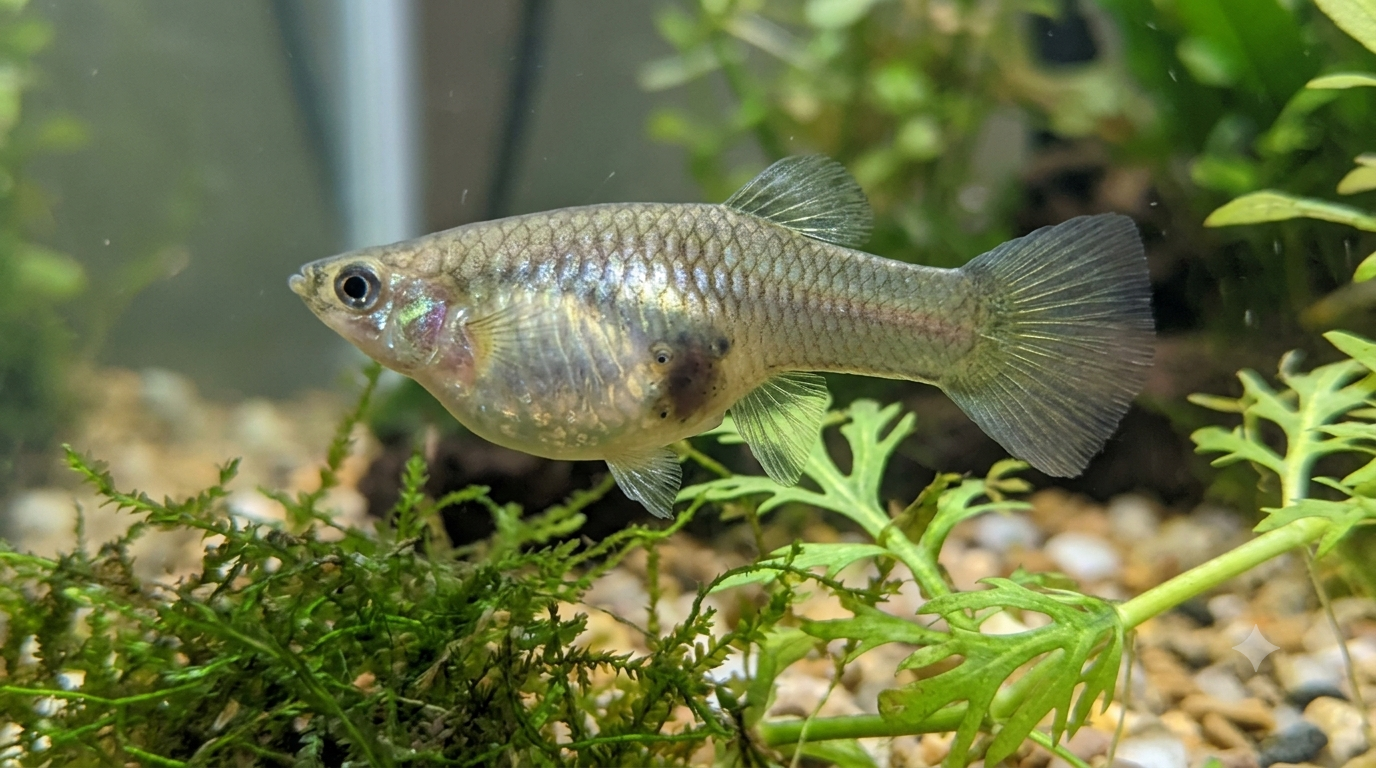
Are mollies aggressive fish species, and why do they fight? Mollies are generally peaceful community fish, but they can become aggressive when males compete for females, the tank is crowded, or tank mates cannot escape harassment.
Most molly fish aggression is preventable with the right group size, gender ratio, space, and compatible companions. If you are asking, “are molly fish aggressive, or not?” the honest answer is: usually no, but an aggressive molly can make life difficult for everyone else in the aquarium.
Male molly aggression is the most common problem, especially when one male repeatedly chases females or nips slower fish.
Are Mollies Aggressive Fish or Generally Peaceful?
Mollies are generally peaceful freshwater fish that can live well in a community aquarium. They are active, curious, and social, but their constant movement and strong breeding drive can look intimidating to smaller or slower fish.
A molly is not naturally a bully in the way some cichlids can be. Problems usually begin when the tank is too small, there are too many males, food is limited, or a fish is sick, weak, or unable to get away.
Molly fish aggression often shows up as chasing rather than serious fighting. A fish may pursue another molly around the tank, follow it closely, flare its fins, or bump it near food. Occasional chasing can be normal, but constant harassment is a warning sign. aquariumsos
Why Do Molly Fish Chase or Attack Each Other?
Why do molly fish chase each other, even when they live in a peaceful community tank? Molly fish often chase, nip, or bully tank mates because of mating behavior, territorial disputes, overcrowding, stress, or competition for food.
While occasional chasing is normal, persistent aggression can leave weaker fish injured, exhausted, or constantly hiding.
But how can you tell whether your mollies are simply playing, mating, or genuinely attacking one another? From recognizing common aggression signs to adjusting tank conditions, choosing the right male-to-female ratio, and knowing when to separate an injured fish, this guide covers everything you need to restore peace to your aquarium.
Male Competition and Dominance
Male molly aggression usually comes from competition. Males compete for attention from females, and a dominant male may chase rivals, display his fins, or try to control the best feeding areas.
Keeping several males together in a small tank can create repeated conflict. A group made up only of males is especially likely to produce aggressive behavior because there are no females to redirect their breeding energy.
Mating Behavior and Female Harassment
Mollies are livebearers, which means females give birth to free-swimming young rather than laying eggs. A male will often pursue a female for mating, and this can become stressful when he will not leave her alone.
This is why the ratio of males to females matters so much. With 1 male and 2 females, the same female may receive most of the attention. A better setup is one male with three or four females, giving each female more time to rest, eat, and hide.
Stress, Overcrowding, and Limited Space
Overcrowding is one of the biggest causes of molly fights. Mollies are active swimmers and produce a lot of waste, so a crowded tank can quickly create poor water quality, stress, and territorial behavior.
A 10 gallon tank may work for a very small, carefully chosen group of smaller mollies, but it leaves little room for error. For a mixed community, a 20 gallon tank or larger is usually safer; sailfin mollies need even more swimming room.
Poor water conditions can also make an otherwise calm molly act aggressive. Regular water changes, a cycled filter, and testing for ammonia and nitrite help reduce stress before it turns into chasing or fin damage.
Are Male Mollies More Aggressive Than Females?
Yes. Male molly aggression is usually more obvious than aggression from females. Males constantly court females, compete with other males, and may chase anything that moves quickly or enters their preferred area.
An aggressive male molly may target one female repeatedly. If that female hides constantly, breathes quickly, loses weight, or has a damaged fin, separate the fish or rehome the male before the problem becomes serious.
Female mollies can also be aggressive at times, especially around food or when they are protecting space. However, an aggressive female is less common than an aggressive male and often settles once the aquarium has more hiding places and less competition.
Do Molly Fish Fight With Other Fish?
Mollies can fight with other fish, but they do not usually start fights without a reason. Common triggers include competition for food, too little space, incompatible tank mates, or a fish that cannot defend itself.
A molly may nip at long, flowing fins. This can be a problem for fancy guppies, bettas, angelfish, and other slow-moving fish with large fins. A male betta and a female betta should not be kept with mollies simply because both species can be territorial and have different care needs.
Mollies can also become territorial around algae or food. If one molly chases every other fish during feeding time, try spreading food across the surface and feeding smaller amounts more than once a day.
How to Recognize Signs of Aggression in Mollies
Watch for these signs:
- One fish constantly chases another molly or a different species.
- A fish hides behind plants, decorations, or the filter all day.
- A fish has a torn fin, missing scales, clamped fins, or visible injuries.
- A female cannot eat because a male follows her everywhere.
- Fish dart around the tank, breathe rapidly, or refuse food.
- One fish controls the food area and chases others away during feeding time.
- A new fish gets bullied immediately after being added.
Normal courtship can involve brief chasing. Aggressive behavior becomes a problem when it is repeated, one-sided, and causes stress or injury.
Can Different Types of Molly Fish Live Together?
Different molly types can usually live together if they are similar in size and temperament. Common varieties include black mollies, dalmatian mollies, lyretail mollies, balloon mollies, and sailfin mollies.
Black molly fish aggressive behavior is not automatically worse than aggression in other colors. A black molly may be an aggressive molly because it is male, crowded, or competing for females—not because of its color.
Be careful mixing large sailfin mollies with tiny fish. Sailfin mollies can grow larger and may outcompete smaller fish for food. A balloon molly also needs extra care because its rounded body shape can make swimming and breeding more difficult.
What Is the Best Male-to-Female Ratio to Prevent Aggression?
The best ratio is usually one male to two or three females. Some experienced hobbyists prefer one male with four females when the tank is large enough and the females are being harassed.
| Group setup | Result |
|---|---|
| One male, one female | High risk of harassment; the female gets no break |
| One male, two females | Can work, but watch for stress |
| One male, three females | Good starting ratio for most home aquariums |
| One male, four females | Often best for reducing repeated mating pressure |
| Two or more males with few females | Higher risk of male competition and chasing |
Never assume a molly is female just because it looks calm. Young mollies can be difficult to sex, and a pet store fish may have been mislabeled. If you recently got mollies and suddenly see chasing, check whether you have more than one male.
What Are the Best Tank Mates for Molly Fish?
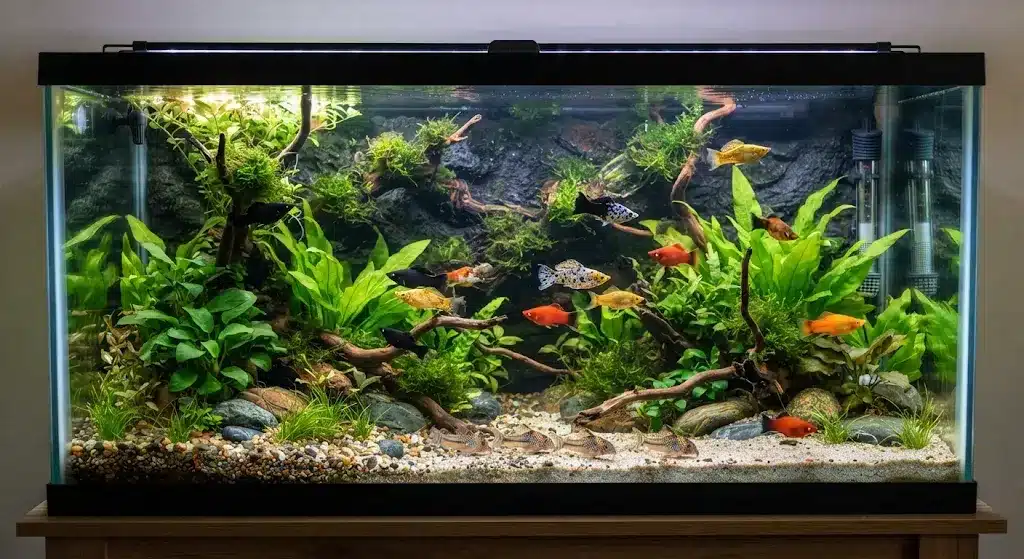
Good molly fish tank mates are peaceful fish that enjoy similar warm, clean freshwater conditions and can handle a busy tank. Mollies do best with active fish that are not easily intimidated.
Suitable companions include:
- Platies
- Swordtails
- Corydoras catfish
- Peaceful tetras, such as neon tetras or black phantom tetras
- Small, peaceful gouramis
- Cherry shrimp, if the tank has plenty of plants and hiding places
- Other livebearers of a similar size
Avoid keeping mollies with goldfish. Goldfish prefer cooler water, while mollies need warmer water, so the two species do not share the same ideal environment.
Male guppies can live with mollies in a large, well-planted aquarium, but fancy guppies with long fins may get nipped. If you keep guppies, choose a spacious tank and avoid overcrowding.
How to Stop Molly Fish From Fighting and Chasing Other Fish
Learning how to stop molly fish from fighting and chasing other fish can help you maintain a peaceful community aquarium. Mollies usually chase each other because of mating pressure, overcrowding, an imbalanced male-to-female ratio, or competition for food and territory.
To stop molly fish from fighting, keep at least two or three females for every male, provide enough swimming space, add plants and hiding spots, and feed your fish regularly. A suitable tank environment and a balanced group can reduce stress and aggressive behavior. Separate persistent bullies or injured fish when necessary to protect the rest of the aquarium.
Improve the Tank Setup
Start by checking tank size, filtration, and hiding places. Add live plants, driftwood, caves, and open swimming space so fish can break line of sight and get away from a persistent chaser.
If the aquarium is overcrowded, do not keep adding fish. Instead, consider a larger tank or rehoming extra fish to another tank or a local fish store. A 55 gallon tank gives a mixed community much more room to establish natural behavior.
Fix the Gender Ratio
If you have one male and one female, try putting in another female or two, provided the tank has space and filtration for them. The goal is to spread the male’s attention across several females instead of focusing it on one fish.
If you have several males, reduce the number of males or increase the number of females. Do not keep an all-male group unless you have a very large tank and are prepared to manage conflict.
Reduce Stress and Competition
Feed a varied diet, including high-quality flakes or pellets plus occasional brine shrimp or vegetable-based foods. Feed at opposite ends of the tank so weaker fish can eat without being chased away.
Keep the water clean with regular water changes and check that ammonia and nitrite stay at zero. Stable, mineral-rich water supports molly health and reduces stress-related aggression.
Separate Persistent Bullies
If one molly continues to chase everything despite more space, a better ratio, and clean water, separate it. Use a breeder net only as a short-term solution; a proper divider or another tank is better for long-term safety.
Rehoming an aggressive male may be the kindest option if he injures females or makes the entire tank stressful. A breeder or local fish store may be able to take him, but call first rather than releasing fish into local waterways.
Frequently Asked Questions About Molly Fish Aggression
Do mollies bite or nip other fish?
Mollies can nip, especially at long fins or during feeding disputes. It is not their first choice of behavior, but nipping can happen when a fish feels crowded, stressed, or territorial.
Can mollies kill other fish?
Yes, but it is uncommon in a healthy, well-managed aquarium. Repeated chasing, fin damage, exhaustion, and stress can weaken a fish and make illness more likely. Separate fish before injuries become severe.
Are black mollies more aggressive?
No. Black mollies are not naturally more aggressive than other molly varieties. Any black molly can become an aggressive molly if it is male, overcrowded, competing for mates, or housed with unsuitable fish.
Will mollies fight with guppies?
They can live together, but problems can happen. Mollies are larger and more active, while male guppies have colorful, flowing fins that may attract unwanted attention. Use a spacious tank, plenty of plants, and a proper male-to-female ratio.
Do mollies become aggressive when pregnant?
A molly that is about to give birth may become more protective or seek hiding places, but pregnancy itself does not automatically make a molly aggressive. If a female is being chased nonstop, the issue is more likely male harassment or an unbalanced group.
Why do mollies chase each other?
Mollies chase each other for mating, dominance, food, territory, or stress. Brief chasing can be normal, but constant chasing means the tank setup, gender ratio, or fish compatibility needs attention.
What is the most aggressive pet fish?
There is no single “most aggressive” pet fish, but some cichlids, male bettas, and certain territorial species can be quite aggressive. A fish’s behavior depends on species, tank size, hiding places, and whether it feels crowded or threatened.
Is it okay to have one molly fish?
It is okay, but one molly may become lonely or stressed. Mollies are social community fish, so keep at least three with more females than males; use a secure lid because mollies can jump.
Which is better, a guppy or a molly?
Neither is universally better. Guppies are smaller and easier for compact aquariums, while mollies are hardier, larger, and may prefer harder or slightly brackish water. Choose based on your tank size, water conditions, and desired community.
Do molly fish jump out of a tank?
Yes. Molly fish can jump when startled, chased, or stressed by poor water quality. Use a tight-fitting lid, cover filter gaps, and check the fish’s environment if jumping becomes repeated.
Are molly fish aggressive, and why do they fight?
Mollies are generally peaceful, but they can become aggressive towards tank mates during mating, food competition, or overcrowding. Male molly aggression is common when one male has too few females, causing constant chasing and stress.
How can you reduce aggression in mollies?
Keep one male with two or three females, avoid overcrowding, and rearrange plants or décor to break sightlines. Add hiding places, maintain clean water, feed evenly, and separate a fish that keeps bullying other fish in the tank.
How many mollies should be kept together?
Keep at least four mollies together in a suitably sized, cycled aquarium. For mixed sexes, use one male with three females to reduce chasing and stress; larger sailfin mollies need more
What fish can live peacefully with mollies?
Mollys live peacefully with platies, swordtails, guppies, peaceful tetras, danios, rasboras, and corydoras catfish. Choose similar-sized fish that tolerate warm, hard freshwater, and provide plenty of space and hiding places.
Conclusion
So, are mollies aggressive fish species? Mollies are not naturally agressive fish, but they can become aggressive under the wrong conditions. Most problems come from too many males, too few females, a small tank, poor water quality, or tank mates that cannot escape a persistent chaser.
A healthy molly aquarium needs space, clean water, plants, and a balanced social group. Keep one male with at least two or three females, avoid overcrowding, and choose peaceful companions such as platies, tetras, corydoras, and similar-sized livebearers.
If one fish constantly chases, nips, or injures another, act early. Improve the environment first, then separate or rehome a true bully if needed. With the right setup, mollies can be colorful, active, and peaceful additions to a freshwater community aquarium.
You might also like
- How Long Are Molly Fish Pregnant For? Breeding Guide (FAQ)
- Molly Fish Care: Complete Expert’s Care & Breeding Guide