How can you tell if your angelfish is male or female? Angelfish sexing techniques can be tricky, especially since these beautiful freshwater fish don’t show obvious differences at first glance. But with the right knowledge, you can identify their gender with ease.
The quickest way to determine an angelfish’s sex is by looking at its breeding tube, males have a pointed one, while females have a rounder, wider tube. Body shape, fin size, and behavior also provide clues. Experts like Dr. Paul Loiselle, a renowned aquarist, recommend observing angelfish over time for accurate sexing.
But these are just the basics. To master the art of sexxing angelfish, you need to know more details and expert-backed techniques. So, let’s dive deeper into how to tell the Angelfish Sexes with confidence!
How to Sex an Angelfish?
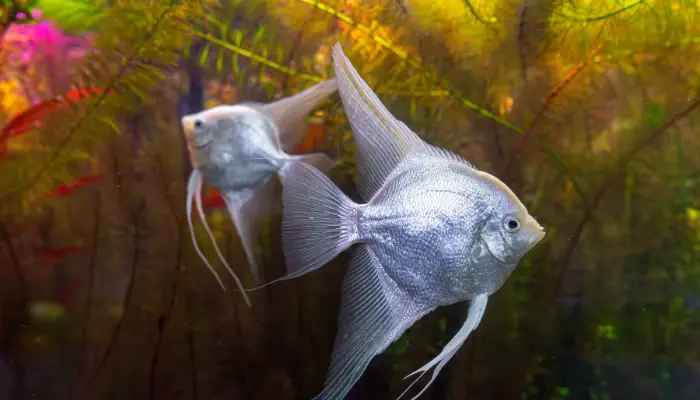
How do I know if my angelfish is male or female? To effectively sex an angelfish, one must observe their physical characteristics and behaviors closely. Generally, male angelfish are larger and possess a more pointed dorsal fin, while females tend to have a rounder body shape.
This difference can be especially noticeable in mature fish. Additionally, during the breeding season, the female angel fish develops a tube-like structure, which is used for laying eggs.
Observing these traits can provide a clear indication of whether you are dealing with a male or female angelfish. If you would like to know the gender of your fish, keep an eye on these physical aspects and behaviors.
Another reliable method to sex angelfish is to observe their behavior during breeding. When attempting to mate, a male will engage in courtship displays, showcasing his vibrant colors and swimming patterns.
In contrast, a female may exhibit more passive behavior, focusing on finding a suitable spawning site. As these behaviors become more apparent, you’ll be able to tell the difference between male and female angelfish with greater ease.
Understanding these behaviors is essential for fish keepers interested in breeding their nuchal hump angel fish successfully.
Angelfish Sexing Tips: 3 Ways to Tell the Sex of Angelfish
How to tell the sex of an angelfish? Sexing angel fish can be challenging, especially when they are young, as they do not exhibit clear sexual dimorphism until they mature.
However, there are a few methods to help sexxing angelfish as they grow older. Here are three ways to tell the sex of angelfish:
1. Examine the Breeding Tube (Most Reliable Method)
- When angelfish are ready to breed, a small tube called the breeding tube or genital papilla becomes visible near their ventral area, just behind the anal fin.
- Males: The breeding tube is narrow, pointed, and more streamlined.
- Females: The breeding tube is wider, rounder, and has a blunt shape.
- This method is most accurate when the fish are mature and in breeding condition.
2. Observe Body Shape and Size
- Males: Male angelfish tend to have a more angular body shape, especially around the head and dorsal region. They may also grow slightly larger than females.
- Females: Female angelfish often have a rounder, more compact body, particularly when they are carrying eggs. Their belly may appear fuller.
3. Behavior During Breeding
- Males: Males are typically more territorial and aggressive, especially during breeding. They may chase other fish and display courtship behaviors, such as cleaning a flat surface for the female to lay eggs.
- Females: Females are usually the ones to lay eggs. If you observe a pair of angelfish preparing to spawn, the female will often have a more prominent belly due to the eggs.
Additional Tips:
- Age Matters: It is nearly impossible to sex angel fish accurately when they are juveniles. Wait until they are at least 6–8 months old.
- Pairing Behavior: Angelfish often form monogamous pairs. If two fish consistently stay together and display breeding behaviors, they are likely a male and female.
By combining these methods, you can increase your chances of accurately determining the sex of your angelfish. However, keep in mind that some individuals may not fit the typical characteristics, so patience and observation are key!
What Is the Dimorphism of the Angelfish?
Dimorphism in angelfish refers to the observable differences between male and female individuals, which can be essential for breeding purposes. One of the most notable characteristics is the difference in size; male angel fish are generally larger and have longer fins compared to their female counterparts.
In addition, the dorsal fin of a male angelfish tends to be more pointed, while a female’s dorsal fin is rounded. The distinctions in size and fin shape become more evident as the angelfish mature, making it easier to identify each gender. This dimorphism plays a crucial role for aquarists who wish to create a breeding pair.
Moreover, during the breeding season, the female angelfish develops a distinctive tube that is essential for laying eggs. This physical change is a clear indication that the fish is ready to spawn.
Understanding these differences is essential for fish keepers who want to ensure successful breeding and raising of fry. By recognizing the dimorphism of angelfish, you can make informed decisions about selecting a breeding pair and providing them with the optimal conditions for reproduction.
Why Are My Angelfish Locking Lips?
Locking lips is a common behavior observed among angel fish, particularly during mating rituals. This behavior often indicates that a pair of angelfish is establishing a bond, as they engage in playful interactions.
During this time, you may notice the fish swimming close together, gently nudging each other with their mouths. This interaction is a crucial part of their courtship and can help strengthen the connection between a male and female angelfish. If you see your angelfish locking lips, it is likely that they are preparing to mate.
However, locking lips can also occur during displays of aggression or territorial disputes, especially if there are multiple angel fish in the same tank. It is essential to pay attention to the context in which this behavior occurs.
If it appears to be friendly, it may indicate that your fish are forming a breeding pair. Conversely, if the behavior escalates and leads to aggressive fighting, you may need to consider rearranging the tank or separating the fish to prevent stress.
Observing your angelfish’s interactions will help you better understand their behavior and maintain a peaceful environment.
Conclusion
So, How to Sex Angelfish? In conclusion, sexing angelfish requires careful observation of physical traits and behaviors. By understanding the differences between male and female angelfish, you can create suitable breeding pairs and maintain a harmonious aquarium environment. Key indicators such as size, shape, and reproductive features, along with behavioral observations, play a vital role in determining the gender of your fish. By applying the techniques outlined in this article, you will be better equipped to tell whether you have male or female angelfish, ultimately enhancing your experience as an aquarium enthusiast.
Whether you are a beginner interested in freshwater fish or a seasoned aquarist looking to expand your knowledge, these angelfish sexing techniques will prove invaluable. With the right approach and observation skills, you’ll be able to successfully breed angelfish and enjoy the beauty of their fry as they grow. Share your experiences on platforms like YouTube or through email, and engage with the angelfish community to learn even more about these fascinating creatures. Happy fish keeping!
Recommended posts
- Are Angelfish Schooling Fish: (Do They Swim in Groups!)
- Breeding of Angelfish – A Complete Guide for Beginners
- Male vs Female Angelfish: Spotting the Differences Like a Pro
- Angelfish Mating or Fighting: Key Signs to Watch For