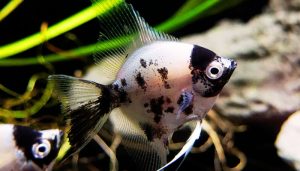
Have you ever wondered how tiny angelfish eggs transform into graceful juveniles? The journey from egg to fully developed fry is fascinating, filled with delicate stages of growth. Understanding Angelfish fry growth stages is essential for anyone interested in breeding this beautiful freshwater species.
Angelfish fry go through four key stages: egg, wriggler, free-swimming fry, and juvenile. Within days, eggs hatch into wrigglers that absorb nutrients from their yolk sacs. Soon, they become free-swimmers, growing rapidly until they develop the iconic angelfish shape.
But what does each stage require for optimal growth? Experts like renowned aquarist Jack Wattley emphasize proper nutrition and stable water conditions.
Let’s dive into each phase and uncover the secrets to raising healthy angelfish fry!
How Long Does It Take for Angel Fish Fry to Grow?
The growth of angelfish fry is an intriguing process that can vary significantly depending on various factors, including water quality, diet, and the specific species of angelfish. Typically, baby angelfish will grow from egg to free swimming stage within 48 hours after hatching.
After this initial stage, the growth rate can accelerate, especially if they are fed a proper diet, such as baby brine shrimp or specialized fry food.
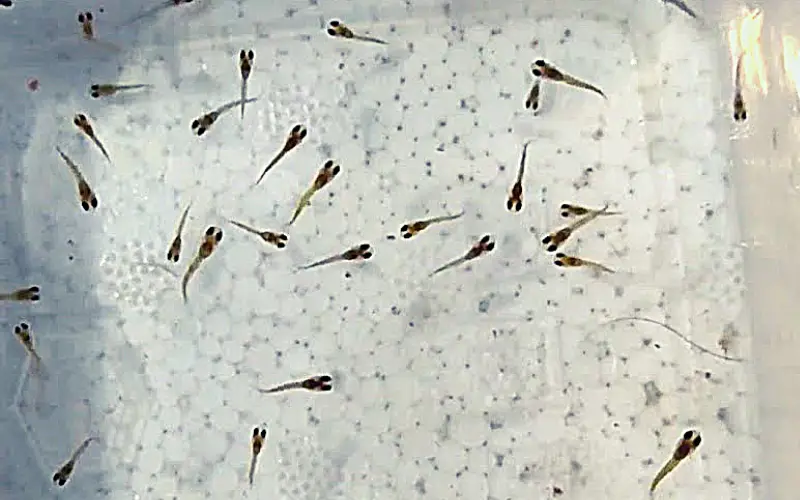
Under optimal conditions, you may notice significant growth within the first few weeks of life, which is crucial for their development into healthy juvenile angelfish. However, if conditions are not ideal, the growth might slow down, making it vital for breeders to monitor the environment closely.
As the fry continue to develop, the feeding method becomes key. Regularly feeding them high-quality food can help them grow faster and stronger. Many aquarists recommend feeding them small amounts several times a day to ensure they get enough nutrients.
The growth cycle of angel fish can be fascinating, and many enthusiasts enjoy documenting this process through videos on platforms like YouTube, sharing their experiences and tips with others in the community.
The careful observation and management of these fry during angelfish fry stages can lead to thriving juvenile angel fish, making the effort well worth it.
The 5 Angelfish Fry Growth Stages:
Angelfish (Pterophyllum scalare) are a popular freshwater species known for their graceful appearance and fascinating breeding process. Their fry undergo several distinct growth stages, each requiring specific care and attention.
Here’s a breakdown of their development from egg to juvenile:
1. Egg Stage (Days 0-3)
After spawning, the female lays eggs on a flat surface, such as a broad leaf or a vertical surface in the aquarium. The eggs are translucent and adhesive, allowing them to stay in place. During this stage:
- The male fertilizes the eggs immediately after they are laid.
- Parents often guard the eggs against potential threats.
- Healthy eggs appear clear, while unfertilized or dead eggs turn white.
- The eggs hatch within 48-72 hours, depending on water temperature (typically 78-82°F or 25-28°C).
2. Wriggler Stage (Days 3-7)
Once hatched, the fry enter the wriggler stage, during which they remain attached to the spawning site via their yolk sacs. In this phase:
- Fry do not yet swim freely and rely on their yolk sacs for nutrition.
- Their bodies begin to develop, and small tail movements become visible.
- Parents often relocate them to a safer area in the tank.
- By the end of this stage, the yolk sac is fully absorbed, and the baby angelfish begin preparing for free swimming.
3. Free-Swimming Stage (Days 7-14)
At around day 7, the fry detach from the spawning site and start swimming independently. During this stage:
- They actively search for food and must be fed appropriately.
- They require a diet of freshly hatched brine shrimp, micro worms, or specialized fry food.
- Parents may still provide protection and guide them around the tank.
- Their coloration remains translucent but starts to darken gradually.
4. Juvenile Stage (Weeks 2-8)
Between two and eight weeks of age, the wigglers undergo significant growth and resemble miniature versions of adult angelfish. Key developments include:
- Rapid body and fin growth, with distinctive angelfish shape becoming evident.
- Increased mobility and ability to compete for food.
- Introduction to crushed flakes and finely ground pellets to supplement their diet.
- Some fry may develop unique color patterns as they mature.
5. Sub-Adult Stage (Months 2-6)
By two to six months, the young angelfish are considered sub-adults. At this stage:
- Their coloration and markings become more defined.
- They develop a social hierarchy and may exhibit territorial behaviors.
- Growth rates vary, and some individuals outgrow others.
- They are ready to be transferred to a larger tank if needed.
Proper care, including regular water changes, optimal water parameters, and a nutritious diet, ensures healthy development through each stage. With patience and attention, baby angelfish grow into stunning, full-sized adults, continuing the cycle of life in the aquarium.
How Long Does It Take for Angelfish Fry to Become Free Swimming?
The transition from egg to free swimming is a fascinating aspect of angelfish fry development. After the eggs hatch, which typically occurs within 24 hours, the fry remain attached to the substrate for a short period while they absorb their yolk sac.
This hatching process is crucial, as it ensures that they have the energy needed to start swimming. Once the yolk sac is fully consumed, the angelfish fry enter the free swimming stage, which usually happens around 5 to 7 days post-hatch.
At this point, they begin to swim around the tank, actively searching for food. During the free swimming stage, it’s essential to provide appropriate food options to support their growth.
Many breeders recommend introducing tiny live foods, such as newly hatched brine shrimp or finely crushed flakes, to encourage healthy eating habits. This stage is critical, as proper nutrition can significantly impact their growth rate and overall health.
Additionally, maintaining optimal water conditions in the aquarium, such as temperature and pH, plays a significant role in their successful transition.
Observing this development is not only rewarding but also provides valuable insights into the breeding process for both novice and experienced aquarists.
When Should I Separate Angelfish Fry from Parents?
Separating angelfish fry from their parents is a decision that many breeders face as they navigate the early stages of raising these fish.
Typically, it’s advisable to separate the fry from the parents once they reach the free swimming stage and have started actively feeding on their own.
This usually occurs around 1 to 2 weeks after hatching, although some breeders prefer to wait until the fry are about 4 weeks old to ensure they can eat independently.
Separation can help reduce stress on both the fry and the parents, as the latter may become protective or aggressive as the fry grow.
Before separating the fry, it’s crucial to ensure they are healthy and eating well. Once separated, the fry should be transferred to a suitable tank setup, ideally a 10-gallon tank to provide ample space for growth.
This new environment should be equipped with a sponge filter to maintain water quality and provide gentle water movement, which is essential for the fry’s development.
Regular monitoring of water conditions and providing quality food will facilitate the growth of the fry into healthy juvenile angelfish, ensuring a successful transition from their parents’ care.
How Many Babies Do Angelfish Usually Have?
Angelfish are known for their ability to produce a substantial number of fry in a single spawning event. A pair of angelfish can lay anywhere between 100 to 1,000 eggs, depending on their age, health, and breeding conditions.
The first batch of eggs laid may be on the lower end of this spectrum, while more experienced pairs often produce larger clutches. The number of eggs can also be influenced by factors such as tank size, water quality, and the presence of plants for the angel fish to lay their eggs on.
Once the eggs are fertilized, they will hatch within 48 hours, leading to a new generation of angelfish fry. Breeding enthusiasts often document their experiences and share insights on forums and social media, discussing the varying batch sizes and care methods.
Additionally, the survival rate of the fry can fluctuate, with environmental factors playing a significant role in their development.
Therefore, understanding the potential number of fry and preparing adequately can make a significant difference in the breeding success for those aiming to raise angelfish in their aquariums.
Conclusion
The angelfish fry growth stages, from egg to juvenile, are filled with critical moments that define their development. Each stage requires careful attention and appropriate care to ensure the fry grow into healthy fish. Understanding how long it takes for angelfish fry to grow, when to separate them from their parents, and how to best feed them can enhance the breeding experience. With the right setup and knowledge, aquarists can successfully raise angel fish fry and enjoy the rewarding process of watching them grow. Remember to share your experiences and findings with fellow enthusiasts and don’t forget to subscribe to informative channels on platforms like YouTube for more tips and insights into this fascinating journey.
Recommended posts
- How Often to Feed Angelfish Fry: Best Feeding Schedule & Tips
- Angel fish Eggs Turned White? Common Reasons & Prevention
- Angelfish Eggs Hatch Time: How Long It Takes & What to Do
- Breeding of Angel fish – A Complete Guide for Beginners
- Angelfish Eggs Stages & Hatching Process: (Exclusive Guide)