A pregnant molly fish carries developing young inside her body and gives birth to live, free-swimming babies rather than laying eggs. Most molly pregnancies last about 30 to 40 days, although temperature, age, health, and stress can change the timing, but what are the Molly fish Pregnancy signs?
If you notice a rounder belly, a darker gravid spot, or unusual hiding behavior, your molly may be getting ready to give birth. This guide explains the signs, molly pregnancy stages, labor signs, and the safest way to care for molly fry.
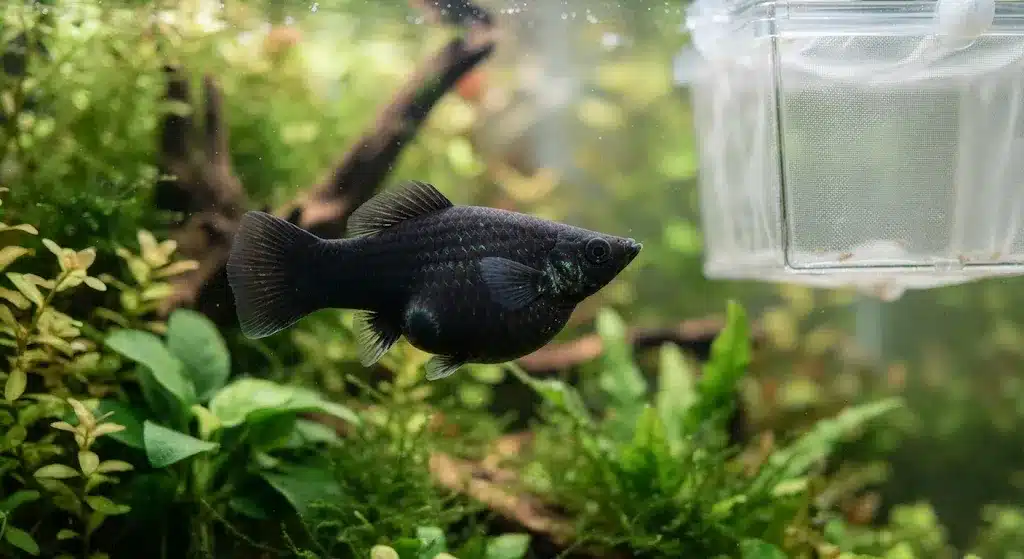
Molly fish is one of the easiest fish to breed in captivity, making it a great choice for beginner aquarists who want to raise baby fish at home. These peaceful livebearers adapt well to home aquariums and reproduce readily when they receive proper care, stable water conditions, and a nutritious diet.
How to Tell If Your Molly Fish Is Pregnant
The clearest signs of a molly pregnant fish are a gradually swelling abdomen, a visible gravid spot near the anal fin, and a more boxy body shape as birth approaches. A pregnant female may also hide more often, swim less actively, and breathe faster shortly before delivery.
Look for these clues over several days rather than judging from one observation:
- Her belly becomes rounder, especially when viewed from above.
- The area near her anal fin darkens or appears fuller.
- Her body changes from smoothly curved to more boxy.
- She spends more time near plants, decorations, or the bottom of the tank.
- A male follows her closely or repeatedly tries to mate with her.
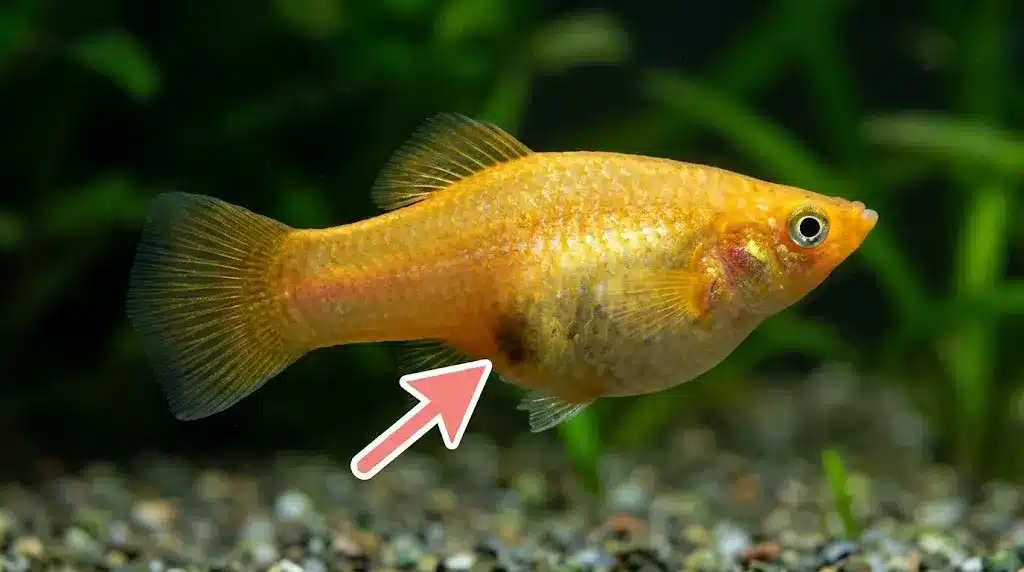
A pregnant molly fish does not always show a dark gravid spot. Light-colored, gold, white, and some balloon mollies can make the spot harder to see. In those cases, belly shape and pregnant molly fish behavior are more useful clues.
What Does a Pregnant Molly Fish Look Like?
A pregnant molly fish develops a larger, rounded abdomen as the babies grow. Near the end of pregnancy, her belly may look squared off rather than simply round, and she may rest more often near hiding places.
The gravid spot is a darker area just in front of the anal fin. It becomes more noticeable as the fry develop, but it is not a guaranteed pregnancy test. A well-fed molly, a fish with constipation, or a female carrying eggs can also look full-bodied.
Pregnant Molly vs. Bloated Molly
| Feature | Pregnant Molly | Bloated or Sick Molly |
|---|---|---|
| Belly shape | Gradually becomes rounder and boxy | Often suddenly swollen, uneven, or very large |
| Gravid spot | May darken and become more visible | May stay unchanged |
| Behavior | May hide, rest, or act restless near birth | May float oddly, struggle to swim, stop eating, or look lethargic |
| Other signs | Normal appetite and breathing | Pineconing scales, clamped fins, rapid breathing, or visible discomfort |
| What to do | Prepare a safe birth area | Check water quality immediately and seek aquarium-fish advice if symptoms continue |
Do not assume a swollen belly means pregnancy. If your molly has trouble swimming, refuses food, has raised scales, or looks uncomfortable, poor water conditions or illness may be the cause.
How Long Are Molly Fish Pregnant?
Molly fish pregnancy usually lasts around 30 to 40 days. Warmer, stable water often moves delivery toward the shorter end of that range, while cooler water, stress, or poor conditions can delay it.
A useful rule is to count roughly four to six weeks from the time you first notice clear pregnancy signs. Do not rely on an exact day, because a female molly can store sperm after mating and may already have been pregnant before you brought her home.
What Are the Stages of Molly Fish Pregnancy?
Molly fish pregnancy stages are easier to understand as a timeline than as fixed medical stages. The female carries fertilized eggs inside her body, the embryos develop, and she releases live fry rather than laying eggs.
Mollyfish pregnancy progresses through several stages, from fertilization and early embryo development to visible pregnancy signs and labor.
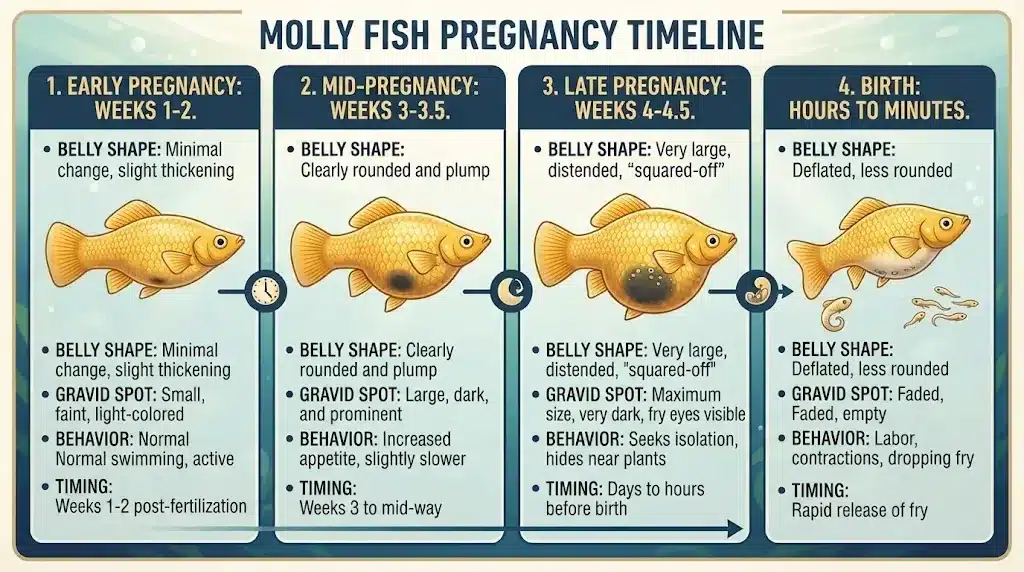
Gestation typically lasts around 40–70 days, depending on water temperature, the female’s health, and environmental conditions. Observing changes in belly shape, appetite, activity, and the gravid spot can help you estimate how close your pregnant molly fish giving birth.
Knowing what to expect at each stage helps you protect the pregnant female, reduce stress, and give newborn fry a better chance of survival. From early pregnancy signs to the final hours before birth, let’s explore each stage of molly fish pregnancy and learn how to recognize the signs with confidence.
Early Pregnancy
In the first week or two, the changes may be subtle. The female’s abdomen starts to fill out, and the gravid spot may become slightly darker.
She may still swim normally, eat well, and interact with tank mates. This is the best time to make sure the aquarium has stable water conditions, live plants, and safe hiding spots.
Mid-Pregnancy
By the middle of pregnancy, the belly becomes clearly rounder. The female may look wider from above, and the gravid spot often becomes easier to see.
Males may show more interest in mating. Keep one male with several females rather than placing one female with several males, because repeated mating attention can stress her.
Late Pregnancy
In the final days, her abdomen looks boxy and full. She may hide behind plants, rest near the filter, breathe faster, or become less interested in food.
This is when you should prepare a nursery or breeding area. Do not chase or net her repeatedly just to check her belly; stress can make birth more difficult.
What Are the Signs a Molly Fish Is About to Give Birth?
Molly fish labor signs include a boxy belly, frequent hiding, restlessness, reduced appetite, faster breathing, and staying close to plants or shelter. Some females also become more aggressive toward tank mates as birth gets close.
Common signs that a molly is ready to give birth include:
- A very full, squared-off abdomen.
- A dark or enlarged gravid spot.
- Hiding behind live plants, driftwood, or decorations.
- Swimming in short bursts, then resting.
- Shaking, twitching, or contracting near the vent area.
- Less interest in food on the day of birth.
- Small, free-swimming fry appearing near plants or the bottom.
Birth often happens quietly. A mother molly may release one fry at a time, with short pauses between babies. The fry are born able to swim, so they usually move toward cover right away.
How Many Babies Do Molly Fish Have at Once?
A molly can give birth to roughly 20 to 100 fry in one brood. The exact number depends on the female’s size, age, health, and whether this is her first pregnancy.
First-time mothers often have fewer babies. Larger, healthy females may produce larger groups, but a huge brood can quickly overcrowd a small aquarium. Plan ahead before breeding molly fish, especially if you do not have space for a separate fry tank.
How to Care for a Pregnant Molly Fish
Care for a pregnant balloon molly by keeping the water clean and warm, feeding a varied diet, reducing stress, and providing plenty of cover. Mollies are tropical fish, so stable warm water matters more than trying to speed up pregnancy.
– Keep the Water Stable
Keep the tank warm, filtered, and free of ammonia and nitrite. Avoid sudden temperature changes, because stress can affect both the mother and the developing fry.
Do a small, regular water change rather than a large one that changes the water conditions too quickly. Use a gentle filter flow so newborn fry are not pulled into strong currents.
– Feed a Balanced Diet
Feed a high-quality flake or pellet food, plus small amounts of protein-rich foods such as brine shrimp or daphnia. Do not overfeed; leftover food can harm water quality.
A varied diet supports the mother molly and helps her recover after giving birth. Remove uneaten food after a few minutes.
– Reduce Stress
Avoid moving the pregnant female unless you must. If you use a separate tank, set it up before she is close to giving birth and match the water conditions to her main tank.
Keep aggressive tank mates away from her. Male mollies can be persistent during mating, so a calm group with more females than males is usually easier on the female.
– Prepare Hiding Places
Add live plants, floating plants, java moss, or fine-leaved plants to give newborn fry places to hide. Dense cover can improve the survival rate when adults are in the same aquarium.
A breeding net or breeder box can protect the fry, but it is not ideal for long-term raising. A small, well-cycled nursery tank gives fry more room to grow.
Do Molly Fish Lay Eggs or Give Birth to Live Babies?
Mollies are livebearers, which means they give birth to live, free-swimming fry instead of laying eggs. Fertilization happens inside the female’s body, and the babies emerge already formed.
This makes mollies similar to guppies and platys. Unlike egg-laying tropical fish, molly babies do not need an egg stage in the aquarium; they can swim and feed soon after birth.
How to Care for Molly Fish Fry After Birth
Molly fry care starts with protection from adult fish. Adults, including the mother molly, may eat the fry, so use dense plants, a breeding net, or a separate fry tank if you want to raise the babies.
Set Up a Fry Tank
A fry tank should have:
- Gentle filtration, such as a sponge filter.
- Warm, stable water.
- Fine-leaved live plants or artificial hiding spots.
- No large or aggressive tank mates.
- A secure lid, because tiny fry can sometimes jump.
A breeding net can work for a short time, but fry grow quickly and need space. Move them to a larger nursery once they are strong swimmers.
Feed the Fry Often
Feed molly fry very small amounts several times a day. Good first foods include crushed flake food, powdered fry food, and baby brine shrimp.
As they grow, offer finely crushed flake food and baby brine shrimp. Remove leftover food to keep the water clean. Fry grow quickly when they receive frequent small meals and clean water.
Protect Them From Adults
Adult mollies do not protect their young. They may eat the fry, so do not rely on the mother to care for them. webmd
If you keep the babies in the main tank, add thick plants and floating cover. If you want a higher survival rate, move the fry to a protected nursery or separate tank.
Frequently Asked Questions About Molly Fish Pregnancy
How can you tell if a molly is pregnant or just fat?
A pregnant molly develops a rounded belly over weeks and may show a darker gravid spot. A bloated molly often swells suddenly and may have trouble swimming, clamped fins, or other signs of illness.
Can a molly fish get pregnant without a male?
Yes. Female mollies can store sperm after mating, so a female can give birth even if no male is currently in the tank. One mating can lead to more than one brood.
Do molly fish eat their babies?
Yes. Adult mollies, including the mother, may eat their fry. Provide dense plants, a breeding net, or a separate fry tank to protect the babies.
How often do molly fish give birth?
A healthy female molly can give birth roughly every 30 to 40 days when conditions are good. Because females can store sperm, they may continue producing broods after a male is removed.
How long does it take for molly fry to grow?
Molly fry grow quickly. They are usually considered adults at around four months, although they may continue growing afterward.
What are the odds of adopting a pregnant female when choosing a molly or a platy?
The odds can be fairly high. Pet stores often keep male and female livebearers together, and females can already be carrying sperm or developing fry when you bring them home.
How many days until molly fish give birth?
Most mollies give birth about 30 to 40 days after fertilization. Watch for a boxy belly, hiding, restlessness, and faster breathing as the due date approaches.
How long are molly fish pregnant?
Mollie fish are pregnant for about four to six weeks. The exact length depends on water temperature, stress, diet, and the individual female.
How does a molly fish act when pregnant?
A pregnant molly often becomes calmer, hides more, and swims less actively. As birth nears, she may rest near plants, breathe faster, eat less, and look restless or slightly aggressive toward tank mates. Her belly also becomes rounder and more boxy.
Do golden molly fish breed easily?
Yes, golden molly fish breed easily. They are livebearers like other mollies, so a healthy female can give birth to live fry about every 30 to 40 days. Provide warm, clean water, hiding plants, and a separate fry area to protect the babies.
Conclusion
Molly fish pregnancy is exciting, but it moves quickly once your female is close to giving birth. Watch for a rounder, boxy abdomen, a darker gravid spot, hiding behavior, and reduced appetite. Because mollies are livebearers, the babies arrive as free-swimming fry rather than eggs.
Prepare before delivery by keeping the water stable, offering a balanced diet, and adding live plants or other hiding places. If you want to raise the babies, use a separate fry tank or a well-planted nursery area, because adult mollies may eat the fry. Feed newborn molly fry tiny amounts of crushed flake food or baby brine shrimp several times a day.
With calm water, safe cover, and a little planning, you can protect the mother molly and give her babies the best chance to grow into healthy adult fish.
You might also like
- Why Do Molly Fish Laying on Bottom of Tank (5 Causes Solved)
- Bloated Molly Fish: Causes & Early Warning Signs of Dropsy
- How to Tell If a Molly Fish Is Dying? (5 Fish Sick Symptoms)
- Ideal Molly Fish Temperature: Keep your fish happy & healthy
- Molly Fish Breeder Mastery: 5 Power Tips for Explosive Growth!