How to breed goldfish and raise healthy baby fish in your own aquarium? For successful goldfish breeding trip, select healthy, mature males and females, prepare a separate breeding tank, and maintain clean, well-oxygenated water.
Goldfish typically spawn when warmer temperatures and seasonal changes trigger their breeding instincts. After spawning, remove the adult fish to protect the eggs from being eaten.
Goldfish can reproduce in home aquariums when you provide the right water conditions, proper nutrition, and a suitable breeding environment. Whether you’re a beginner or an experienced aquarist, understanding their spawning behavior will help you get better results.
From identifying male and female goldfish to caring for fertilized eggs and raising fry, every stage requires attention. We’ll walk you through the breeding process, including practical aquarium tips and common mistakes to avoid. Ready to welcome your first generation of baby goldfish? Let’s get started!
How Does Goldfish Breeding Work?
Goldfish breeding works through external fertilization. A male goldfish chases a gravid female, nudges her near plants or a spawning mop, and releases milt—sperm-containing fluid—as she releases eggs. Fertilization happens in the water, not inside the female’s body.
How Goldfish Reproduce
The reproduction of goldfish begins when rising water temperature and longer daylight signal spring-like conditions. Males become more active, develop breeding stars, and begin to chase the female around the aquarium or pond.
During goldfish spawning, the female scatters adhesive eggs onto fine plants, spawning mops, or other surfaces. The male releases milt over the eggs, allowing fertilization to occur.
Are Goldfish Egg Layers or Livebearers?
Goldfish are egg layers, not livebearers. A female goldfish does not give birth to free-swimming babies; she releases eggs that must be fertilized by a male in the water.
This matters because adult goldfish will eat eggs and newly hatched fry. Remove the adults or move the spawning medium as soon as spawning ends.
How to Tell Male and Female Goldfish Apart
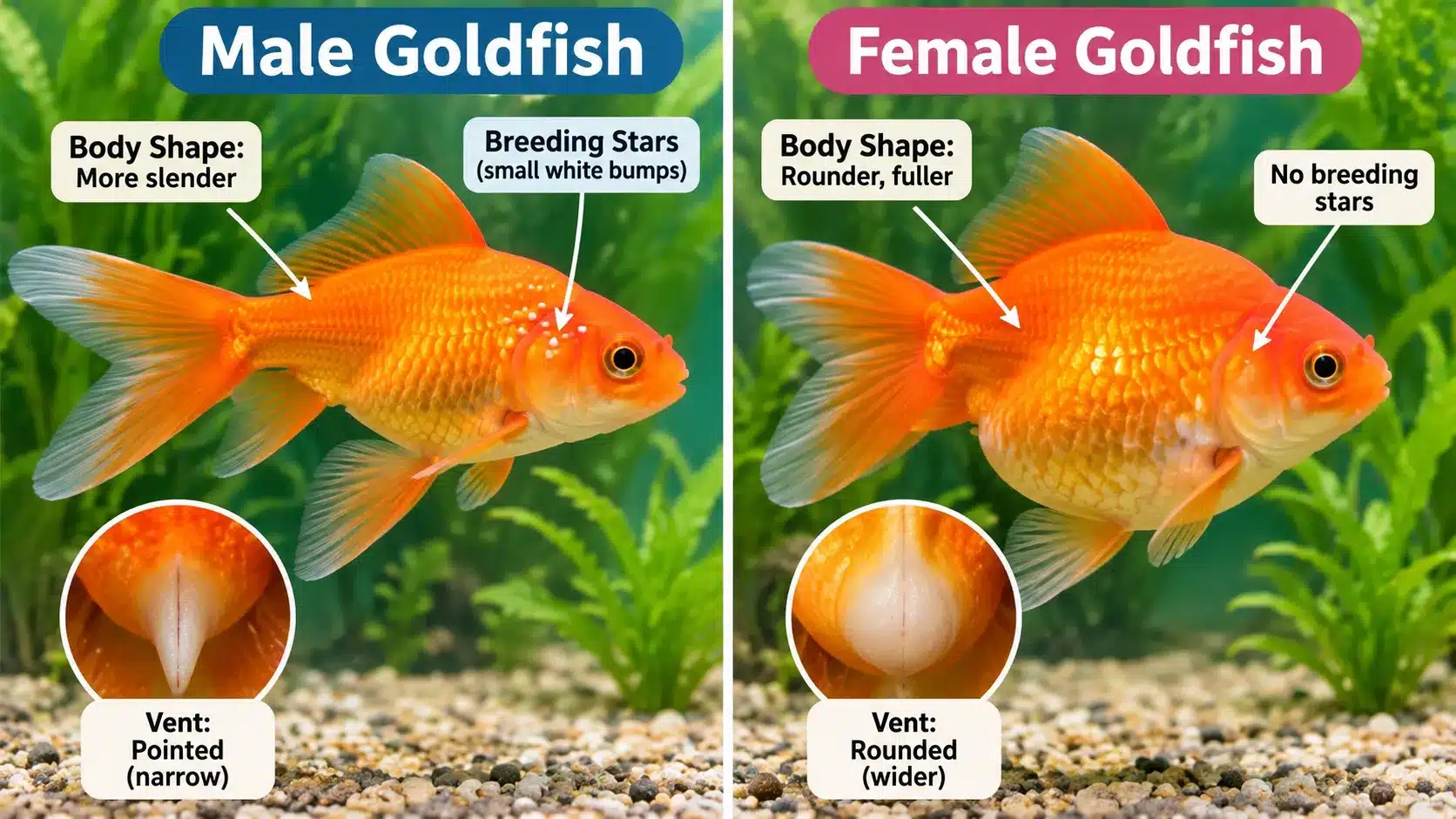
Sexing goldfish is easiest during the goldfish breeding season, when males show breeding stars and females look rounder with eggs. Outside spawning season, sex differences can be subtle.
Physical Differences Between Male and Female Goldfish
| Feature | Male goldfish | Female goldfish |
|---|---|---|
| Breeding stars | Small white tubercles may appear on gill covers and pectoral-fin rays | Usually absent or much less obvious |
| Body shape | Often slimmer, especially when viewed from above | Plumper and rounder when carrying eggs |
| Vent shape | Often more concave or inward | Often rounder or more protruding |
| Behavior | Actively chases and nudges females | May be chased and pushed toward spawning surfaces |
A ready male may show pinhead-sized white spots on the pectoral fins and gill covers. These are breeding stars, not ich or disease, but do not rely on them alone because some females can develop similar spots.
Signs That Goldfish Are Ready to Breed
Look for these signs before you try to breed goldfish:
- A female looks plump and rounded around the belly.
- A male repeatedly chases the female around the tank.
- Males nudge the female’s sides and vent area.
- Fish swim quickly near plants, spawning mops, or the tank bottom.
- Spawning activity often begins in early morning light.
What Age Do Goldfish Start Breeding?
Goldfish can become sexually mature at about one year old, but their breeding condition improves as they grow. Commercial producers often keep brood fish for several years because older, well-conditioned fish may produce more reliable spawns.
Do not rush young or underweight fish into breeding. A healthy adult female should look plump but not bloated, and both fish should swim strongly, eat well, and show no signs of illness.
When Is Goldfish Breeding Season?
The natural goldfish breeding season is spring, when water warms and daylight increases. In outdoor ponds, spawning commonly begins when water reaches about 60°F (15.5°C).
Ideal Water Temperature for Goldfish Spawning
Goldfish can spawn across a broad temperature range, but around 68°F to 73°F (20°C to 23°C) is a practical target for home goldfish breeders. The temperature change often matters as much as the final temperature, because it helps simulate the move from winter into spring.
For a controlled indoor spawn, slowly increase the water temperature by about 1°C to 2°C (1.8°F to 3.6°F) per day until it reaches the target range. Avoid sudden temperature swings, which can stress fish and harm water quality.
How Seasonal Changes Trigger Breeding
Longer light periods, warmer water, and fresh, clean water help goldfish recognize spring. You can simulate this indoors by keeping fish slightly cooler for several weeks, then gradually warming the aquarium and increasing light exposure.
A brief cold period can help condition fish, but never chill or heat them abruptly. Stable, clean water and a gradual temperature increase are safer than extreme changes.
Hand Spawning Fancy Goldfish Successfully and Safely
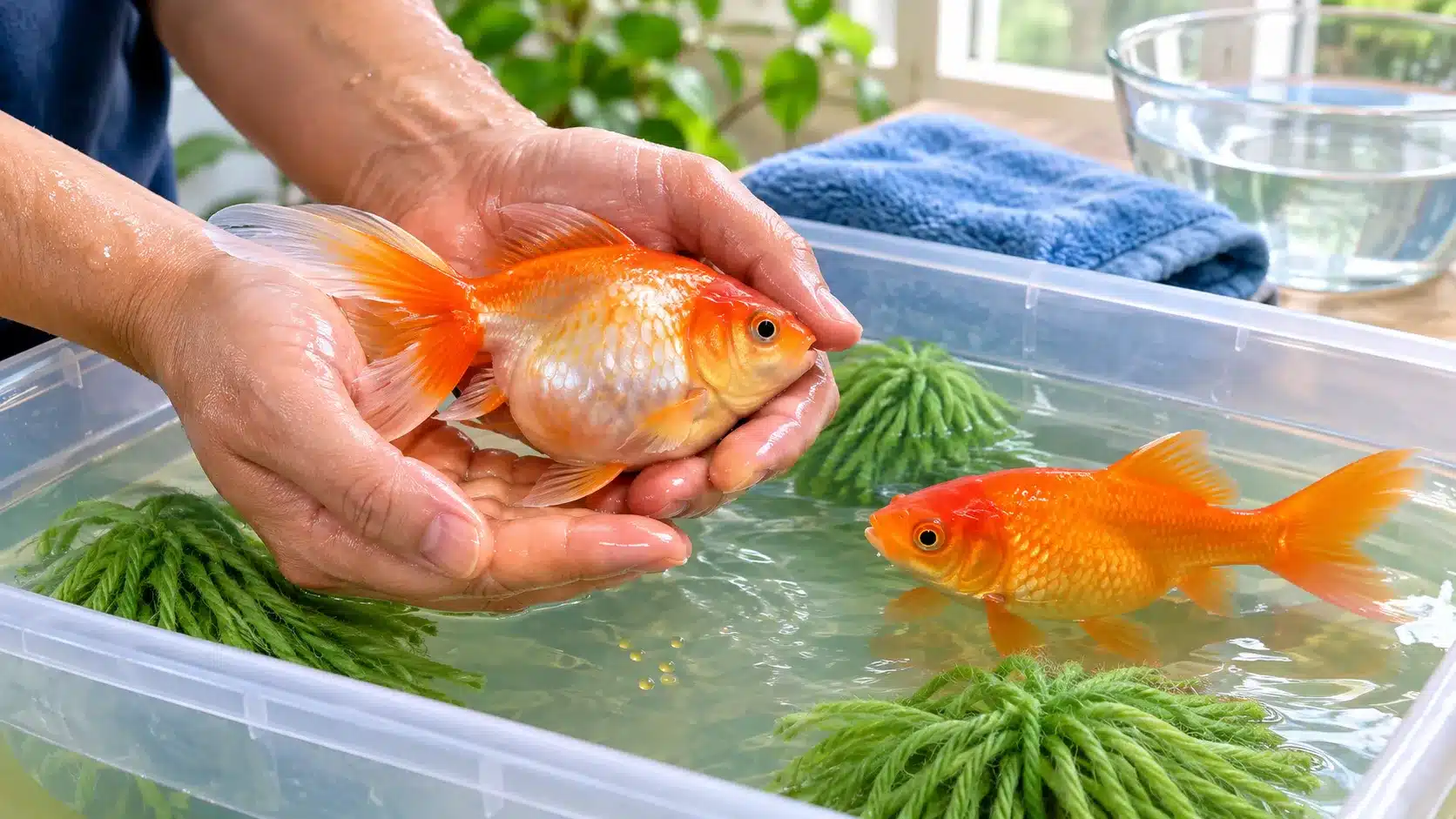
Hand spawning, also called manual spawning of the goldfish, is an advanced breeding method in which a breeder gently collects eggs and milt from ready fish, then mixes them in clean water to fertilize the eggs. It can help fancy varieties such as ranchu, ryukin, oranda, and telescope-eye goldfish, because their round bodies and altered swimming ability can make natural chasing difficult.
Only use hand spawning when both fish are clearly in breeding condition. Never force eggs or milt from a fish: squeezing too hard can injure the female, damage internal organs, reduce future spawning success, or even kill the fish.srac.
When to Use Hand Spawning
Choose hand spawning only when the female is plump, the vent looks swollen, and males are actively chasing her or releasing milt with very light pressure. These signs show that the fish are ready to breed; hand spawning should assist a natural process, not force an unready fish.
Fancy goldfish may need help because their compact bodies can make it harder for a male to position himself beside the female during normal goldfish spawn behavior. A breeder may use this method to protect eggs from adults and improve fertilization rates.
What You Need
Prepare these items before you begin:
- A clean, shallow container or small tub filled with aged, dechlorinated water from the breeding aquarium.
- Spawning mops or fine-leaved plants placed around the sides and bottom of the container.
- Two healthy males for one female, if possible.
- A soft net, clean wet hands, and a towel.
- Gentle aeration for the hatching container.
- A separate hatching tank or hatchery setup.
Manual spawning of a goldfish in a small tub allows for greater control during the process. Use water at the same temperature as the aquarium, because sudden temperature changes can stress the fish and reduce fertilization success.
How to Prepare a Goldfish Breeding Tank
Set up the breeding aquarium before the fish show mating behavior. A 20-gallon aquarium can work for a small spawning setup, but a bigger tank gives adults more room and makes water quality easier to manage.
Choosing the Right Aquarium Size and Equipment
Use a mature, cycled aquarium or a large, well-aerated tub with gentle filtration. Avoid strong filter intakes, because they can pull in eggs and tiny fry.
Your setup should include:
- A sponge filter or gentle air-driven filtration.
- An air stone to aerate the water.
- A reliable thermometer.
- A heater only if you need to control temperature safely.
- A spawning mop or fine-leaved plants.
- A separate hatching container or fry tank.
- A siphon for careful waste removal.
Do not use a tiny bowl or an uncycled tank. Goldfish produce a large bio-load, and poor water quality can prevent spawning or kill eggs and fry.
Best Plants and Spawning Mops for Goldfish Eggs
Goldfish eggs are sticky, so they need a surface to attach to. Fine-leaved live plants, such as hornwort, cabomba, or elodea, work well; a synthetic spawning mop is even easier to remove after spawning.
Using spawning mops gives you more control. When eggs cover the mop, you can lift it out and move it to a hatching tank without disturbing the adults.
How to Breed Goldfish Step by Step
Breeding goldfish at home becomes much easier when you follow the right steps and create a suitable environment for spawning. But how do you encourage goldfish to mate, protect their eggs, and raise healthy baby goldfish? The process starts with selecting healthy breeding pairs and preparing a separate breeding tank.
Successful goldfish breeding requires patience, careful observation, and consistent water maintenance. From identifying male and female goldfish to caring for eggs and raising tiny fry, each stage plays an important role in their survival. Follow these step-by-step instructions to give your goldfish the best possible start.
1. Selecting Healthy Breeding Goldfish
Choose active fish with clear eyes, intact fins, smooth scales, and steady swimming. Avoid fish that look thin, lethargic, injured, or constantly gasping at the surface.
For better fertilization, many breeders use one female with two healthy males. This gives the female more chances to release eggs while males release milt.
For fancy goldfish breeding, select fish with strong swimming, balanced bodies, and healthy fins. A ranchu or ryukin may look striking, but poor body shape or weak swimming can create welfare problems in offspring.
2. Conditioning Goldfish Before Spawning
Feed a varied diet for several weeks before you want to breed. High-quality pellets, blanched vegetables, and occasional frozen blood worms can support egg development and milt production.
Do not overfeed. Uneaten food quickly reduces water quality, and poor water quality is one of the most common reasons breeding attempts fail.
3. Encouraging Goldfish to Spawn
When the female looks plump and males begin to chase her, place the fish in the breeding aquarium with fresh spawning mops or plants. Keep the water clean, well aerated, and gradually warmed into the spawning range.
Goldfish often spawn in the morning. If you see fish are chasing intensely and the female is being pushed into the spawning medium, spawning may begin soon.moa.
How to Identify and Hatch Goldfish Eggs
Learning how to identify and hatch goldfish eggs helps you distinguish healthy, fertilized eggs from infertile ones before they develop fungus. With a little attention, you can protect the eggs and give newly hatched goldfish fry a healthy start.
Fertilized goldfish eggs usually look clear or translucent with a small developing embryo inside, while unfertilized eggs often turn opaque white within a few days.
To hatch goldfish eggs successfully, transfer healthy eggs to a separate, well-aerated tank, maintain stable water conditions, and remove eggs that develop fungus. Depending on water temperature, healthy eggs typically hatch within 2–7 days.
What Do Fertilized Goldfish Eggs Look Like?
Fresh goldfish eggs are tiny, round, and usually clear or pale amber. Healthy fertilized eggs may develop a small dark spot as the embryo grows; cloudy, white, or fuzzy eggs are often infertile or fungal.
Eggs do not come off plants or mops easily because they are adhesive. That is helpful for collection, but it also means you should avoid scraping or rubbing them off.
How Long Do Goldfish Eggs Take to Hatch?
The incubation period depends mostly on water temperature. At about 70°F to 75°F (21°C to 24°C), eggs commonly hatch in roughly three to five days; cooler water slows development.
Keep the hatching container shallow—about 6 inches deep is a common practical depth—because very deep water can make it harder for newly hatched fry to reach the surface.
How to Prevent Fungus on Goldfish Eggs
Remove obviously white, fuzzy, or dead eggs promptly so fungus does not spread. Gentle aeration, stable temperature, and clean water reduce fungal problems.
Some breeders use a very small amount of methylene blue as a preventive treatment, but follow the product label exactly and avoid overdosing. Remove fungused eggs rather than relying on chemicals to fix a dirty setup.courseware.
How to Raise Goldfish Fry (Baby Goldfish)
Raising goldfish fry (baby goldfish) can be an exciting experience, but those tiny fish need special attention during their first weeks of life. Do you know what to feed them, how often to change their water, or when they can safely join adult goldfish? Proper care during this early stage helps young goldfish grow stronger and healthier.
To raise goldfish fry successfully, keep them in a separate, clean aquarium with gentle filtration, stable water conditions, and plenty of oxygen. Feed newly hatched fry suitable foods such as infusoria, followed by baby brine shrimp and finely crushed goldfish food as they grow. Perform regular partial water changes, remove uneaten food, and monitor their growth to prevent health problems.
Goldfish fry require more than regular feeding to reach adulthood. You must also understand their developmental stages, feeding schedules, tank requirements, common health problems, and the right time to move them into a larger aquarium. This step-by-step guide explains how to care for baby goldfish from hatching through their early growth stages, helping you raise a healthy new generation.
What Do Baby Goldfish Eat?
Newly hatched fry live on their yolk sac for a short time. Once they swim freely, offer newly hatched baby brine shrimp, liquid fry food, or finely powdered fry food.
Baby brine shrimp are especially useful because they are small, nutritious, and easy for young fry to hunt. As fry grow, slowly introduce crushed high-quality pellets and finely ground flakes.
How Often Should You Feed Goldfish Fry?
Feed very small amounts several times a day. Fry have tiny stomachs, and leftover food can foul the water quickly.
A useful rule is to offer only what they can finish in a few minutes, then remove visible leftovers. Overfeeding can pollute the aquarium, while underfeeding can slow growth or cause starvation.
Water Changes and Aquarium Maintenance for Fry
Use a gentle siphon to remove waste from the bottom of the container. Keep the siphon intake away from fry, or cover it with a fine mesh guard.
Perform small, frequent water changes rather than large disruptive ones. Use dechlorinated water matched closely to the tank temperature, and use a water conditioner before adding it.
Common Goldfish Breeding Problems and Mistakes
Why do some goldfish refuse to spawn, and why do fertilized eggs sometimes fail to hatch? Poor water quality, unsuitable breeding conditions, and improper egg care often cause these problems, especially for beginners.
Common goldfish breeding problems include unsuccessful spawning, infertile eggs, fungal infections, poor egg hatching rates, and high fry mortality.
You can prevent many of these issues by choosing healthy breeding pairs, maintaining stable water parameters, providing suitable spawning materials, and feeding baby goldfish properly. Regular tank maintenance and careful monitoring also help protect eggs and developing fry.
Why Are My Goldfish Not Breeding?
Goldfish may not breed because they are too young, poorly conditioned, kept at the wrong temperature, stressed, or overcrowded. A lack of clear male and female identification can also stop a breeding attempt before it starts.
Check these basics:
- Are the fish mature and healthy?
- Do you have at least one confirmed male and one female?
- Is the water clean, oxygenated, and gradually warmed?
- Are there spawning mops or fine plants available?
- Are the fish getting enough light and a proper diet?
Do Goldfish Eat Their Eggs and Babies?
Yes. Adult goldfish commonly eat eggs and baby goldfish, especially when spawning ends and food is scarce. This is normal fish behavior, not a sign that your goldies are unusually aggressive.
Remove the adults immediately after spawning, or remove the egg-covered spawning mop and place it in a separate hatchery tank. This single step greatly improves survival.
How to Improve Goldfish Fry Survival Rates
Improve survival by keeping water shallow, gently aerated, warm, and clean. Feed appropriately sized food often, remove waste, and separate noticeably larger fry from smaller ones when needed.
A small tub allows for greater control during the first weeks. As fry grow, move them to a bigger tank with more swimming space and stronger filtration that is still safe for small fish.
Frequently Asked Questions About Goldfish Breeding
How Many Eggs Do Goldfish Lay?
A female goldfish may release roughly 500 to 1,000 eggs in a single spawn, although the actual number varies with her size, age, and condition.moa.gov
Can Goldfish Breed in a Community Tank?
Goldfish can breed in a community tank, but it is not ideal. Other fish may eat eggs, adults may eat their own young, and filtration can pull in fry. A dedicated breeding aquarium is safer.
How Many Baby Goldfish Survive?
Survival varies widely. With good egg protection, clean water, frequent feeding, and careful culling, more fry can survive—but many eggs and fry will still not reach adulthood. Plan for far fewer surviving fish than the number of eggs laid.
How Long Does It Take Baby Goldfish to Grow?
Growth depends on food, temperature, space, and water quality. Commercial growers report that newly hatched fry may reach about ¾ inch in roughly six weeks under managed conditions.
Do Goldfish Breed in Tanks?
Yes, goldfish can breed in tanks. You need enough space, clean water, spawning material, and a plan to separate eggs from adults.
How Do Goldfish Reproduce?
Goldfish reproduce by external fertilization. The female releases eggs, the male releases milt, and fertilization occurs in the water.
How Do Goldfish Mate?
Goldfish do not mate by pairing or internal fertilization. Males chase and nudge females, encouraging them to release eggs onto plants or a spawning mop while the male releases milt.
When Do Goldfish Breed?
Goldfish usually breed in spring, when water warms and daylight increases. Indoors, you can trigger spawning by gradually raising the water temperature and extending light exposure.
How Do Goldfish Breed?
To breed goldfish, condition healthy adults, provide spawning mops or plants, gradually warm the water, watch for chasing behavior, then remove adults or eggs immediately after spawning.
How Do Goldfish Procreate?
Goldfish procreate through spawning. Females lay adhesive eggs, males fertilize them with milt, and the eggs hatch into fry after an incubation period.
Are goldfish easy to breed?
Yes, but raising fry successfully takes preparation, clean water, space, and time. Adults often eat eggs and fry, so separation is essential.
How quickly do goldfish breed?
Goldfish can spawn soon after water warms to about 68–73°F, often within days of the temperature rise. Eggs usually hatch in two to nine days.
How do you prepare goldfish for breeding?
Condition healthy adults with varied food, stable clean water, and a gradual temperature increase to mimic spring. Provide spawning mops or fine plants.
How do goldfish spawn and lay eggs?
Males chase and nudge females, which release adhesive eggs onto plants or spawning mops. Males release milt over the eggs, fertilizing them externally.
How do you care for goldfish fry?
Keep fry in shallow, gently aerated, clean water. Feed newly hatched brine shrimp or fine fry food once they swim freely, and remove waste carefully.
What equipment do you need to breed goldfish in a tank?
You need a cycled aquarium or breeding tub, sponge filter, air stone, thermometer, heater if needed, spawning mops or fine plants, a separate hatching tank, siphon, dechlorinator, and fry food.
Conclusion
Learning how to breed goldfish at home successfully starts long before you see eggs. Choose healthy, mature fish, give them clean water and space, condition them with a varied diet, and use spawning mops or fine plants to collect goldfish eggs. Once spawning begins, act quickly: remove the adults or transfer the egg-covered mop to a separate hatchery, because goldfish will eat their eggs and fry.
Keep the hatching container shallow, gently aerated, and stable at about 70°F to 75°F. Feed free-swimming baby goldfish newly hatched baby brine shrimp or fine fry food in tiny amounts, then use careful water changes to maintain water quality.
Goldfish breeding is rewarding, but it is also a responsibility. A single spawn can create hundreds of potential fish, so have space, filtration, food, and rehoming plans ready before you begin. With patience, clean water, and careful observation, you can raise strong, healthy goldfish from egg to juvenile.
You might also like
- Goldfish Tank Mates (List): Expert’s Care & Breeding Guide
- Do Goldfish Eat Other Fish? – Here’s How to (Stop Them!)
- Can Angelfish Live with Goldfish? – Here’s Why Not & (FAQs)
- When Is Gold fish Breeding Season? (Surprising Facts & FAQ)
- Goldfish Breeds Shubunkin 101 – Ultimate shubunkin goldfish breeding Guide!