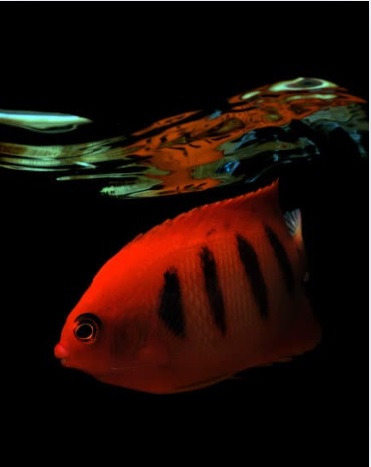
The Flame Angelfish, scientifically known as Centropyge loricula, is a stunning addition to any saltwater aquarium. Renowned for its vibrant orange-red coloration adorned with a distinctive vertical elongated black spot, this dwarf angels captivates both seasoned aquarists and newcomers alike.
As a member of the angelfish family, the Flame Angel thrives in various reefs of Oceania, particularly around the Hawaiian Islands.
This article explores essential aspects of keeping Flame Angel fish, including their natural habitat, behavior in aquariums, reef compatibility, and breeding.
Whether you’re a reef chaser or a hobbyist, understanding these factors will help you create an ideal environment for this captivating species.
Where Do Flame Angelfish Live?
Flame Angelfish are primarily found in the warm waters of the Pacific Ocean, especially in the lagoons and coral reefs surrounding the Hawaiian Islands. These fish inhabit various reefs of Oceania, where they swim among live rock and coral formations, providing them with shelter and grazing opportunities.
In the wild, Flame Angelfish are often spotted in pairs or small groups, showcasing their social nature. The coral-rich environment is essential for their survival as it offers not only food sources, such as algae, brine shrimp, frozen mysis shrimp and plankton but also protection from larger predators.
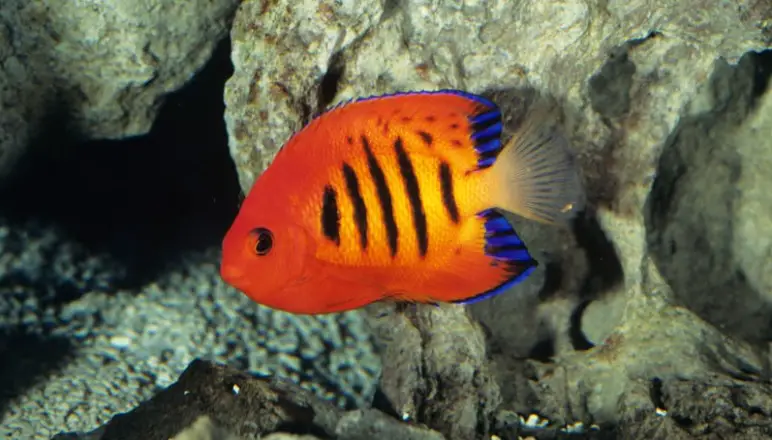
Consequently, replicating this habitat in captivity is crucial for their well-being, ensuring they have ample space to swim and explore.
Additionally, the Flame Angelfish’s natural habitat significantly influences its care in aquariums. In captivity, it’s essential to mimic their reef environment, including providing plenty of live rock and coral structures for them to hide and graze on.
They prefer to inhabit areas where they can access both open swimming space and nooks to retreat to when feeling threatened.
Hobbyists should also consider the water quality and temperature, as these factors play a vital role in maintaining the health of Flame Angel fish. By creating a habitat that closely resembles their natural surroundings, aquarists can help these stunning fish thrive.
Are Flame Angelfish Aggressive in Aquarium?
Flame Angelfish are generally known for their vibrant personalities, but they can exhibit territorial behaviors, particularly in confined spaces.
While they are not considered highly aggressive, they may display aggression towards other dwarf angelfish or similar-sized species, especially if kept in smaller tanks. It is crucial for aquarists to provide adequate space, ideally in a tank of at least 70 gallons, to minimize territorial disputes.
When introducing new fish, quarantining them beforehand can help reduce stress and aggression, allowing for a smoother integration into the existing aquarium community.
Moreover, the Flame Angelfish’s behavior can vary depending on the specific tank dynamics and the presence of hiding spots. If they feel threatened or overcrowded, they may become more assertive in defending their territory.
Therefore, it is advisable to carefully plan the tank’s layout, ensuring there are plenty of hiding spots and open swimming areas.
When kept in pairs, these fish often exhibit more harmonious behavior, as they naturally form bonds in the wild. Observing their interactions can provide insights into their social nature and help aquarists create a peaceful environment.
Are Flame Angelfish Reef Safe?
The Flame Angelfish is often considered reef safe with caution. While they are not known to consume coral directly, they may nibble on small polyp stony (SPS) corals and other delicate invertebrates if they are hungry or not properly fed.
Therefore, providing a varied diet rich in algae, spirulina, and other nutritious foods is essential to prevent any unwanted grazing on corals. By ensuring the Flame Angel fish receives good nutrition, hobbyists can help protect their reef environments while keeping these beautiful fish healthy.
However, it’s essential to monitor their behavior closely, especially in a community tank with sensitive corals and invertebrates. Some aquarists have reported that while Flame Angelfish can coexist with many reef species, they may exhibit predatory behavior towards smaller shrimp or clams.
This means that, although they can be part of a reef setup, careful consideration must be given to tank mates and overall compatibility. As with any species, the success of keeping Flame Angelfish in a reef tank largely depends on the individual fish’s temperament and the tank’s overall environment.
Where to find Flame Angelfish for Sale?
Hobbyists interested in adding Flame Angelfish to their aquariums can find these captivating fish through various sources. Many local fish stores specialize in marine species and may have captive-bred Flame Angel fish available.
Buying captive-bred specimens is often recommended, as they tend to adapt better to aquarium life and have a higher survival rate compared to wild-caught fish. Additionally, online retailers and aquaculture facilities often list Flame Angelfish for sale, allowing enthusiasts to browse and pick from a range of options.
When purchasing Flame Angelfish, it’s essential to ensure the source is reputable, prioritizing health and sustainability. Many aquarists also recommend joining mailing lists or forums dedicated to reef chasers, where members often share leads on where to find high-quality fish.
By connecting with fellow hobbyists, you can gain insights into the best places to buy Flame Angelfish while learning about their care and compatibility with other species. This shared knowledge can enhance your experience in keeping these beautiful fish.
Flame Angelfish Tank Size
The minimum recommended tank size for Flame Angelfish is at least 70 gallons. This size provides ample space for swimming, grazing, and establishing territory, which are essential for the overall health and well-being of the fish.
In smaller tanks, these angelfish can become stressed, leading to aggressive behavior and health issues. Therefore, ensuring a sufficiently large aquarium is crucial for maintaining a harmonious environment.
In addition to the size requirement, the tank’s layout should include plenty of live rock and coral structures, which mimic their natural habitat. These elements not only provide hiding spots but also create grazing opportunities for the Flame Angels.
A well-structured tank will encourage natural behaviors, allowing the fish to swim, explore, and feel secure. Furthermore, maintaining good water quality and stable parameters is vital, as these factors directly impact the health of the Flame Angelfish.
By providing a spacious and well-designed aquarium, aquarists can support the thriving nature of this beautiful pygmy angelfish species.
Breeding Flame Angel fish
Breeding Flame Angelfish in captivity is a challenging yet rewarding endeavor for dedicated aquarists. While successful breeding has been documented, it requires specific conditions and a deep understanding of the species.
Flame Angel fish are known to form mating pairs, and providing a suitable environment that mimics their natural habitat is crucial. This includes maintaining stable water parameters, offering plenty of hiding spots, and ensuring a nutritious diet rich in phytoplankton and copepods.
Once a pair is established, they may begin spawning, typically laying eggs on flat surfaces like rocks or coral. The process can be fascinating to observe, but it necessitates careful monitoring to ensure that the eggs are not predated upon by tank mates.
Some aquarists choose to set up a separate breeding tank to increase the chances of successful hatching, as newly hatched larvae require specific conditions to thrive.
Overall, while breeding Flame Angelfish presents challenges, the experience can be immensely rewarding for those passionate about aquaculture and the care of this stunning species.
Conclusion
In conclusion, the Flame Angelfish is a captivating addition to any reef aquarium, known for its vibrant coloration and engaging personality. However, potential aquarists must be mindful of their care requirements, including tank size, feeding, and compatibility with other species. While Flame Angel fish are generally reef safe with caution, monitoring their behavior and providing proper nutrition is essential to protect delicate corals and invertebrates. For those interested in breeding, creating the right environment can lead to successful offspring. Ultimately, the Flame Angelfish offers both beauty and challenge, making it a favorite among reef chasers and marine enthusiasts alike.
Recommended posts
- 7 Best Reef Safe Angelfish for Your Tank – A Complete Guide
- Are Angelfish Saltwater or Freshwater? Discover Their Ideal Habitat
- Saltwater Angelfish Types: Colors, Sizes & Compatibility
- Red Devil Angelfish: Habitat, Diet & Tank Requirements
- Japanese Pygmy Angelfish: Stunning Marine Fish for Saltwater Tanks